

Parmelia pinnatifida
Parmelia pinnatifida Kurok.
Edibility
Edibility unknown — do not eat
Never eat a wild mushroom based on this site or any app.
Photos
-

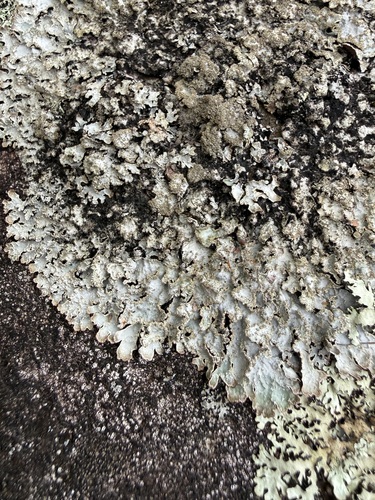
Photo: Vesa Oikonen. CC0. Source (inaturalist)
Lookalikes
No lookalikes are recorded for this species yet. That does not mean there are none. Many mushrooms look alike, so never rely on appearance alone.
Season
When this species has been recorded, by month, from open-licensed US and Canada observations. It shows when people report it, not a guarantee it is fruiting.
The highlighted bar is the current month.
View season data as a table
| Month | Records |
|---|---|
| January | 0 |
| February | 0 |
| March | 0 |
| April | 0 |
| May | 0 |
| June | 13 |
| July | 15 |
| August | 7 |
| September | 2 |
| October | 1 |
| November | 0 |
| December | 0 |
Where it is found
States and provinces with the most records. Check the foraging rules for the place you plan to visit.
- Nunavut 21 records · Foraging rules
- Alaska 5 records · Foraging rules
- Manitoba 3 records · Foraging rules
- Northwest Territories 2 records · Foraging rules
- Ontario 2 records · Foraging rules
- Newfoundland and Labrador 2 records · Foraging rules
- Nova Scotia 1 records · Foraging rules
- Quebec 1 records · Foraging rules
- West Virginia 1 records · Foraging rules
About
Parmelia pinnatifida is a species of foliose lichen in the family Parmeliaceae, first recognised as a distinct species in 1976. Originally classified as a variety of P. omphalodes in 1803, it is characterised by its small, circular body (thallus) with narrow, highly branched, overlapping lobes, and its grey to brown upper surface contrasting with a black underside. While its status as a separate species has been debated, modern genetic studies support this classification, though some uncertainty remains. The lichen typically grows on siliceous (silicon-rich) rocks, and occasionally on moss, plant debris, or tree bark, showing a preference for humid environments. It has been documented across Europe, North America, and Antarctica, with populations in mountainous regions, though its reported presence in the Southern Hemisphere requires further verification.
From Wikipedia, CC BY-SA 4.0. Read the original article.
Recent finds
No community finds tagged with this species yet. Log a find.
More in the genus Parmelia
-
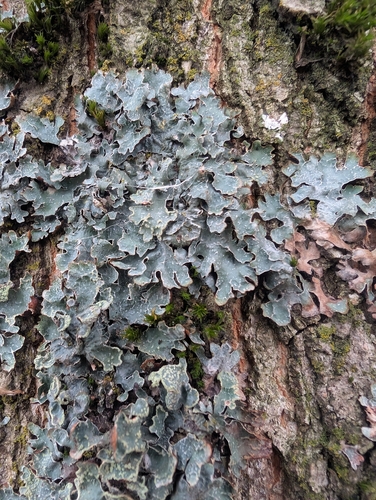
Netted Shield Lichen
Parmelia sulcata
Edibility unknown — do not eat -
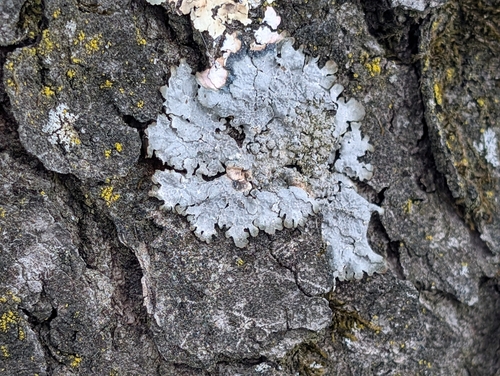
Bottle Brush Shield Lichen
Parmelia squarrosa
Edibility unknown — do not eat -
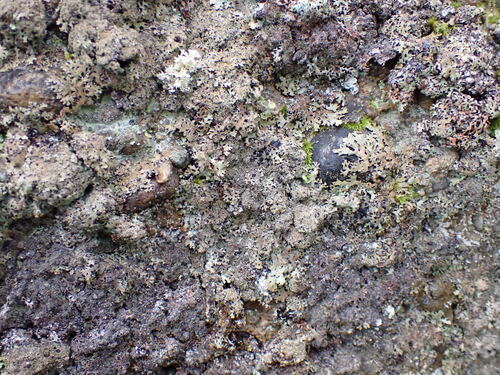
Salted Shield Lichen
Parmelia saxatilis
Edibility unknown — do not eat -
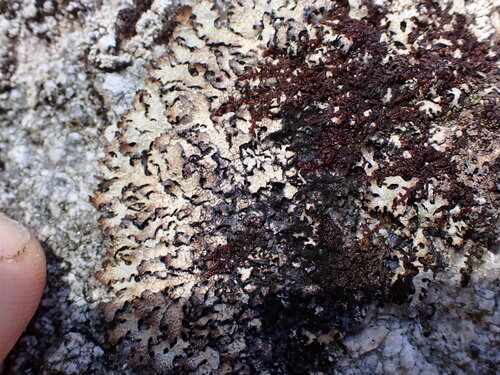
Smoky Crottle
Parmelia omphalodes
Edibility unknown — do not eat -

Western Shield Lichen
Parmelia hygrophila
Edibility unknown — do not eat -
Pea-green Shield Lichen
Parmelia fraudans
Edibility unknown — do not eat - No photo yet
Parmelia rigida
Edibility unknown — do not eat - No photo yet
Appalachian Shield Lichen
Parmelia neodiscordans
Edibility unknown — do not eat
Never eat a wild mushroom based on this site or any app. See safety basics and the disclaimer.