

Ravenel's Lepidella
Amanita ravenelii (Berkeley & Broome) Saccardo, 1887
Edibility
Edibility unknown — do not eat
Never eat a wild mushroom based on this site or any app.
Photos
-
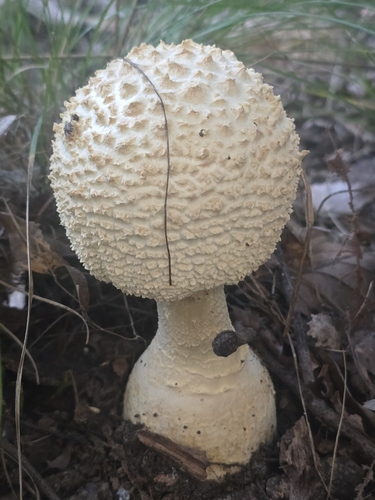
Photo: Christine Braaten. CC0. Source (inaturalist) -
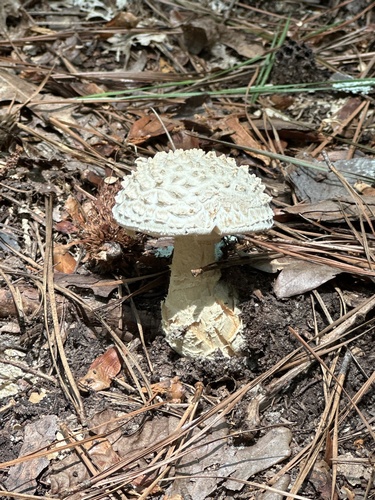
Photo: novvictan. CC-BY. Source (inaturalist) -
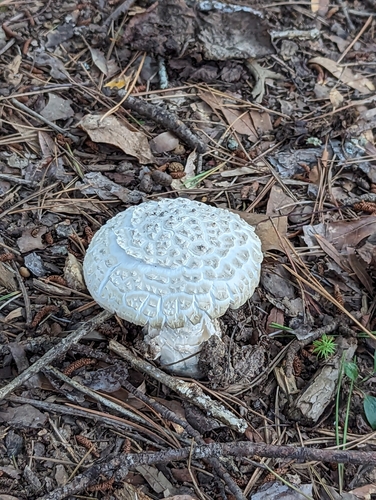
Photo: alexandew2552. CC0. Source (inaturalist) -
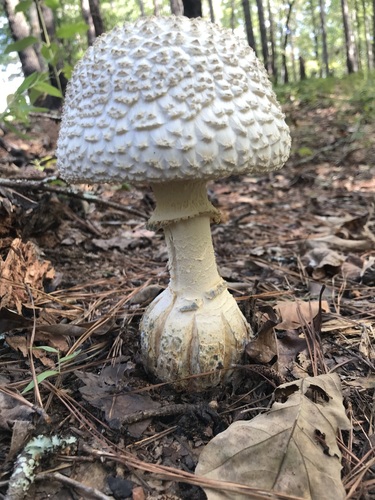
Photo: boletejones. CC-BY. Source (inaturalist)
Lookalikes
No lookalikes are recorded for this species yet. That does not mean there are none. Many mushrooms look alike, so never rely on appearance alone.
Season
When this species has been recorded, by month, from open-licensed US and Canada observations. It shows when people report it, not a guarantee it is fruiting.
The highlighted bar is the current month.
View season data as a table
| Month | Records |
|---|---|
| January | 1 |
| February | 0 |
| March | 1 |
| April | 0 |
| May | 12 |
| June | 20 |
| July | 59 |
| August | 68 |
| September | 51 |
| October | 71 |
| November | 7 |
| December | 0 |
Where it is found
States and provinces with the most records. Check the foraging rules for the place you plan to visit.
- Virginia 21 records · Foraging rules
- Maryland 15 records · Foraging rules
- North Carolina 13 records · Foraging rules
- South Carolina 4 records · Foraging rules
- Pennsylvania 4 records · Foraging rules
- West Virginia 3 records · Foraging rules
- Georgia 3 records · Foraging rules
- Louisiana 3 records · Foraging rules
- Missouri 3 records · Foraging rules
- Tennessee 3 records · Foraging rules
- Indiana 2 records · Foraging rules
- Ohio 2 records · Foraging rules
- Mississippi 1 records · Foraging rules
- Illinois 1 records · Foraging rules
- New York 1 records · Foraging rules
Show 6 more
- Massachusetts1 records
- District of Columbia1 records
- Connecticut1 records
- Kentucky1 records
- Alabama1 records
- Arkansas1 records
Identification traits
| Cap shape | umbonate |
|---|---|
| Underside (gills, pores or teeth) | gills |
| Ecology | mycorrhizal |
| Stem features | ring and volva |
| Spore print color | white |
Traits vary. Use them to ask better questions of an expert, not to make a final call.
About
Amanita ravenelii, commonly known as the pinecone lepidella, is a species of fungus in the family Amanitaceae. The whitish fruit bodies (mushrooms) are medium to large, with caps up to 17 centimeters (6+1⁄2 inches) wide, and stems up to 25 cm (10 in) long. The cap surface has large warts and the stem has a scaly, bulbous base. The flesh of the mushrooms is firm, with a distinct chlorine-like odor. It is widely distributed in mixed and deciduous forests of the southeastern United States, where it grows solitarily or in groups on the ground in late summer and autumn. It has also been recorded in Mexico and Argentina. It is a mycorrhizal species, although the plant species with which it tends to associate are not known. Lookalike North American Amanita species include A. chlorinosma, A. polypyramis, A. mutabilis, and A. armillariiformis. Within the genus Amanita, it is part of the section Lepidella. Guidebooks do not recommend mushrooms of this section as edible; they may be poisonous.
From Wikipedia, CC BY-SA 4.0. Read the original article.
Recent finds
No community finds tagged with this species yet. Log a find.
More in the genus Amanita
-
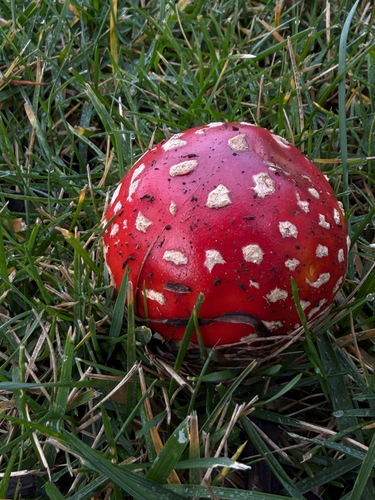
Fly Agaric
Amanita muscaria
Poisonous - No photo yet
Grisette
Amanita vaginata
Caution -
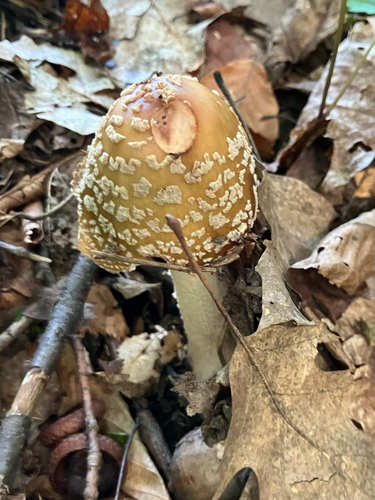
Blusher
Amanita rubescens
Edibility unknown — do not eat -
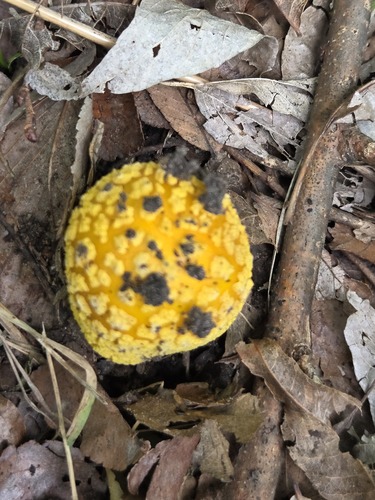
Yellow Patches
Amanita flavoconia
Edibility unknown — do not eat -
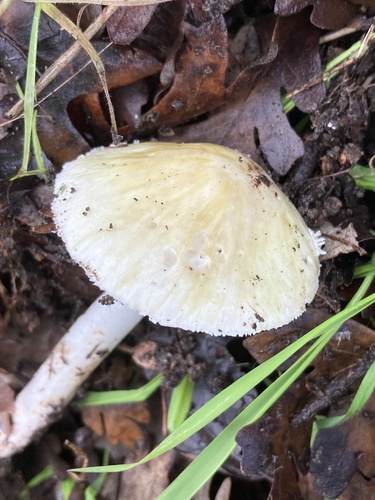
Death Cap
Amanita phalloides
Deadly — can kill -
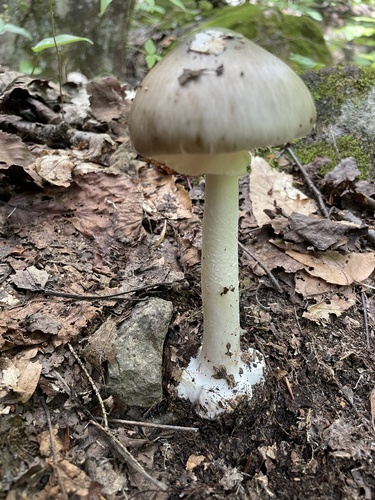
Brown American Star-footed Amanita
Amanita brunnescens
Edibility unknown — do not eat -
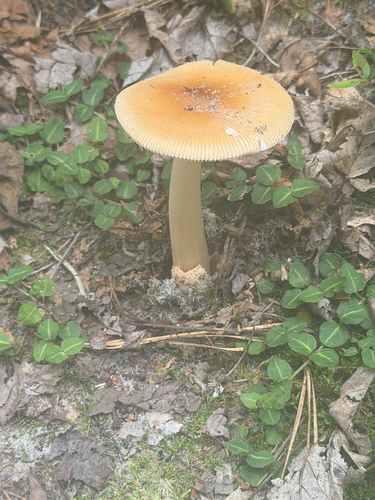
Tawny Grisette
Amanita fulva
Edibility unknown — do not eat -
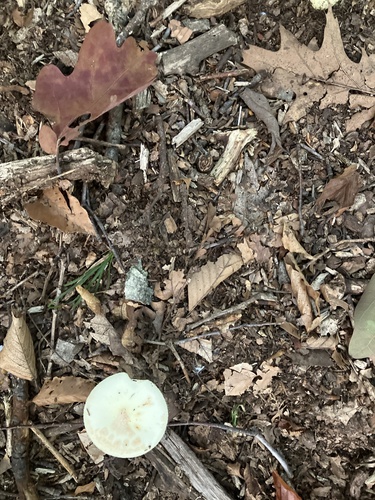
False Deathcap
Amanita citrina
Poisonous
Never eat a wild mushroom based on this site or any app. See safety basics and the disclaimer.