

Death Cap
Amanita phalloides (Vaill. ex Fr.) Link
Also called: Deathcap, The Death Cap
Safety first
This mushroom is listed as deadly. Eating it can kill.
Many edible mushrooms have toxic lookalikes, and some of those can be fatal. Have any mushroom identified in person by a local expert before you eat it.
If someone may have eaten a wild mushroom, call US Poison Control at 1-800-222-1222 or 911 right away. In Canada, call your provincial poison centre or 911.
Edibility
Deadly — can kill Source: Wikipedia: Amanita phalloides
Classification from Wikipedia: Amanita phalloides. Sources can be wrong or incomplete, and people react differently.
Never eat a wild mushroom based on this site or any app.
Photos
-
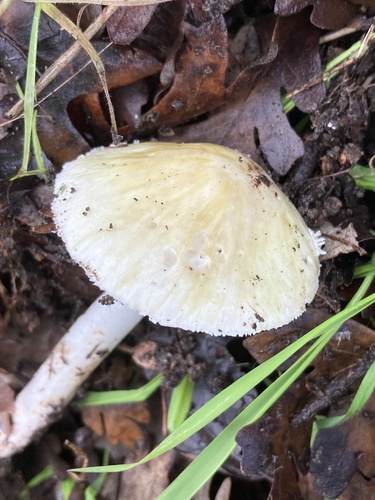
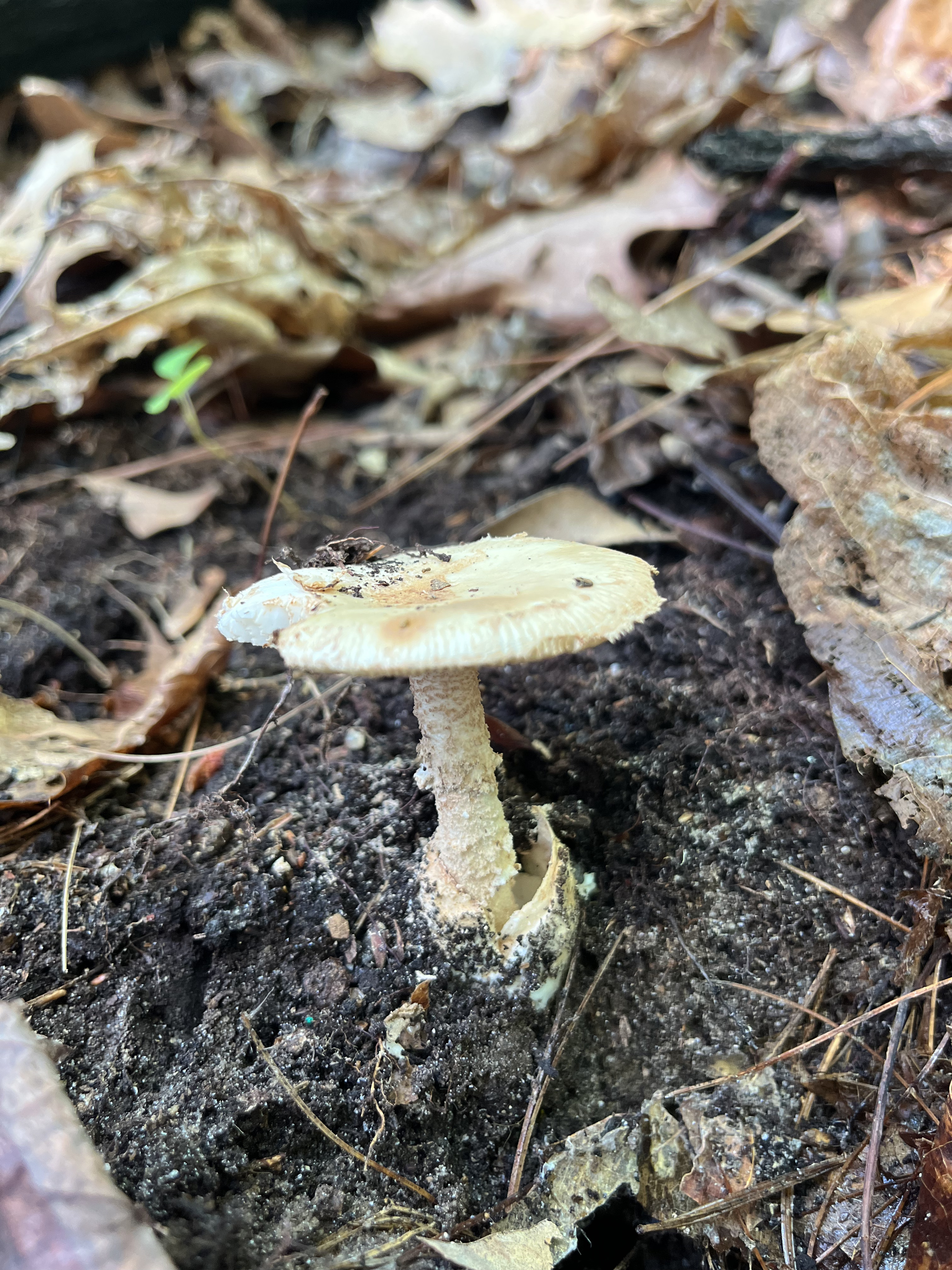
Photo: Adam J. Searcy. CC-BY. Source (inaturalist) -
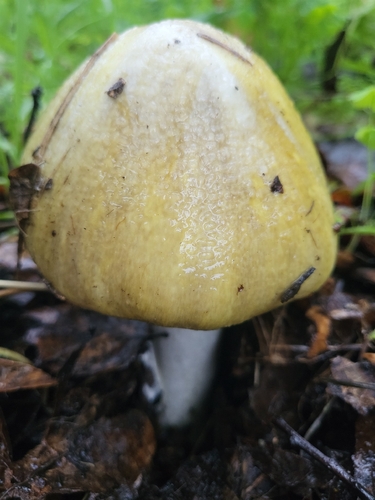
Photo: Peter Brastow. CC-BY. Source (inaturalist) -
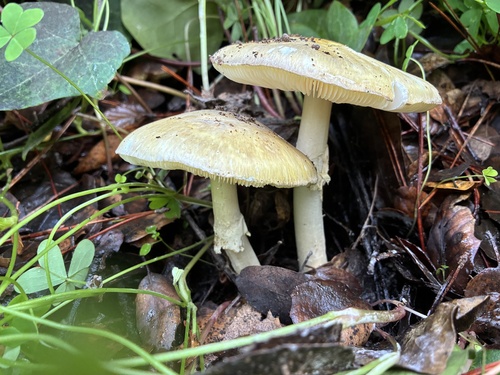
Photo: Sarinda Newell. CC-BY. Source (inaturalist) -
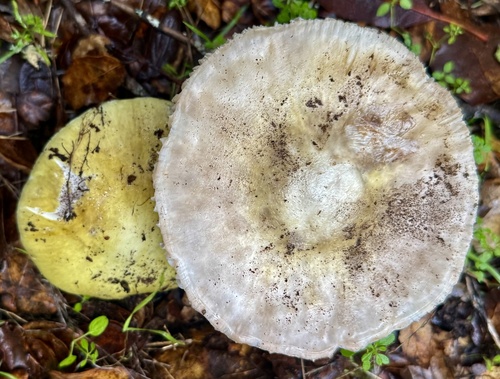
Photo: Chuck Wilson. CC0. Source (inaturalist)
Lookalikes
No lookalikes are recorded for this species yet. That does not mean there are none. Many mushrooms look alike, so never rely on appearance alone.
Season
When this species has been recorded, by month, from open-licensed US and Canada observations. It shows when people report it, not a guarantee it is fruiting.
The highlighted bar is the current month.
View season data as a table
| Month | Records |
|---|---|
| January | 172 |
| February | 16 |
| March | 4 |
| April | 13 |
| May | 50 |
| June | 47 |
| July | 161 |
| August | 169 |
| September | 137 |
| October | 375 |
| November | 276 |
| December | 355 |
Where it is found
States and provinces with the most records. Check the foraging rules for the place you plan to visit.
- California 873 records · Foraging rules
- New York 160 records · Foraging rules
- British Columbia 131 records · Foraging rules
- New Jersey 105 records · Foraging rules
- Pennsylvania 87 records · Foraging rules
- Washington 36 records · Foraging rules
- North Carolina 30 records · Foraging rules
- Virginia 18 records · Foraging rules
- Alabama 17 records · Foraging rules
- Connecticut 17 records · Foraging rules
- Florida 17 records · Foraging rules
- Massachusetts 17 records · Foraging rules
- Maryland 13 records · Foraging rules
- Maine 10 records · Foraging rules
- Illinois 7 records · Foraging rules
Show 28 more
- Ohio7 records
- Ontario7 records
- Oregon7 records
- Vermont7 records
- District of Columbia6 records
- Missouri6 records
- Georgia5 records
- Hawaii5 records
- Michigan5 records
- Minnesota5 records
- South Carolina5 records
- Tennessee5 records
- New Hampshire4 records
- West Virginia4 records
- Wisconsin4 records
- Delaware3 records
- Alaska2 records
- Colorado1 records
- Indiana1 records
- Iowa1 records
- Kansas1 records
- Kentucky1 records
- Mississippi1 records
- Montana1 records
- Oklahoma1 records
- Quebec1 records
- Texas1 records
- Utah1 records
Identification traits
| Cap shape | convex |
|---|---|
| Underside (gills, pores or teeth) | gills |
| Ecology | mycorrhizal |
| Stem features | ring and volva |
| Spore print color | white |
Traits vary. Use them to ask better questions of an expert, not to make a final call.
About
Amanita phalloides ( AM-ə-NY-tə fə-LOY-deez), commonly known as the death cap, is a deadly poisonous basidiomycete fungus and mushroom, one of many in the genus Amanita. Originating in Europe but later introduced to other parts of the world since the late twentieth century, A. phalloides forms ectomycorrhizae with various broadleaved trees. In some cases, the death cap has been introduced to new regions with the cultivation of non-native species of oak, chestnut, and pine. The large fruiting bodies appear in summer and autumn; the caps are generally greenish in colour with a white stipe and gills. The cap colour is variable, including white forms, and is thus not a reliable identifier. The death cap resembles several edible species (most notably Caesar's mushroom and the straw mushroom) commonly consumed by humans, increasing the risk of accidental poisoning. Amatoxins, a class of toxins found in mushrooms like A. phalloides, are thermostable: they resist changes due to heat and cold, so their toxic effects are not reduced by cooking or freezing. Amanita phalloides is the most poisonous of all known mushrooms. It is estimated that as little as half a mushroom contains enough toxin to kill an adult human. It is also the deadliest mushroom worldwide, responsible for 90% of mushroom-related fatalities every year. It has been involved in the majority of human deaths from mushroom poisoning, possibly including Roman Emperor Claudius in AD 54 and Holy Roman Emperor Charles VI in 1740. It has also been the subject of much research and many of its biologically active agents have been isolated. The principal toxic constituent is α-Amanitin, which causes liver and kidney failure.
From Wikipedia, CC BY-SA 4.0. Read the original article.
More in the genus Amanita



Never eat a wild mushroom based on this site or any app. See safety basics and the disclaimer.