

Fly Agaric
Amanita muscaria (L.) Lam.
Safety first
This mushroom is listed as poisonous. Eating it can make you seriously ill.
Many edible mushrooms have toxic lookalikes, and some of those can be fatal. Have any mushroom identified in person by a local expert before you eat it.
If someone may have eaten a wild mushroom, call US Poison Control at 1-800-222-1222 or 911 right away. In Canada, call your provincial poison centre or 911.
Edibility
Poisonous Source: Wikipedia: Amanita muscaria
Classification from Wikipedia: Amanita muscaria. Sources can be wrong or incomplete, and people react differently.
Never eat a wild mushroom based on this site or any app.
Photos
-
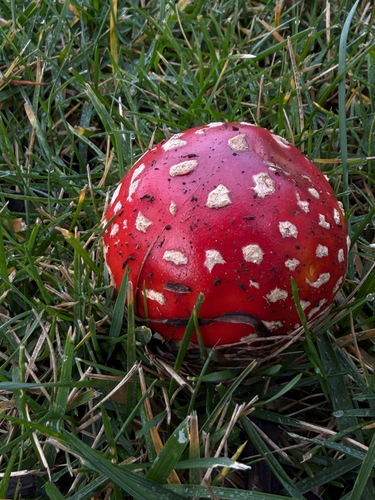
Photo: Chris Sulots. CC-BY. Source (inaturalist) -
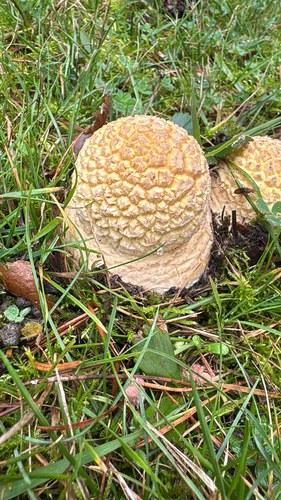
Photo: Megan “Moe” Morelock. CC-BY. Source (inaturalist) -
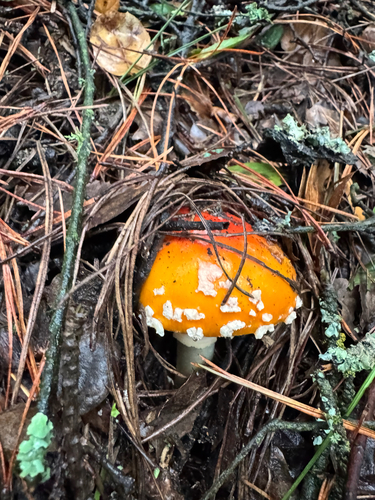
Photo: wildflowerwatching. CC-BY. Source (inaturalist) -
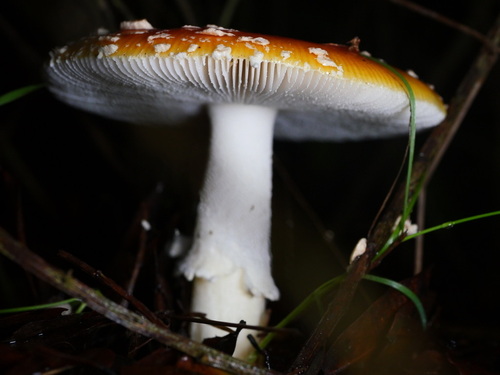
Photo: caseyhh. CC0. Source (inaturalist)
Lookalikes
No lookalikes are recorded for this species yet. That does not mean there are none. Many mushrooms look alike, so never rely on appearance alone.
Season
When this species has been recorded, by month, from open-licensed US and Canada observations. It shows when people report it, not a guarantee it is fruiting.
The highlighted bar is the current month.
View season data as a table
| Month | Records |
|---|---|
| January | 345 |
| February | 42 |
| March | 34 |
| April | 25 |
| May | 73 |
| June | 242 |
| July | 673 |
| August | 1,193 |
| September | 1,336 |
| October | 1,550 |
| November | 697 |
| December | 519 |
Where it is found
States and provinces with the most records. Check the foraging rules for the place you plan to visit.
- California 1,142 records · Foraging rules
- British Columbia 700 records · Foraging rules
- Washington 365 records · Foraging rules
- Ontario 303 records · Foraging rules
- Alaska 293 records · Foraging rules
- Colorado 288 records · Foraging rules
- New York 271 records · Foraging rules
- Oregon 261 records · Foraging rules
- Pennsylvania 215 records · Foraging rules
- Quebec 203 records · Foraging rules
- Massachusetts 191 records · Foraging rules
- Michigan 176 records · Foraging rules
- Minnesota 168 records · Foraging rules
- Ohio 115 records · Foraging rules
- Nova Scotia 112 records · Foraging rules
Show 42 more
- Vermont100 records
- Arizona91 records
- Maine76 records
- Wisconsin75 records
- North Carolina73 records
- New Jersey65 records
- Virginia64 records
- Maryland61 records
- Idaho52 records
- Wyoming43 records
- New Hampshire42 records
- Utah38 records
- New Mexico38 records
- Alberta34 records
- West Virginia29 records
- New Brunswick29 records
- Connecticut28 records
- Illinois21 records
- Indiana21 records
- Prince Edward Island20 records
- Tennessee20 records
- Florida20 records
- Texas20 records
- Delaware19 records
- Manitoba17 records
- Mississippi13 records
- Hawaii12 records
- Louisiana11 records
- South Dakota11 records
- Georgia10 records
- Alabama10 records
- Newfoundland and Labrador10 records
- Montana9 records
- Kentucky9 records
- Saskatchewan8 records
- Northwest Territories8 records
- Rhode Island7 records
- South Carolina6 records
- District of Columbia6 records
- Yukon3 records
- Missouri2 records
- Iowa1 records
Identification traits
| Cap shape | convex |
|---|---|
| Underside (gills, pores or teeth) | gills |
| Ecology | mycorrhizal |
| Stem features | ring and volva |
| Spore print color | white |
Traits vary. Use them to ask better questions of an expert, not to make a final call.
About
Amanita muscaria, commonly known as the fly agaric or fly amanita or simply red toadstool, is a basidiomycete fungus of the genus Amanita. Its name may come from its historical use to kill flies or from the effects it causes (a medieval belief held that flies could enter the head and cause madness). It is a distinctive, large, white-gilled mushroom typically featuring a bright red cap covered with white warts. The complex genetic diversity of A. muscaria suggests that it is a species complex. It is a widely distributed mushroom native to temperate and boreal forests of the Northern Hemisphere, now also naturalised in the Southern Hemisphere, forming symbiotic relationships with various trees and spreading invasively in some regions. Ingestion of the mushroom can cause poisoning, especially in children and those seeking its hallucinogenic effects, due to psychoactive compounds like muscimol and ibotenic acid; however, fatal poisonings are extremely rare. Parboiling reduces toxicity; drying converts ibotenic acid into muscimol while retaining psychoactive effects. Some cultures use it as food after preparation. Indigenous peoples of Siberia used A. muscaria and other Amanita species as an entheogen. It has been controversially linked to Santa Claus, Viking berserkers, Vedic soma, and early Christianity, though evidence is sparse and disputed. Its rise in the 2020s as a hallucinogen has led to governmental scrutiny. A. muscaria has appeared in art and literature since the Renaissance, becoming iconic in fairy tales, children's books, and media like Disney's Fantasia (1940) and the Super Mario video games. It has also influenced literary depictions of altered perception—most notably in Alice's Adventures in Wonderland—and has been referenced in novels by writers including Oliver Goldsmith, Thomas Pynchon, and Alan Garner.
From Wikipedia, CC BY-SA 4.0. Read the original article.
Recent finds
No community finds tagged with this species yet. Log a find.
More in the genus Amanita
- No photo yet
Grisette
Amanita vaginata
Caution -
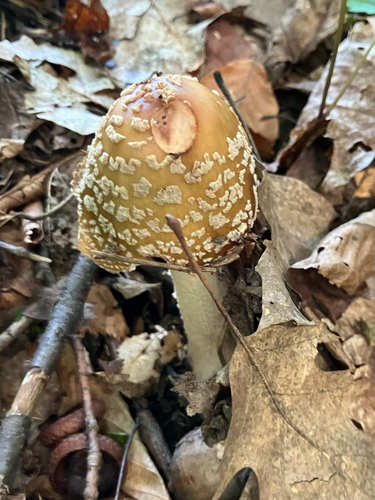
Blusher
Amanita rubescens
Edibility unknown — do not eat -
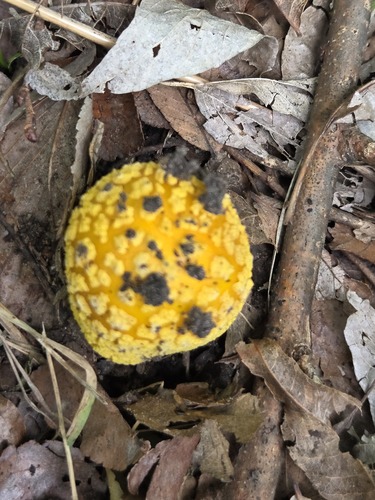
Yellow Patches
Amanita flavoconia
Edibility unknown — do not eat -
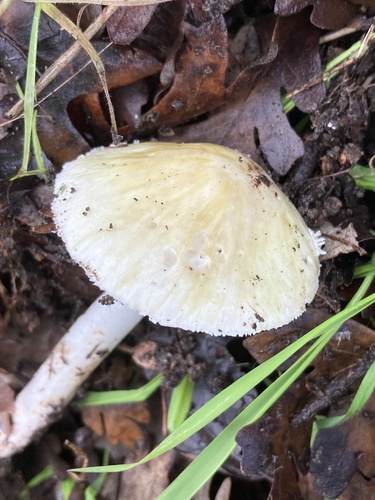
Death Cap
Amanita phalloides
Deadly — can kill -
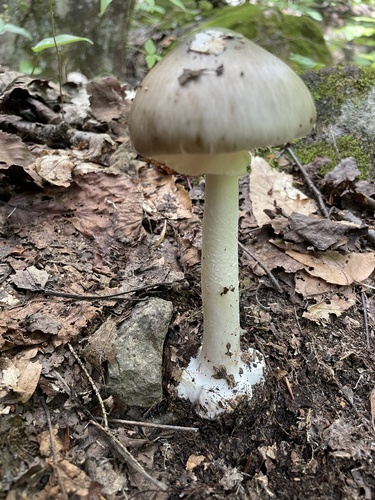
Brown American Star-footed Amanita
Amanita brunnescens
Edibility unknown — do not eat -
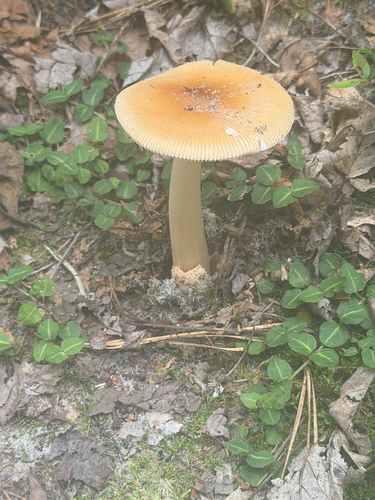
Tawny Grisette
Amanita fulva
Edibility unknown — do not eat -
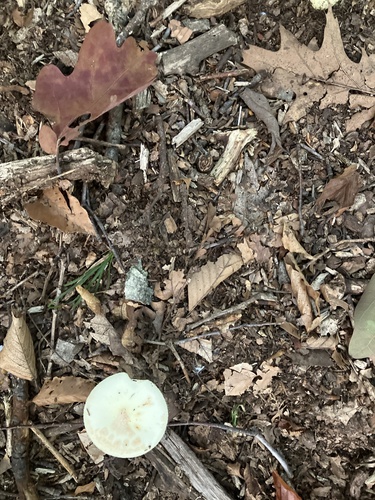
False Deathcap
Amanita citrina
Poisonous -
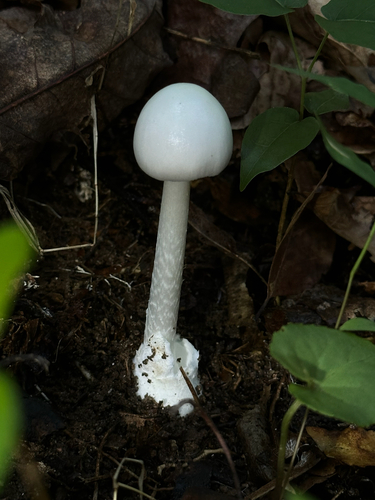
Eastern Destroying Angel Amanita, Eastern North American Destroying Angel, Destroying Angel
Amanita bisporigera
Deadly — can kill
Never eat a wild mushroom based on this site or any app. See safety basics and the disclaimer.