

Yellow Patches
Amanita flavoconia G.F.Atk.
Also called: Yellow Patches, Yellow Wart, Orange Amanita, Yellow-dust Amanita, American Yellow Dust Amanita, yellow dust amanita, yellow spotted amanita
Edibility
Edibility unknown — do not eat
Never eat a wild mushroom based on this site or any app.
Photos
-
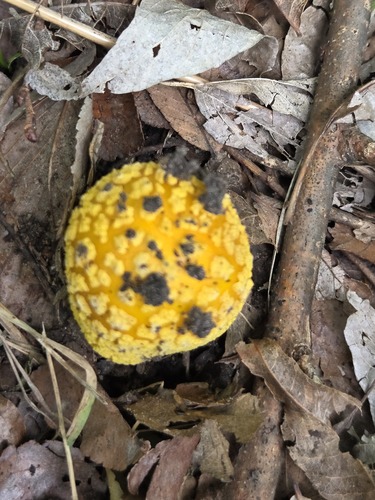
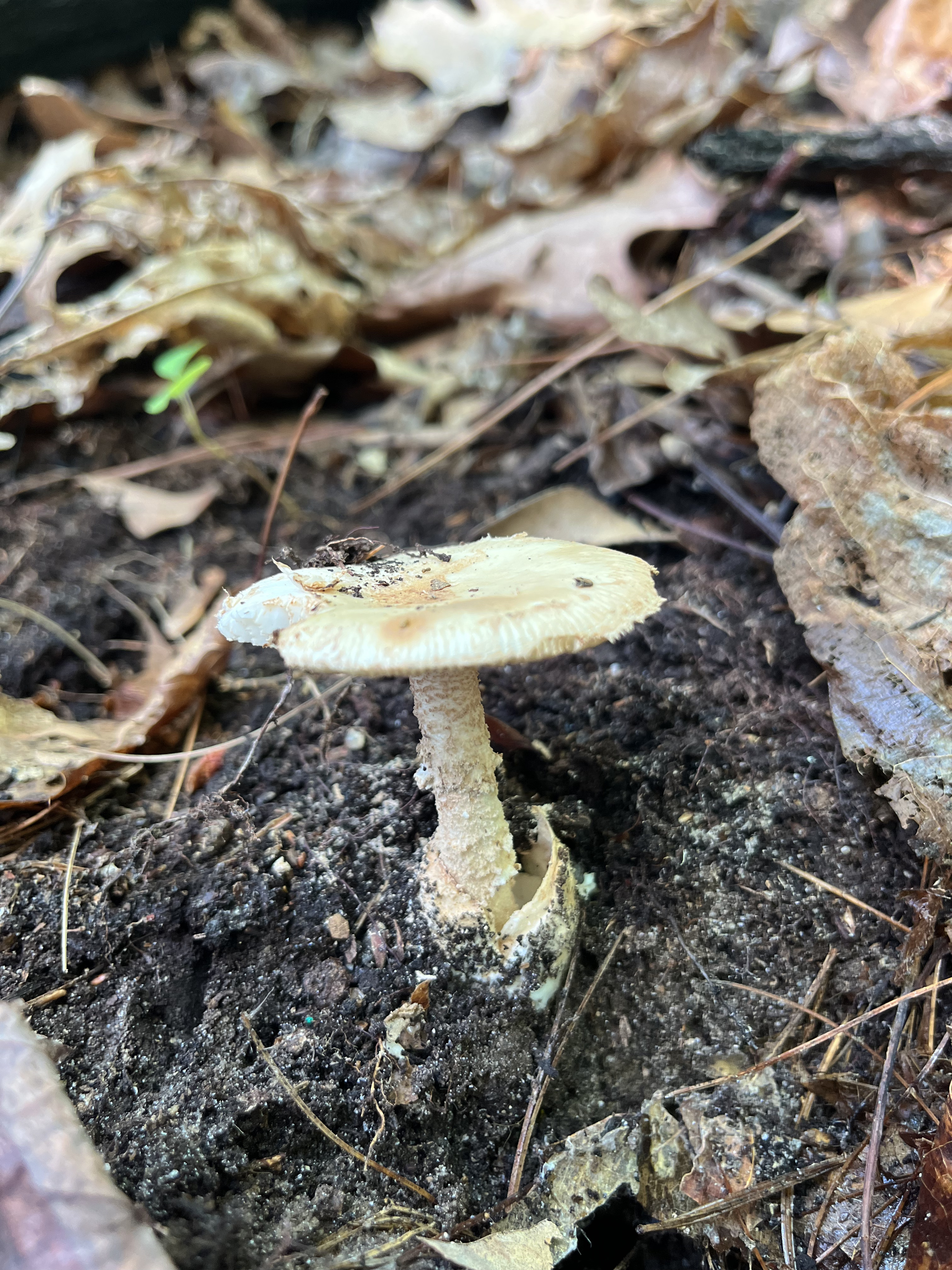
Photo: John Thomlinson. CC-BY. Source (inaturalist) -
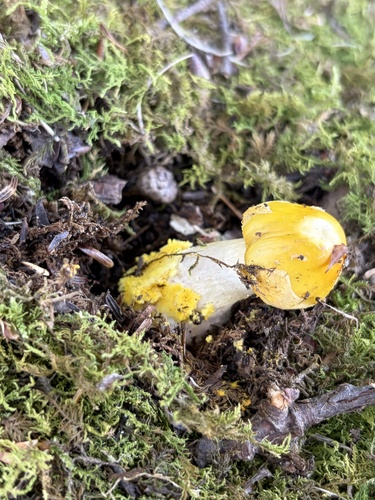
Photo: Julie Travaglini. CC-BY. Source (inaturalist) -
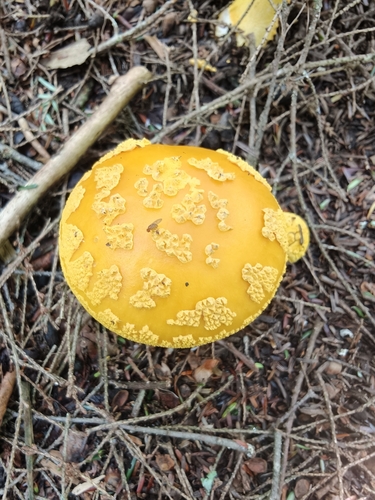
Photo: Daniel Beevers. CC-BY. Source (inaturalist) -
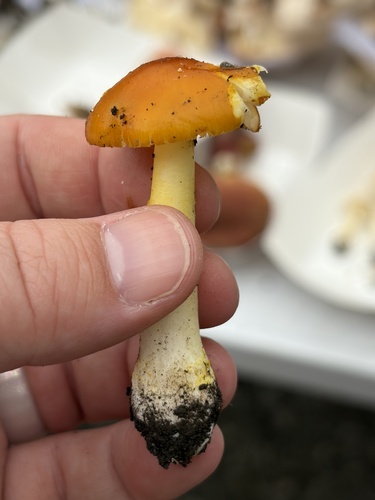
Photo: Julie Travaglini. CC-BY. Source (inaturalist)
Lookalikes
No lookalikes are recorded for this species yet. That does not mean there are none. Many mushrooms look alike, so never rely on appearance alone.
Season
When this species has been recorded, by month, from open-licensed US and Canada observations. It shows when people report it, not a guarantee it is fruiting.
The highlighted bar is the current month.
View season data as a table
| Month | Records |
|---|---|
| January | 2 |
| February | 1 |
| March | 12 |
| April | 5 |
| May | 151 |
| June | 206 |
| July | 659 |
| August | 521 |
| September | 284 |
| October | 153 |
| November | 61 |
| December | 2 |
Where it is found
States and provinces with the most records. Check the foraging rules for the place you plan to visit.
- Pennsylvania 197 records · Foraging rules
- North Carolina 149 records · Foraging rules
- New York 138 records · Foraging rules
- Virginia 95 records · Foraging rules
- Massachusetts 90 records · Foraging rules
- West Virginia 90 records · Foraging rules
- Quebec 86 records · Foraging rules
- Michigan 80 records · Foraging rules
- Vermont 78 records · Foraging rules
- Ontario 76 records · Foraging rules
- Tennessee 57 records · Foraging rules
- Nova Scotia 51 records · Foraging rules
- New Hampshire 48 records · Foraging rules
- Texas 47 records · Foraging rules
- Indiana 46 records · Foraging rules
Show 29 more
- Florida44 records
- Maine36 records
- Ohio33 records
- Minnesota33 records
- Illinois30 records
- Maryland27 records
- Georgia25 records
- New Jersey24 records
- New Brunswick20 records
- Alabama16 records
- Louisiana13 records
- Wisconsin12 records
- Rhode Island12 records
- Mississippi10 records
- Missouri10 records
- Oklahoma10 records
- Iowa9 records
- Arkansas8 records
- Prince Edward Island8 records
- Connecticut6 records
- District of Columbia6 records
- South Carolina6 records
- Kansas4 records
- Newfoundland and Labrador3 records
- Arizona2 records
- California2 records
- Kentucky2 records
- Delaware1 records
- Idaho1 records
Identification traits
| Cap shape | flat |
|---|---|
| Underside (gills, pores or teeth) | gills |
| Ecology | mycorrhizal |
| Stem features | ring and volva |
| Spore print color | white |
Traits vary. Use them to ask better questions of an expert, not to make a final call.
About
Amanita flavoconia, commonly known as yellow patches, yellow wart, orange amanita, yellow-dust amanita or the American yellow dust amanita, is a species of mushroom in the family Amanitaceae. It has an orangish-yellow cap with yellowish-orange patches or warts, a yellowish-orange annulus, and a white to orange stem. Common and widespread throughout eastern North America, it grows on the ground in broad-leaved and mixed forests, especially in mycorrhizal association with hemlock.
From Wikipedia, CC BY-SA 4.0. Read the original article.
Recent finds
No community finds tagged with this species yet. Log a find.
More in the genus Amanita
-

Fly Agaric
Amanita muscaria
Poisonous -
Grisette
Amanita vaginata
Caution -

Blusher
Amanita rubescens
Edibility unknown — do not eat -

Death Cap
Amanita phalloides
Deadly — can kill - No photo yet
Brown American Star-footed Amanita
Amanita brunnescens
Edibility unknown — do not eat - No photo yet
Tawny Grisette
Amanita fulva
Edibility unknown — do not eat - No photo yet
False Deathcap
Amanita citrina
Edibility unknown — do not eat - No photo yet
Eastern Destroying Angel Amanita, Eastern North American Destroying Angel, Destroying Angel
Amanita bisporigera
Edibility unknown — do not eat
Never eat a wild mushroom based on this site or any app. See safety basics and the disclaimer.