

Amanita prairiicola
Amanita prairiicola Peck
Edibility
Edibility unknown — do not eat
Never eat a wild mushroom based on this site or any app.
Lookalikes
No lookalikes are recorded for this species yet. That does not mean there are none. Many mushrooms look alike, so never rely on appearance alone.
Season
When this species has been recorded, by month, from open-licensed US and Canada observations. It shows when people report it, not a guarantee it is fruiting.
The highlighted bar is the current month.
View season data as a table
| Month | Records |
|---|---|
| January | 0 |
| February | 0 |
| March | 0 |
| April | 0 |
| May | 0 |
| June | 9 |
| July | 1 |
| August | 3 |
| September | 8 |
| October | 0 |
| November | 1 |
| December | 0 |
Where it is found
States and provinces with the most records. Check the foraging rules for the place you plan to visit.
- Kansas 12 records · Foraging rules
- Colorado 6 records · Foraging rules
- Wyoming 3 records · Foraging rules
- North Carolina 1 records · Foraging rules
- North Dakota 1 records · Foraging rules
Identification traits
| Cap shape | convex |
|---|---|
| Underside (gills, pores or teeth) | gills |
| Spore print color | white |
Traits vary. Use them to ask better questions of an expert, not to make a final call.
About
Amanita prairiicola is an American fungus. Its cap is white, 6–20 centimetres (2+1⁄2–8 inches) across, and usually flat to convex. The gills are a cream to gold hue, free, crowded, and broad. The stalk is 15–20 by 2–4 cm (6–8 by 1–1+1⁄2 in), and is also cream colored. The species is native to western North America from Oregon to Arizona and eastward to Kansas. One specimen has been described in Argentina, though it may have been imported with soil. Unlike most Amanita species, it does not appear to need a mycorrhizal host and has been found in areas with no potential for a host, such as open cultivated fields and deserts.
From Wikipedia, CC BY-SA 4.0. Read the original article.
Recent finds
No community finds tagged with this species yet. Log a find.
More in the genus Amanita
-
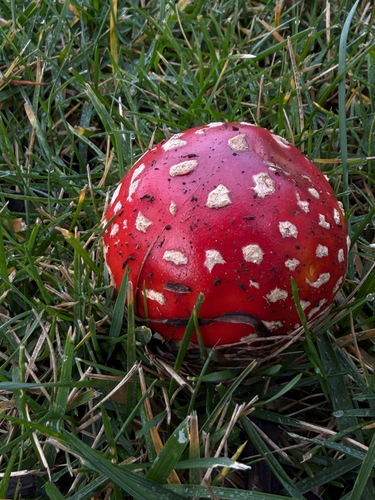
Fly Agaric
Amanita muscaria
Poisonous - No photo yet
Grisette
Amanita vaginata
Caution -
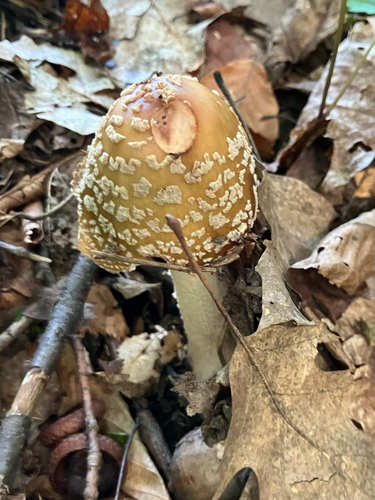
Blusher
Amanita rubescens
Edibility unknown — do not eat -
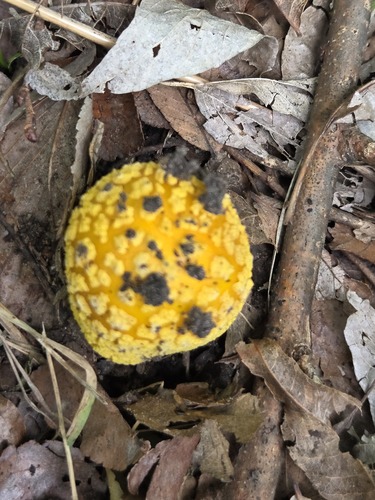
Yellow Patches
Amanita flavoconia
Edibility unknown — do not eat -
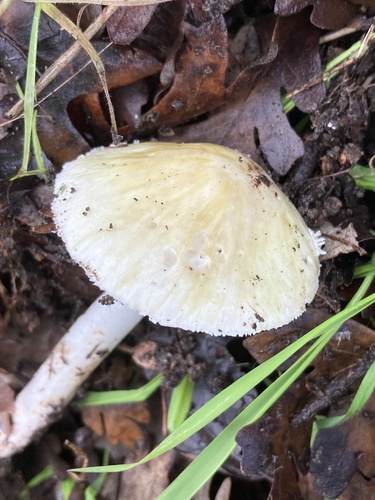
Death Cap
Amanita phalloides
Deadly — can kill -
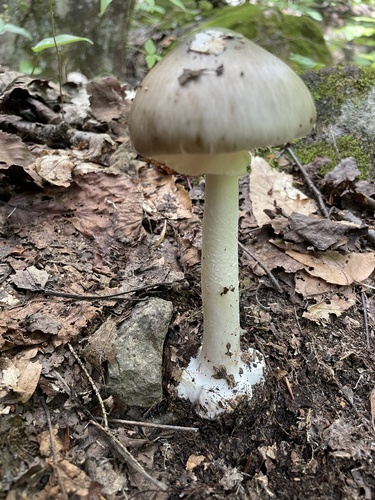
Brown American Star-footed Amanita
Amanita brunnescens
Edibility unknown — do not eat -
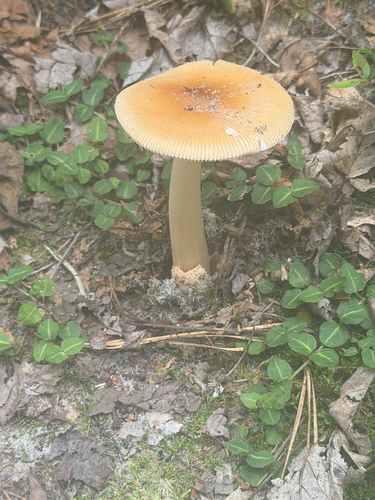
Tawny Grisette
Amanita fulva
Edibility unknown — do not eat -
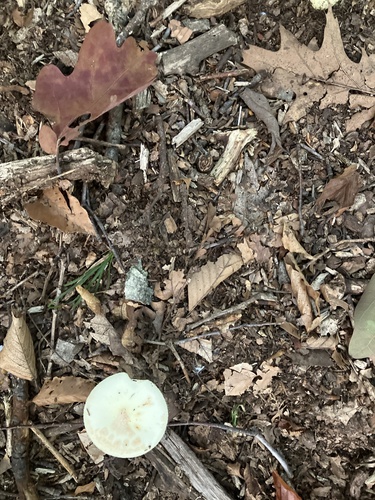
False Deathcap
Amanita citrina
Poisonous
Never eat a wild mushroom based on this site or any app. See safety basics and the disclaimer.