

Farinose Cartilage Lichen
Ramalina farinacea (L.) Ach.
Also called: Dotted Ramalina
Edibility
Edibility unknown — do not eat
Never eat a wild mushroom based on this site or any app.
Photos
-
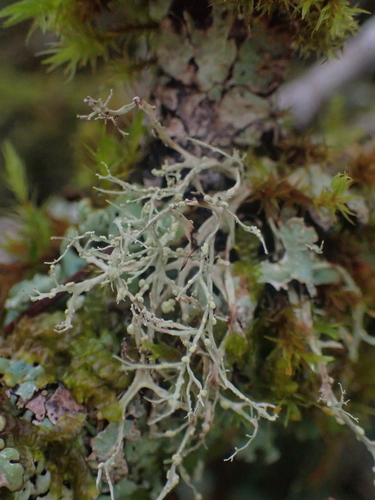
Photo: Deniz Wilson. CC0. Source (inaturalist) -
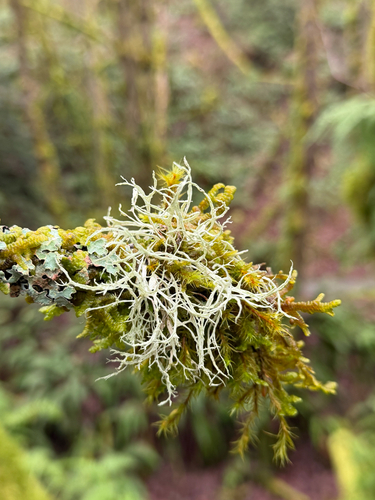
Photo: Evelyn Lazzaretti 🏳️⚧️. CC0. Source (inaturalist) -
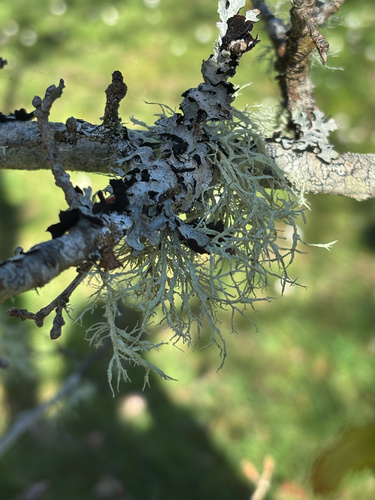
Photo: Abby Hyde. CC-BY. Source (inaturalist) -
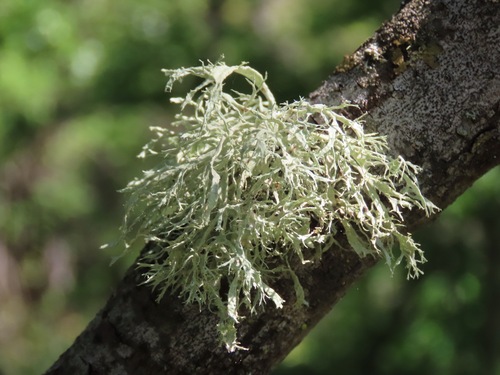
Photo: Erin Springinotic. CC0. Source (inaturalist)
Lookalikes
No lookalikes are recorded for this species yet. That does not mean there are none. Many mushrooms look alike, so never rely on appearance alone.
Season
When this species has been recorded, by month, from open-licensed US and Canada observations. It shows when people report it, not a guarantee it is fruiting.
The highlighted bar is the current month.
View season data as a table
| Month | Records |
|---|---|
| January | 121 |
| February | 126 |
| March | 155 |
| April | 144 |
| May | 172 |
| June | 258 |
| July | 378 |
| August | 349 |
| September | 198 |
| October | 105 |
| November | 117 |
| December | 136 |
Where it is found
States and provinces with the most records. Check the foraging rules for the place you plan to visit.
- British Columbia 626 records · Foraging rules
- California 424 records · Foraging rules
- Washington 341 records · Foraging rules
- Oregon 270 records · Foraging rules
- Alaska 103 records · Foraging rules
- Maine 96 records · Foraging rules
- Quebec 74 records · Foraging rules
- Newfoundland and Labrador 65 records · Foraging rules
- Massachusetts 58 records · Foraging rules
- Michigan 47 records · Foraging rules
- Idaho 40 records · Foraging rules
- Nova Scotia 33 records · Foraging rules
- Manitoba 30 records · Foraging rules
- Ontario 30 records · Foraging rules
- New Hampshire 15 records · Foraging rules
Show 27 more
- Texas14 records
- Connecticut11 records
- Vermont11 records
- Prince Edward Island11 records
- Alberta10 records
- New Brunswick8 records
- Montana6 records
- Hawaii5 records
- Iowa4 records
- Wisconsin4 records
- New Jersey3 records
- Rhode Island3 records
- Tennessee3 records
- Louisiana2 records
- New Mexico2 records
- New York2 records
- Virginia2 records
- Arizona1 records
- Illinois1 records
- Minnesota1 records
- Missouri1 records
- Northwest Territories1 records
- Ohio1 records
- Pennsylvania1 records
- West Virginia1 records
- Wyoming1 records
- Yukon1 records
About
Ramalina farinacea is a species of fruticose lichen in the family Ramalinaceae. It appears as small, shrub-like tufts typically 3–6 cm (1.2–2.4 in) long that hang from tree branches and trunks, particularly in woodland areas and on isolated trees. Distinguished by its flattened, yellow-green to grey-green branches with powdery white spots along the edges, this lichen is widespread throughout temperate regions, especially in coastal areas with oceanic climates. First scientifically described by Carl Linnaeus in 1753 and later reclassified by Erik Acharius in 1810, it is remarkably tolerant of air pollution compared to other lichens, which enables it to thrive in environments where similar species cannot survive. While primarily reproducing through the dispersal of powdery particles called soredia, it occasionally produces disc-shaped fruiting bodies (apothecia) along its branches.
From Wikipedia, CC BY-SA 4.0. Read the original article.
More in the genus Ramalina


Never eat a wild mushroom based on this site or any app. See safety basics and the disclaimer.