

Sinewed Bushy Lichen
Ramalina americana Hale
Also called: Sinewed Bush Lichen, American cartilage lichen
Edibility
Edibility unknown — do not eat
Never eat a wild mushroom based on this site or any app.
Photos
-
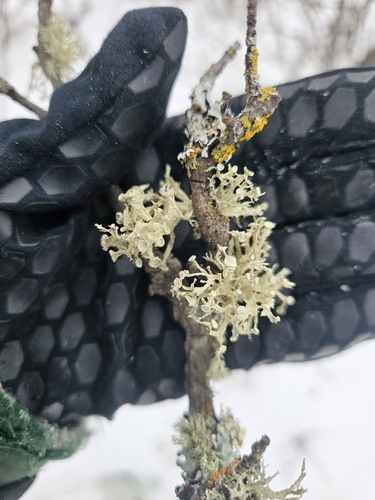
Photo: Norma Malinowski. CC-BY. Source (inaturalist) -
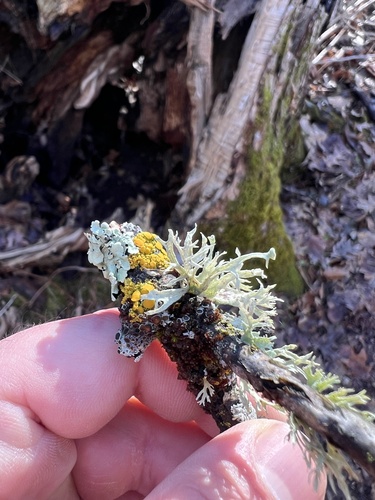
Photo: Spencer Bierman. CC-BY. Source (inaturalist) -
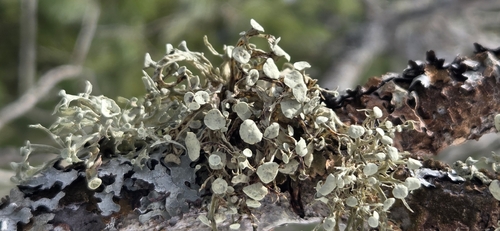
Photo: WF_MI. CC-BY. Source (inaturalist) -
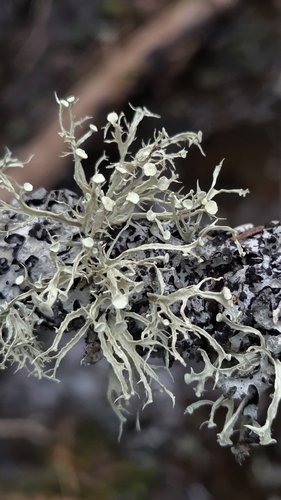
Photo: Asia Ruby Fuoco. CC-BY. Source (inaturalist)
Lookalikes
No lookalikes are recorded for this species yet. That does not mean there are none. Many mushrooms look alike, so never rely on appearance alone.
Season
When this species has been recorded, by month, from open-licensed US and Canada observations. It shows when people report it, not a guarantee it is fruiting.
The highlighted bar is the current month.
View season data as a table
| Month | Records |
|---|---|
| January | 43 |
| February | 37 |
| March | 73 |
| April | 135 |
| May | 192 |
| June | 249 |
| July | 408 |
| August | 248 |
| September | 142 |
| October | 137 |
| November | 62 |
| December | 57 |
Where it is found
States and provinces with the most records. Check the foraging rules for the place you plan to visit.
- Minnesota 399 records · Foraging rules
- Michigan 233 records · Foraging rules
- Wisconsin 172 records · Foraging rules
- North Carolina 100 records · Foraging rules
- Massachusetts 83 records · Foraging rules
- Maine 76 records · Foraging rules
- Ontario 75 records · Foraging rules
- Virginia 66 records · Foraging rules
- Iowa 63 records · Foraging rules
- New Hampshire 57 records · Foraging rules
- Tennessee 56 records · Foraging rules
- New York 50 records · Foraging rules
- West Virginia 48 records · Foraging rules
- New Brunswick 33 records · Foraging rules
- North Dakota 32 records · Foraging rules
Show 35 more
- Louisiana31 records
- Connecticut31 records
- Ohio29 records
- Missouri24 records
- Arkansas23 records
- Texas22 records
- Illinois21 records
- Vermont20 records
- Quebec20 records
- New Jersey18 records
- Pennsylvania18 records
- Nova Scotia13 records
- Maryland13 records
- Kentucky12 records
- Alabama12 records
- Georgia10 records
- South Dakota10 records
- Florida10 records
- Kansas7 records
- Rhode Island7 records
- Mississippi6 records
- Alberta6 records
- District of Columbia5 records
- Oklahoma5 records
- New Mexico4 records
- Delaware4 records
- Washington3 records
- Alaska2 records
- South Carolina2 records
- California2 records
- Prince Edward Island2 records
- Manitoba2 records
- Arizona1 records
- British Columbia1 records
- Indiana1 records
About
Ramalina americana, commonly known as the sinewed ramalina, is a pale green fruticose lichen that is found across the Northern US Midwest, extending into Southern Canada and the Eastern Seaboard. It is characterized morphologically by the presence of pseudocyphellae, straight spores, and its unique chemical diversity.
From Wikipedia, CC BY-SA 4.0. Read the original article.
More in the genus Ramalina
-

Lace Lichen
Ramalina menziesii
Edibility unknown — do not eat -

Farinose Cartilage Lichen
Ramalina farinacea
Edibility unknown — do not eat - No photo yet
Rock Bushy Lichen
Ramalina intermedia
Edibility unknown — do not eat - No photo yet
Punctured Bushy Lichen
Ramalina dilacerata
Edibility unknown — do not eat - No photo yet
Frayed Ribbon Lichen
Ramalina roesleri
Edibility unknown — do not eat - No photo yet
Southern Strap
Ramalina stenospora
Edibility unknown — do not eat - No photo yet
Western Strap Lichen
Ramalina leptocarpha
Edibility unknown — do not eat - No photo yet
cartilage lichen
Ramalina complanata
Edibility unknown — do not eat
Never eat a wild mushroom based on this site or any app. See safety basics and the disclaimer.