

rosette lichen
Physcia millegrana Degel.
Also called: Mealy Rosette Lichen
Edibility
Edibility unknown — do not eat
Never eat a wild mushroom based on this site or any app.
Photos
-
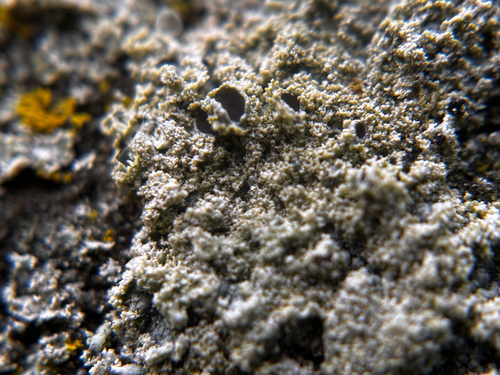
Photo: Simon Conover. CC-BY. Source (inaturalist) -
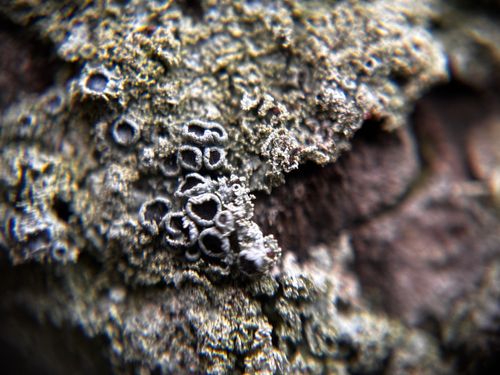
Photo: Simon Conover. CC-BY. Source (inaturalist) -
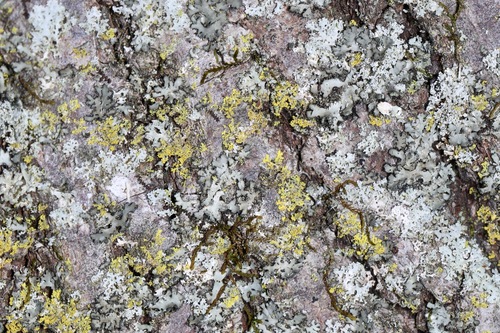
Photo: Cole Wolf. CC-BY. Source (inaturalist) -
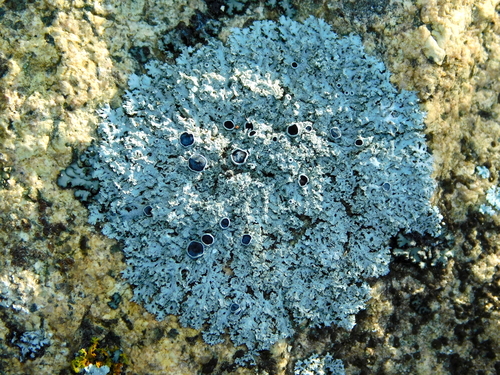
Photo: Michael J. Papay. CC-BY. Source (inaturalist)
Lookalikes
No lookalikes are recorded for this species yet. That does not mean there are none. Many mushrooms look alike, so never rely on appearance alone.
Season
When this species has been recorded, by month, from open-licensed US and Canada observations. It shows when people report it, not a guarantee it is fruiting.
The highlighted bar is the current month.
View season data as a table
| Month | Records |
|---|---|
| January | 187 |
| February | 144 |
| March | 242 |
| April | 381 |
| May | 360 |
| June | 473 |
| July | 554 |
| August | 476 |
| September | 325 |
| October | 298 |
| November | 237 |
| December | 158 |
Where it is found
States and provinces with the most records. Check the foraging rules for the place you plan to visit.
- Minnesota 382 records · Foraging rules
- New York 322 records · Foraging rules
- Pennsylvania 277 records · Foraging rules
- Ohio 249 records · Foraging rules
- Maryland 248 records · Foraging rules
- Michigan 238 records · Foraging rules
- New Jersey 225 records · Foraging rules
- Massachusetts 203 records · Foraging rules
- Ontario 179 records · Foraging rules
- Wisconsin 174 records · Foraging rules
- Iowa 151 records · Foraging rules
- Connecticut 126 records · Foraging rules
- North Carolina 124 records · Foraging rules
- Kansas 120 records · Foraging rules
- Virginia 106 records · Foraging rules
Show 32 more
- Indiana93 records
- Illinois79 records
- Missouri73 records
- West Virginia66 records
- Kentucky61 records
- Quebec58 records
- Maine47 records
- Delaware47 records
- Tennessee44 records
- Vermont41 records
- Georgia26 records
- Alabama21 records
- District of Columbia20 records
- Rhode Island14 records
- New Hampshire14 records
- Arkansas11 records
- Louisiana11 records
- California11 records
- Nova Scotia11 records
- South Dakota11 records
- Oklahoma10 records
- South Carolina10 records
- Nebraska9 records
- Texas4 records
- Mississippi4 records
- Alberta3 records
- North Dakota2 records
- Manitoba2 records
- Hawaii1 records
- Washington1 records
- British Columbia1 records
- New Brunswick1 records
About
Physcia millegrana, commonly known as the mealy rosette lichen, is a species of corticolous (bark-dwelling), foliose lichen in the family Physciaceae. It is common in the eastern United States. It was formally described as a new species in 1940 by the lichenologist Gunnar Degelius. This gray lichen with a pale underside is characterized by its coarse soredia (granular vegetative propagules) that are densely distributed the margins of lobes, giving them a somewhat ruffled appearance. Secondary metabolites (lichen products) found in Physcia millegrana include atraric acid, methyl 3-hydroxy orsellinate, and divaricatic acid.
From Wikipedia, CC BY-SA 4.0. Read the original article.
More in the genus Physcia
-

Star Rosette Lichen
Physcia stellaris
Edibility unknown — do not eat -

Hoary Rosette Lichen
Physcia aipolia
Edibility unknown — do not eat -

Hooded Rosette Lichen
Physcia adscendens
Edibility unknown — do not eat -

American Rosette Lichen
Physcia americana
Edibility unknown — do not eat - No photo yet
Blue-gray Rosette Lichen
Physcia caesia
Edibility unknown — do not eat - No photo yet
Powder-tipped Rosette Lichen
Physcia dubia
Edibility unknown — do not eat - No photo yet
slender rosette lichen
Physcia subtilis
Edibility unknown — do not eat - No photo yet
Black-eyed Rosette Lichen
Physcia phaea
Edibility unknown — do not eat
Never eat a wild mushroom based on this site or any app. See safety basics and the disclaimer.