

Hooded Rosette Lichen
Physcia adscendens H.Olivier
Also called: Rosette lichen
Edibility
Edibility unknown — do not eat
Never eat a wild mushroom based on this site or any app.
Photos
-
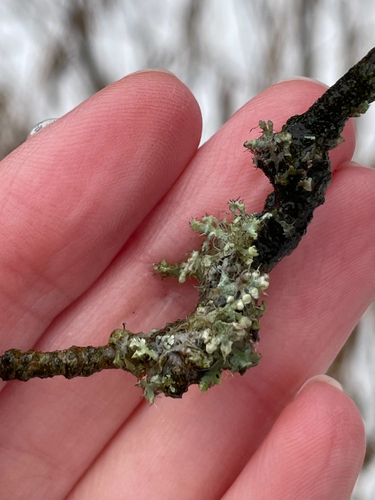
Photo: nuthatchnicole. CC-BY. Source (inaturalist) -
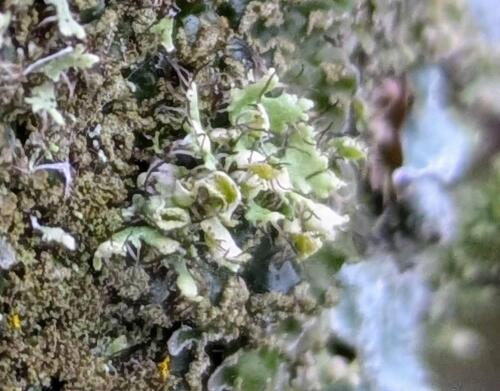
Photo: machaut2. CC-BY. Source (inaturalist) -
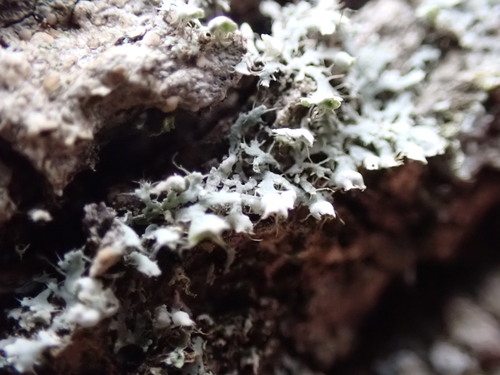
Photo: Randal. CC0. Source (inaturalist) -
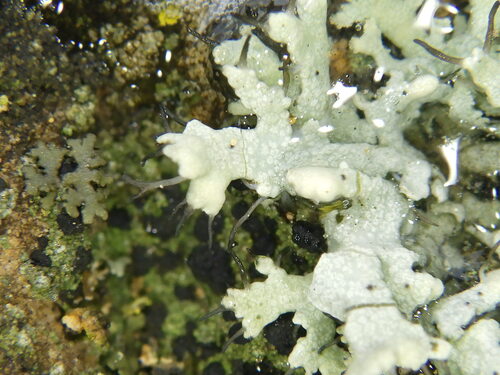
Photo: Jonny Tostenson. CC0. Source (inaturalist)
Lookalikes
No lookalikes are recorded for this species yet. That does not mean there are none. Many mushrooms look alike, so never rely on appearance alone.
Season
When this species has been recorded, by month, from open-licensed US and Canada observations. It shows when people report it, not a guarantee it is fruiting.
The highlighted bar is the current month.
View season data as a table
| Month | Records |
|---|---|
| January | 58 |
| February | 71 |
| March | 87 |
| April | 166 |
| May | 226 |
| June | 427 |
| July | 500 |
| August | 386 |
| September | 189 |
| October | 137 |
| November | 91 |
| December | 47 |
Where it is found
States and provinces with the most records. Check the foraging rules for the place you plan to visit.
- Minnesota 334 records · Foraging rules
- Michigan 308 records · Foraging rules
- Ontario 265 records · Foraging rules
- California 231 records · Foraging rules
- North Dakota 152 records · Foraging rules
- British Columbia 145 records · Foraging rules
- Massachusetts 125 records · Foraging rules
- South Dakota 101 records · Foraging rules
- Washington 86 records · Foraging rules
- Maine 70 records · Foraging rules
- Wisconsin 69 records · Foraging rules
- Quebec 59 records · Foraging rules
- Alberta 54 records · Foraging rules
- New York 47 records · Foraging rules
- Colorado 39 records · Foraging rules
Show 37 more
- Oregon37 records
- Connecticut28 records
- Wyoming27 records
- Nova Scotia25 records
- Nebraska21 records
- Pennsylvania20 records
- Alaska20 records
- Montana19 records
- Iowa19 records
- Manitoba18 records
- Idaho15 records
- New Mexico12 records
- Newfoundland and Labrador10 records
- Yukon9 records
- Illinois9 records
- Indiana8 records
- Ohio8 records
- New Jersey7 records
- New Hampshire7 records
- Vermont7 records
- Saskatchewan6 records
- Nunavut5 records
- New Brunswick5 records
- Utah3 records
- Rhode Island3 records
- Prince Edward Island3 records
- Hawaii2 records
- Kansas2 records
- Nevada2 records
- Arizona2 records
- Alabama1 records
- Maryland1 records
- Missouri1 records
- Northwest Territories1 records
- Tennessee1 records
- Texas1 records
- West Virginia1 records
About
Physcia adscendens, the hooded rosette lichen, is a species of foliose lichen in the family Physciaceae. Originally described in 1882, this widely distributed lichen is characterised by its distinctive hood-shaped lobes that curl upward at the tips and long dark-tipped hairs growing from underneath. The species has a broad ecological tolerance and can colonise various substrates, from limestone monuments to tree bark, contributing to its success as a pioneer species following environmental disturbances.
From Wikipedia, CC BY-SA 4.0. Read the original article.
More in the genus Physcia


Never eat a wild mushroom based on this site or any app. See safety basics and the disclaimer.