

Peltigera cinnamomea
Peltigera cinnamomea Goward, 1994
Edibility
Edibility unknown — do not eat
Never eat a wild mushroom based on this site or any app.
Lookalikes
No lookalikes are recorded for this species yet. That does not mean there are none. Many mushrooms look alike, so never rely on appearance alone.
Season
When this species has been recorded, by month, from open-licensed US and Canada observations. It shows when people report it, not a guarantee it is fruiting.
The highlighted bar is the current month.
View season data as a table
| Month | Records |
|---|---|
| January | 1 |
| February | 0 |
| March | 1 |
| April | 3 |
| May | 3 |
| June | 7 |
| July | 42 |
| August | 23 |
| September | 5 |
| October | 3 |
| November | 0 |
| December | 0 |
Where it is found
States and provinces with the most records. Check the foraging rules for the place you plan to visit.
- British Columbia 63 records · Foraging rules
- Alaska 8 records · Foraging rules
- Washington 6 records · Foraging rules
- Alberta 4 records · Foraging rules
- Oregon 4 records · Foraging rules
- Ontario 1 records · Foraging rules
About
Peltigera cinnamomea, commonly known as the cinnamon-pelt lichen, is a muscicolous (moss-dwelling), leafy lichen in the family Peltigeraceae. The Canadian lichenologist Trevor Goward formally described the species in 1995. The lichen is found in northwestern North America's forested regions, particularly in the unique montane and subalpine forest communities of the northern Rocky Mountains. Peltigera cinnamomea grows under prolonged snow cover, surviving well into spring. This trait distinguishes it from many other Peltigera species in similar North American forest ecosystems. Peltigera cinnamomea forms a specialised symbiotic relationship with specific strains of the cyanobacterium Nostoc, enabling it to fix atmospheric nitrogen, crucial for survival in nutrient-poor environments. This lichen is part of the broadly defined species complex centred around the widely distributed Peltigera canina. Within this complex, P. cinnamomea falls under the CICADE group, indicating a preference for moist, woodland habitats. Characterised by its leafy thallus, which is loosely attached to its substrate, P. cinnamomea typically measures 10–30 cm (4–12 in) in diameter. The thallus has a distinctive appearance, with a dull, billowed upper surface covered in a soft, dense growth of hairs. The species name cinnamomea is reflected in the pale tan undersurface of the thallus, featuring rusty-brown, cinnamon-coloured veins. The lichen produces apothecia (fruiting bodies) that bear clear ascospores with three internal partitions.
From Wikipedia, CC BY-SA 4.0. Read the original article.
Recent finds
No community finds tagged with this species yet. Log a find.
More in the genus Peltigera
-
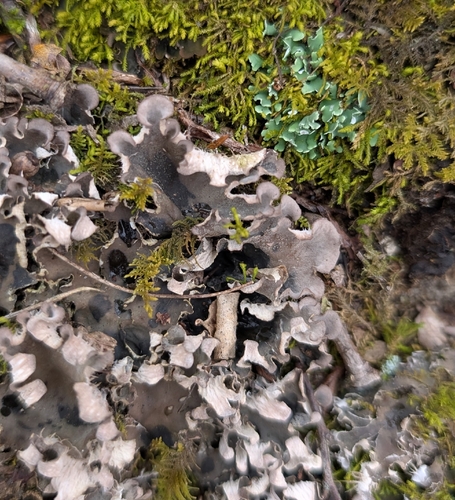
Dog-lichen
Peltigera canina
Edibility unknown — do not eat -
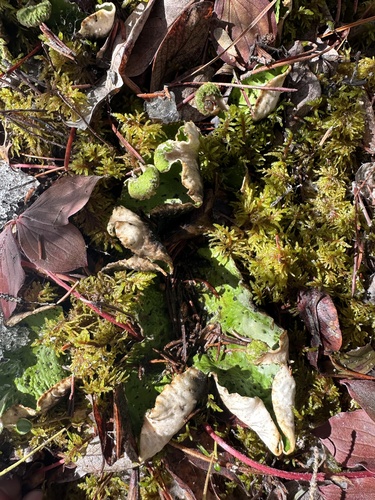
Common Freckle Pelt Lichen
Peltigera aphthosa
Edibility unknown — do not eat -
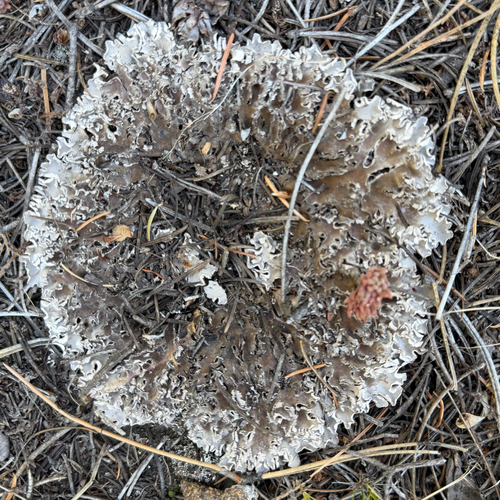
Field Dog-lichen
Peltigera rufescens
Edibility unknown — do not eat -
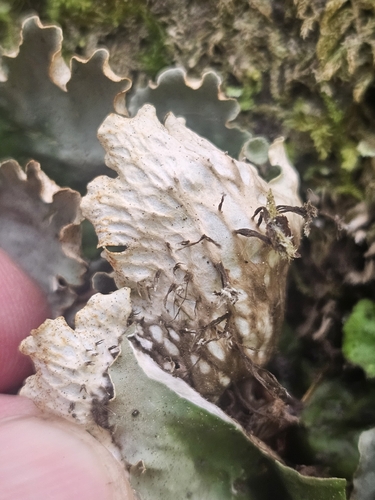
ruffled freckled pelt lichen
Peltigera leucophlebia
Edibility unknown — do not eat -
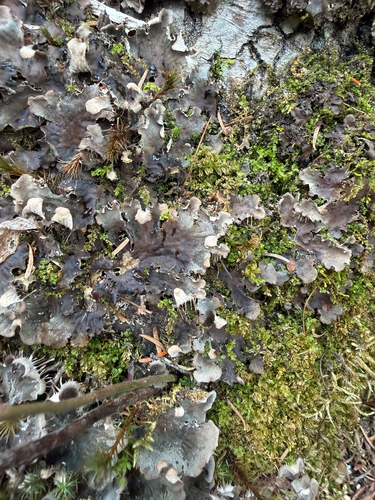
scaly pelt lichen
Peltigera praetextata
Edibility unknown — do not eat -
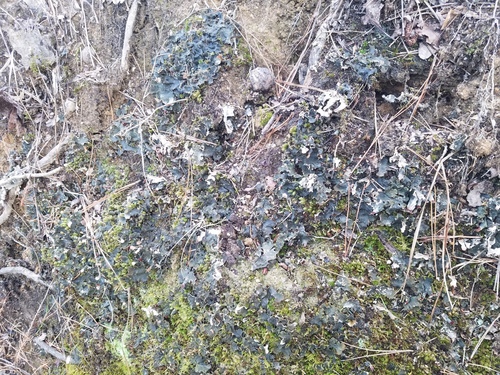
Many-fruited Pelt Lichen
Peltigera polydactylon
Edibility unknown — do not eat -
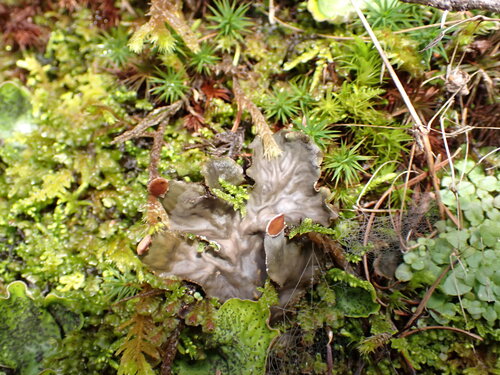
membranous pelt lichen
Peltigera membranacea
Edibility unknown — do not eat -
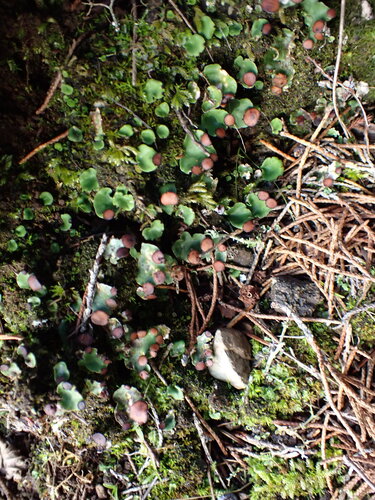
Pixie Gowns Lichen
Peltigera venosa
Edibility unknown — do not eat
Never eat a wild mushroom based on this site or any app. See safety basics and the disclaimer.