

chestnut pelt lichen
Peltigera castanea Goward, Goffinet & Miądl.
Edibility
Edibility unknown — do not eat
Never eat a wild mushroom based on this site or any app.
Lookalikes
No lookalikes are recorded for this species yet. That does not mean there are none. Many mushrooms look alike, so never rely on appearance alone.
Season
When this species has been recorded, by month, from open-licensed US and Canada observations. It shows when people report it, not a guarantee it is fruiting.
The highlighted bar is the current month.
View season data as a table
| Month | Records |
|---|---|
| January | 0 |
| February | 0 |
| March | 0 |
| April | 0 |
| May | 0 |
| June | 0 |
| July | 1 |
| August | 0 |
| September | 0 |
| October | 0 |
| November | 0 |
| December | 0 |
Where it is found
States and provinces with the most records. Check the foraging rules for the place you plan to visit.
- British Columbia 1 records · Foraging rules
About
Peltigera castanea is a species of terricolous and muscicolous (ground- and moss-dwelling), foliose lichen in the family Peltigeraceae. Described as a new species in 2003, it is part of the taxonomically challenging species complex centred around Peltigera didactyla. Recognised based on phylogenetic studies that highlighted its unique genetic markers, P. castanea is distinguished by its dark, chestnut-coloured upper surface, which inspired its vernacular name, chestnut pelt lichen. Its known distribution includes North America (British Columbia, Western Canada), Asia (China and Siberia), Europe (Estonia), Greenland, and the Antarctic. The conservation status of Peltigera castanea varies regionally, from being critically imperiled in British Columbia and Yukon to critically endangered in Estonia due to significant habitat degradation and restricted population size. Peltigera castanea is distinguished by its foliose, leaf-like thallus that loosely attaches to its substrate. It covers up to 30 cm (12 in) in diameter, comprising stiff, overlapping lobes that often curl upwards. Its distinctive upper surface is chestnut-brown, turning pale bluish-grey when sheltered, and features granular soredia for vegetative reproduction, housed within irregularly shaped soralia. The lichen's densely veined lower surface transitions from white to black, with tufted rhizines that become woolly towards the centre. Compared to related species in the genus Peltigera, such as P. extenuata and P. didactyla, P. castanea has a smooth, shiny, mostly non-tomentose upper cortex, darkening veins, and flocculent, often tufted rhizines, whereas its relatives show variations in lobe concavity and surface texture, including the presence of apothecia (fruiting bodies).
From Wikipedia, CC BY-SA 4.0. Read the original article.
Recent finds
No community finds tagged with this species yet. Log a find.
More in the genus Peltigera
-
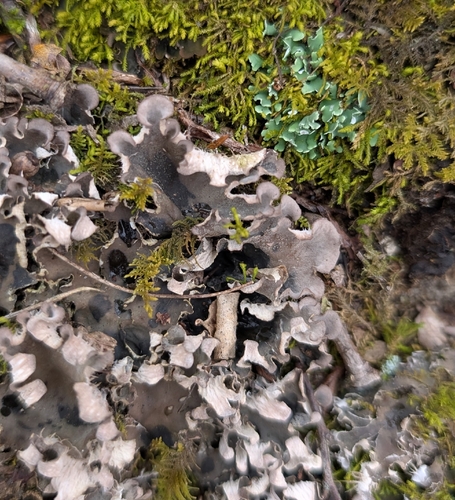
Dog-lichen
Peltigera canina
Edibility unknown — do not eat -
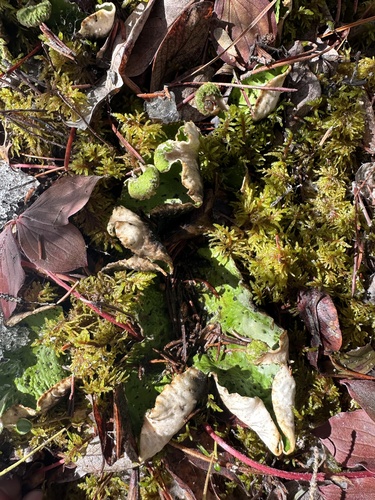
Common Freckle Pelt Lichen
Peltigera aphthosa
Edibility unknown — do not eat -
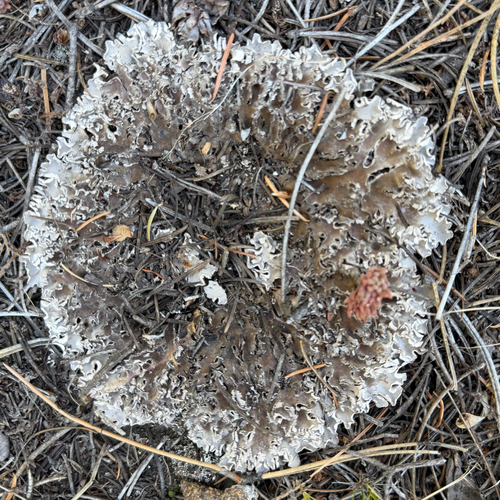
Field Dog-lichen
Peltigera rufescens
Edibility unknown — do not eat -
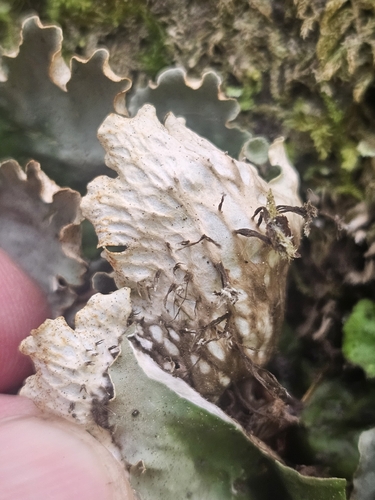
ruffled freckled pelt lichen
Peltigera leucophlebia
Edibility unknown — do not eat -
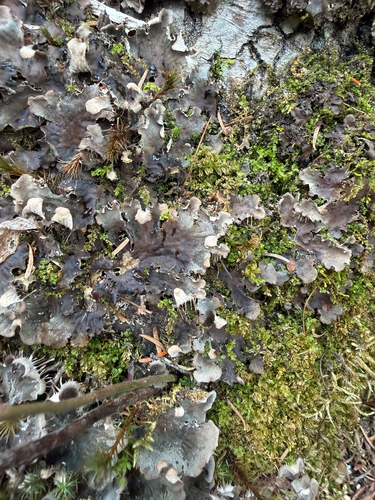
scaly pelt lichen
Peltigera praetextata
Edibility unknown — do not eat -
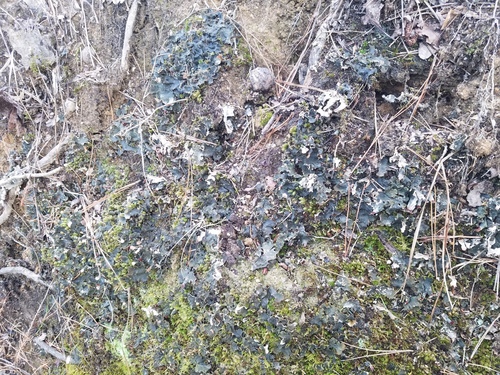
Many-fruited Pelt Lichen
Peltigera polydactylon
Edibility unknown — do not eat -
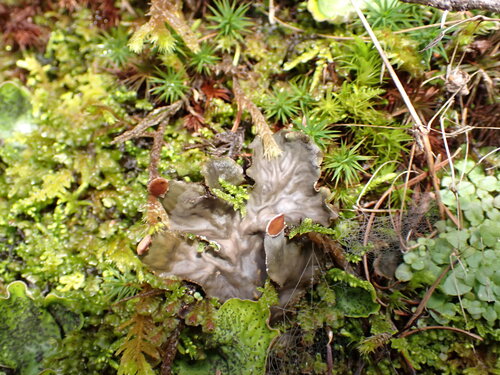
membranous pelt lichen
Peltigera membranacea
Edibility unknown — do not eat -
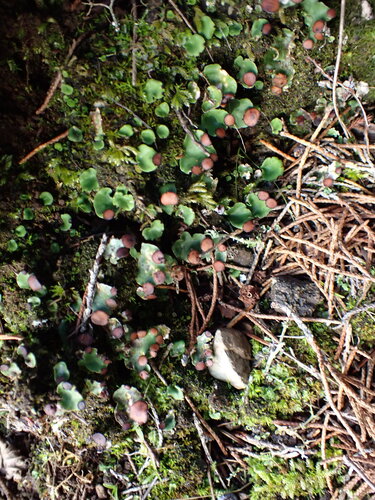
Pixie Gowns Lichen
Peltigera venosa
Edibility unknown — do not eat
Never eat a wild mushroom based on this site or any app. See safety basics and the disclaimer.