

Burgess' skin lichen
Leptogium burgessii (L.) Mont.
Edibility
Edibility unknown — do not eat
Never eat a wild mushroom based on this site or any app.
Lookalikes
No lookalikes are recorded for this species yet. That does not mean there are none. Many mushrooms look alike, so never rely on appearance alone.
Season
When this species has been recorded, by month, from open-licensed US and Canada observations. It shows when people report it, not a guarantee it is fruiting.
The highlighted bar is the current month.
View season data as a table
| Month | Records |
|---|---|
| January | 0 |
| February | 0 |
| March | 0 |
| April | 0 |
| May | 0 |
| June | 0 |
| July | 0 |
| August | 0 |
| September | 0 |
| October | 0 |
| November | 0 |
| December | 1 |
Where it is found
States and provinces with the most records. Check the foraging rules for the place you plan to visit.
- Pennsylvania 2 records · Foraging rules
- West Virginia 2 records · Foraging rules
About
Leptogium burgessii is a species of foliose lichen in the family Collemataceae. The species was originally described by Carl Linnaeus in 1774 and transferred to Leptogium by Camille Montagne in 1840. It forms leafy greyish to brownish patches distinguished by a velvety lower surface covered with short cream-coloured hairs composed of spherical cells. In Europe, L. burgessii has an oceanic Atlantic distribution, occurring from the Canary Islands through north-western Iberia to south-western Norway, where it grows on tree bark and mossy rocks in humid forests. The lichen requires high air humidity and is typically found in well-preserved old deciduous woodland, often growing over mosses on broad-leaved trees such as ash. Although the species has been reported from other continents including Africa, Asia, and South America, molecular studies indicate that many extra-European records may represent closely related but distinct species.
From Wikipedia, CC BY-SA 4.0. Read the original article.
Recent finds
No community finds tagged with this species yet. Log a find.
More in the genus Leptogium
-
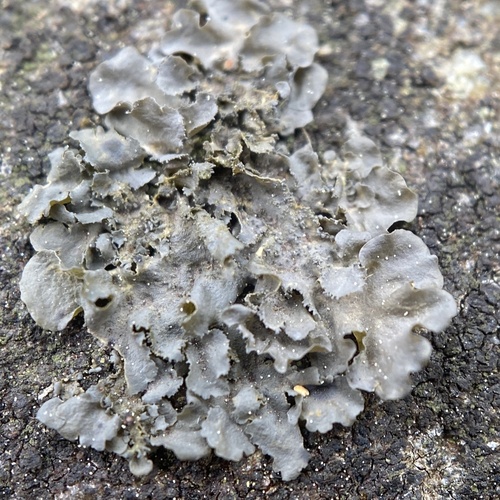
Blue Jellyskin
Leptogium cyanescens
Edibility unknown — do not eat -

Bearded Jellyskin Lichen
Leptogium saturninum
Edibility unknown — do not eat -
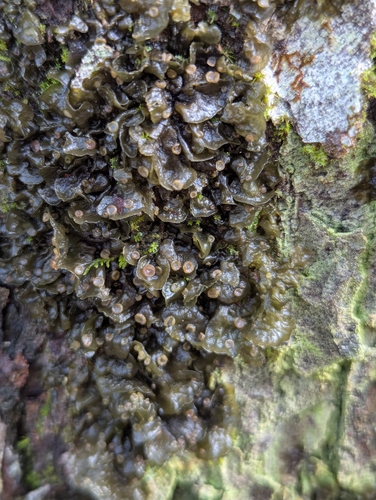
Jelly Lichen
Leptogium corticola
Edibility unknown — do not eat -
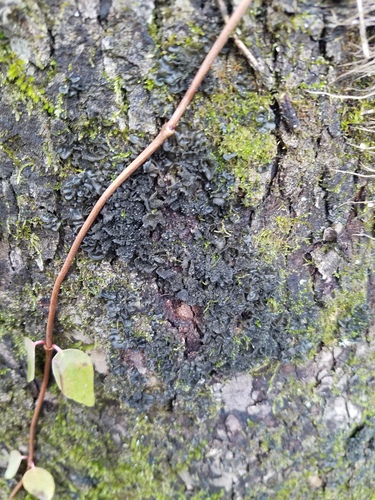
Austroamerican skin lichen
Leptogium austroamericanum
Edibility unknown — do not eat -
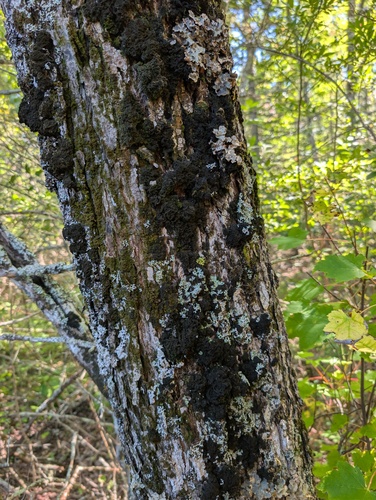
Stretched Jellyskin
Leptogium milligranum
Edibility unknown — do not eat -
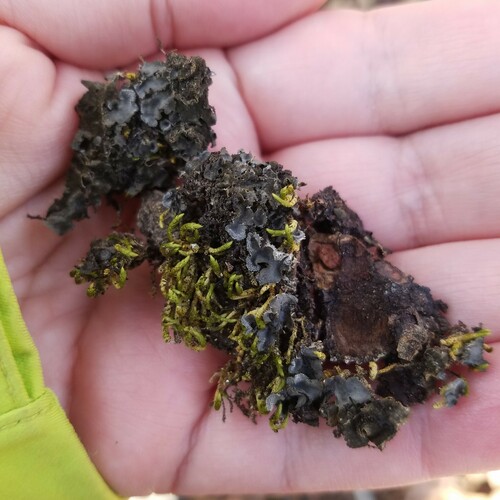
Hairy Jellyskin
Leptogium hirsutum
Edibility unknown — do not eat -
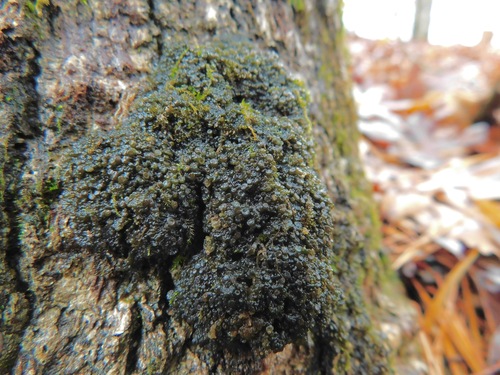
Ruffled Jellyskin
Leptogium chloromelum
Edibility unknown — do not eat -
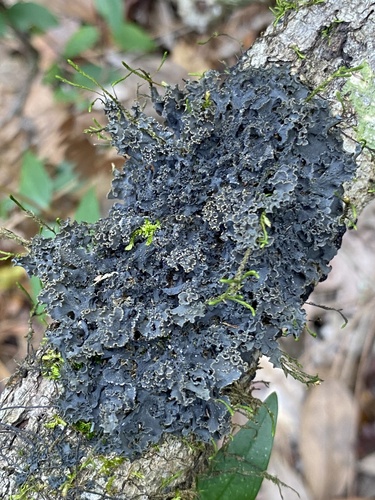
skin lichen
Leptogium marginellum
Edibility unknown — do not eat
Never eat a wild mushroom based on this site or any app. See safety basics and the disclaimer.