

Blue Jellyskin
Leptogium cyanescens (Ach.) Körb.
Also called: Blue oilskin: Skin lichen, Blue Jellyskin Lichen, skin lichen
Edibility
Edibility unknown — do not eat
Never eat a wild mushroom based on this site or any app.
Photos
-
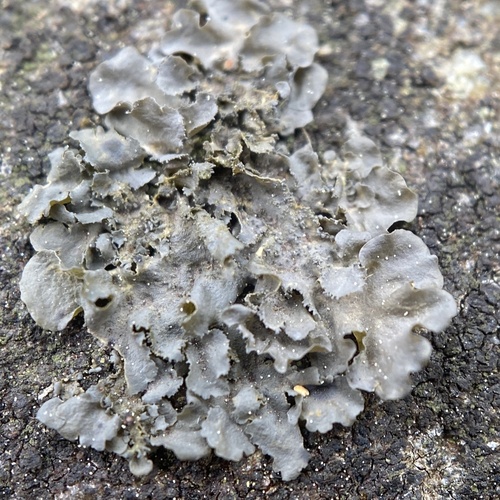
Photo: Michelle Orcutt. CC-BY. Source (inaturalist) -
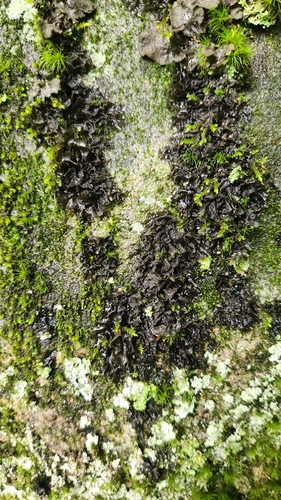
Photo: Patrick Jackson. CC-BY. Source (inaturalist) -
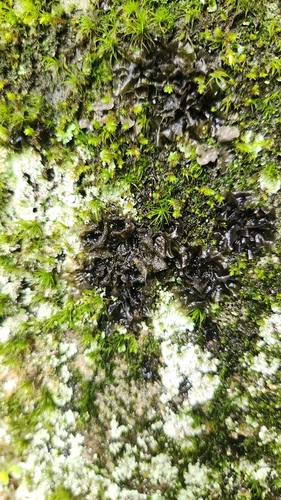
Photo: Patrick Jackson. CC-BY. Source (inaturalist) -
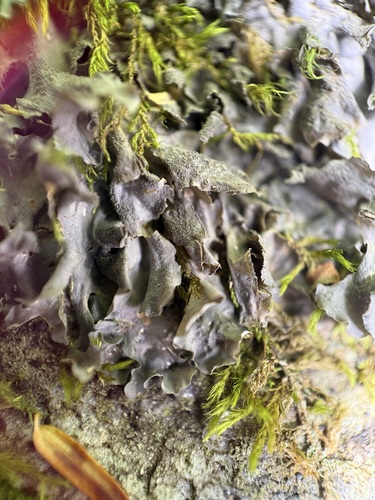
Photo: Tanner Barnharst. CC-BY. Source (inaturalist)
Lookalikes
No lookalikes are recorded for this species yet. That does not mean there are none. Many mushrooms look alike, so never rely on appearance alone.
Season
When this species has been recorded, by month, from open-licensed US and Canada observations. It shows when people report it, not a guarantee it is fruiting.
The highlighted bar is the current month.
View season data as a table
| Month | Records |
|---|---|
| January | 112 |
| February | 79 |
| March | 254 |
| April | 323 |
| May | 357 |
| June | 388 |
| July | 506 |
| August | 382 |
| September | 320 |
| October | 311 |
| November | 160 |
| December | 206 |
Where it is found
States and provinces with the most records. Check the foraging rules for the place you plan to visit.
- North Carolina 508 records · Foraging rules
- Tennessee 262 records · Foraging rules
- Minnesota 249 records · Foraging rules
- Louisiana 144 records · Foraging rules
- Alabama 138 records · Foraging rules
- Ontario 137 records · Foraging rules
- Michigan 135 records · Foraging rules
- Maine 133 records · Foraging rules
- Florida 123 records · Foraging rules
- Georgia 121 records · Foraging rules
- Arkansas 117 records · Foraging rules
- Virginia 104 records · Foraging rules
- Quebec 88 records · Foraging rules
- Nova Scotia 86 records · Foraging rules
- Missouri 83 records · Foraging rules
Show 38 more
- Kentucky76 records
- Pennsylvania74 records
- New York74 records
- South Carolina70 records
- Massachusetts64 records
- New Jersey63 records
- Connecticut61 records
- Wisconsin60 records
- West Virginia57 records
- Texas55 records
- New Hampshire52 records
- Vermont51 records
- Ohio50 records
- Maryland45 records
- Mississippi37 records
- New Brunswick32 records
- Oklahoma29 records
- Hawaii19 records
- South Dakota15 records
- Illinois14 records
- Alaska13 records
- Indiana11 records
- Newfoundland and Labrador10 records
- British Columbia9 records
- Colorado8 records
- Delaware8 records
- Washington8 records
- Arizona7 records
- Iowa7 records
- Kansas7 records
- New Mexico7 records
- Oregon5 records
- Prince Edward Island3 records
- Alberta2 records
- District of Columbia2 records
- California1 records
- Idaho1 records
- Manitoba1 records
About
Leptogium cyanescens, commonly called the blue jellyskin, is a foliose, gelatinous lichen in the family Collemataceae. It is one of the most widespread members of its genus, recorded throughout temperate and subtropical regions on at least four continents.
From Wikipedia, CC BY-SA 4.0. Read the original article.
Never eat a wild mushroom based on this site or any app. See safety basics and the disclaimer.