

Lecanora albellula
Lecanora albellula (Nyl.) Th.Fr.
Edibility
Edibility unknown — do not eat
Never eat a wild mushroom based on this site or any app.
Lookalikes
No lookalikes are recorded for this species yet. That does not mean there are none. Many mushrooms look alike, so never rely on appearance alone.
Season
When this species has been recorded, by month, from open-licensed US and Canada observations. It shows when people report it, not a guarantee it is fruiting.
The highlighted bar is the current month.
View season data as a table
| Month | Records |
|---|---|
| January | 2 |
| February | 0 |
| March | 7 |
| April | 8 |
| May | 15 |
| June | 14 |
| July | 41 |
| August | 27 |
| September | 9 |
| October | 9 |
| November | 3 |
| December | 2 |
Where it is found
States and provinces with the most records. Check the foraging rules for the place you plan to visit.
- South Dakota 38 records · Foraging rules
- British Columbia 22 records · Foraging rules
- North Dakota 10 records · Foraging rules
- Ontario 9 records · Foraging rules
- California 9 records · Foraging rules
- Wyoming 8 records · Foraging rules
- Washington 6 records · Foraging rules
- Quebec 5 records · Foraging rules
- Michigan 4 records · Foraging rules
- Colorado 3 records · Foraging rules
- Nebraska 3 records · Foraging rules
- Maine 2 records · Foraging rules
- Manitoba 2 records · Foraging rules
- Newfoundland and Labrador 2 records · Foraging rules
- Arizona 2 records · Foraging rules
Show 10 more
- Idaho2 records
- Minnesota2 records
- Pennsylvania2 records
- New York1 records
- Oregon1 records
- Alaska1 records
- Alberta1 records
- Iowa1 records
- West Virginia1 records
- North Carolina1 records
About
Lecanora albellula is a species of crustose lichen in the family Lecanoraceae. It grows tightly attached to the bark and wood of trees in both coniferous and mixed forests. First described in 1866 by the Finnish lichenologist William Nylander from material collected in Russian Lapland, it is widely distributed across Asia, Europe, and North America. The species is easily recognised by its pale, finely granular thallus—which can appear somewhat wart-like—and its small, round, light brick-coloured apothecia. Its name, referring to its whitish appearance, is based on traditional morphological observations used to distinguish it from similar species. Research has refined the understanding of L. albellula through both modern genetic studies and detailed chemical analyses. These studies have clarified its placement within a well-defined clade of related lichens and revealed that some North American specimens previously identified as this species actually represent a closely related taxon, provisionally known as "Lecanora sp. D". Lecanora albellula produces characteristic secondary metabolites, notably isousnic acid, which, together with its distinctive anatomical and reproductive features, aids in distinguishing it from its congeners. Its occurrence on various tree barks and wood, particularly in temperate to subalpine regions, highlights its specific ecological requirements and the ongoing need for careful taxonomic verification.
From Wikipedia, CC BY-SA 4.0. Read the original article.
Recent finds
No community finds tagged with this species yet. Log a find.
More in the genus Lecanora
-
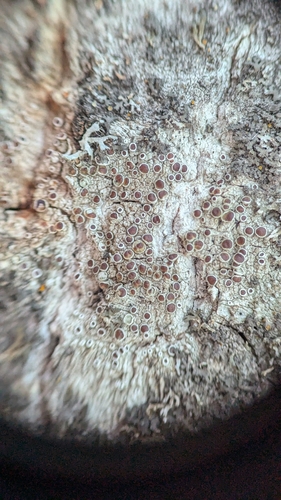
Lecanora albella
Edibility unknown — do not eat -
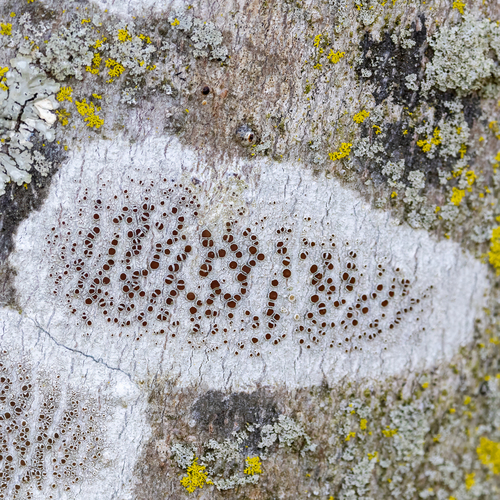
Bumpy Rim-lichen
Lecanora hybocarpa
Edibility unknown — do not eat -
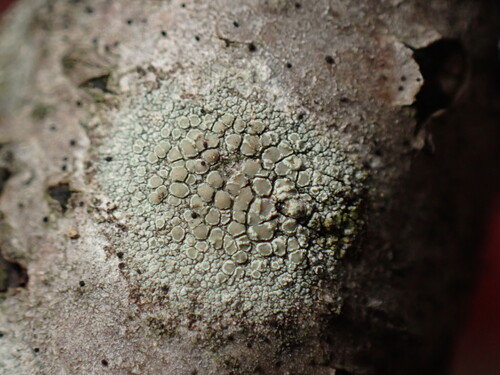
Mealy Rim-lichen
Lecanora strobilina
Edibility unknown — do not eat -
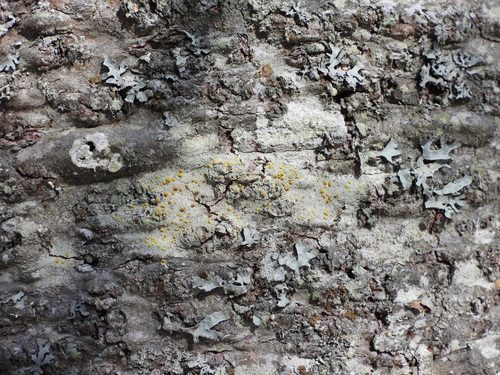
Fused Rim Lichen
Lecanora symmicta
Edibility unknown — do not eat -
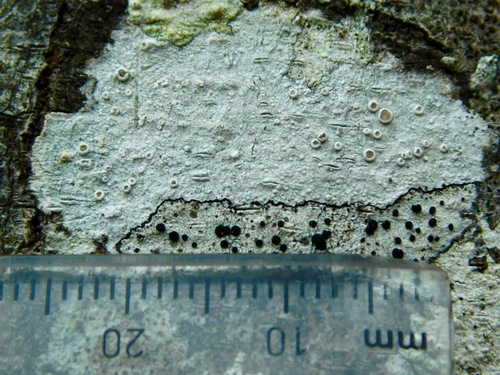
Frosted Rim-lichen
Lecanora caesiorubella
Edibility unknown — do not eat -
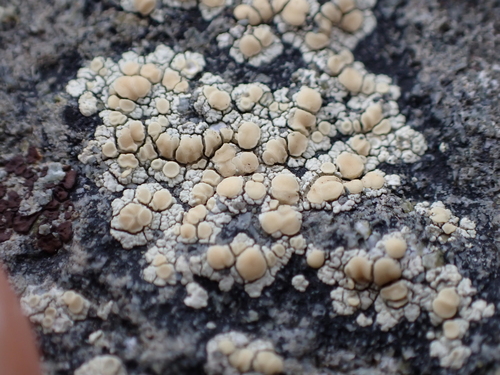
Granite-speck Rim Lichen
Lecanora polytropa
Edibility unknown — do not eat -
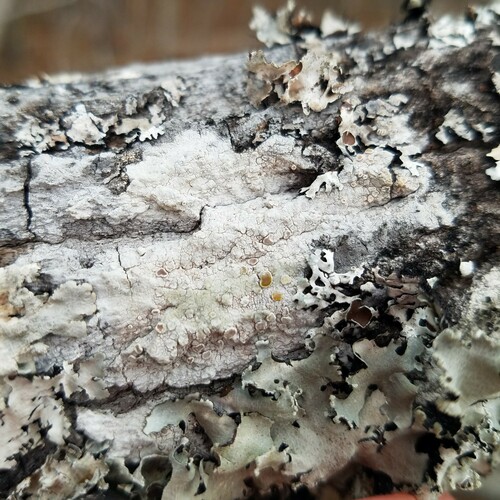
Lesser Dust My Discs
Lecanora protervula
Edibility unknown — do not eat -
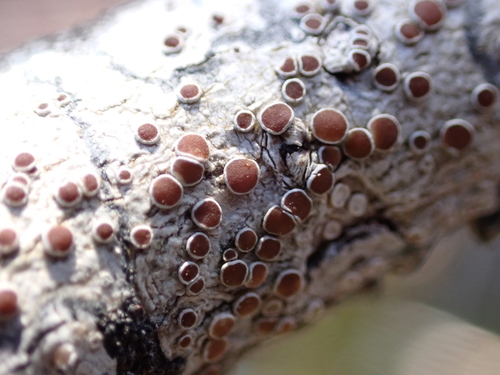
Common Rim Lichen
Lecanora pulicaris
Edibility unknown — do not eat
Never eat a wild mushroom based on this site or any app. See safety basics and the disclaimer.