

Mealy Rim-lichen
Lecanora strobilina (Spreng.) Kieff.
Also called: rim lichen
Edibility
Edibility unknown — do not eat
Never eat a wild mushroom based on this site or any app.
Photos
-
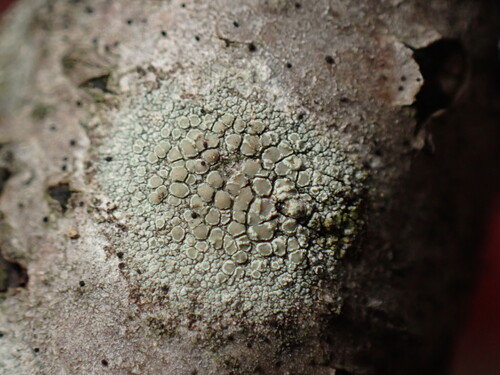
Photo: W Rao. CC-BY. Source (inaturalist) -
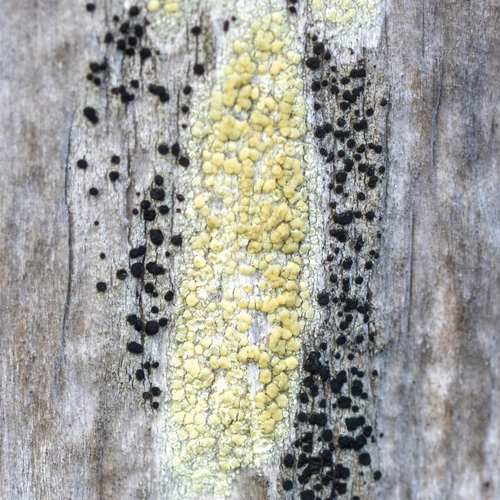
Photo: Dan Vickers. CC-BY. Source (inaturalist) -
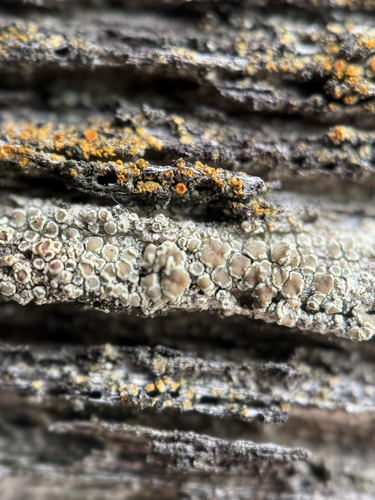
Photo: Tanner Barnharst. CC-BY. Source (inaturalist) -
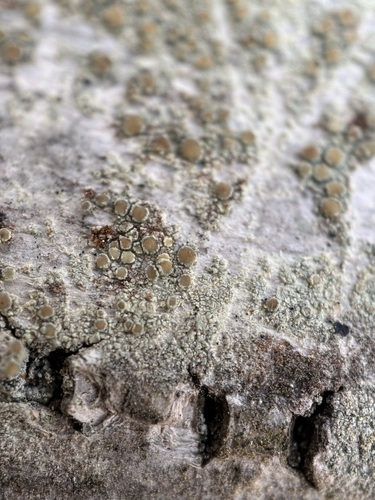
Photo: Tanner Barnharst. CC-BY. Source (inaturalist)
Lookalikes
No lookalikes are recorded for this species yet. That does not mean there are none. Many mushrooms look alike, so never rely on appearance alone.
Season
When this species has been recorded, by month, from open-licensed US and Canada observations. It shows when people report it, not a guarantee it is fruiting.
The highlighted bar is the current month.
View season data as a table
| Month | Records |
|---|---|
| January | 84 |
| February | 66 |
| March | 176 |
| April | 320 |
| May | 224 |
| June | 198 |
| July | 234 |
| August | 169 |
| September | 176 |
| October | 290 |
| November | 155 |
| December | 171 |
Where it is found
States and provinces with the most records. Check the foraging rules for the place you plan to visit.
- North Carolina 216 records · Foraging rules
- Minnesota 163 records · Foraging rules
- Virginia 161 records · Foraging rules
- Maryland 133 records · Foraging rules
- New Jersey 128 records · Foraging rules
- Tennessee 120 records · Foraging rules
- Missouri 110 records · Foraging rules
- Massachusetts 102 records · Foraging rules
- Pennsylvania 100 records · Foraging rules
- Georgia 94 records · Foraging rules
- Iowa 80 records · Foraging rules
- Louisiana 72 records · Foraging rules
- Kansas 70 records · Foraging rules
- Alabama 63 records · Foraging rules
- Wisconsin 56 records · Foraging rules
Show 34 more
- Maine50 records
- Arkansas49 records
- Ohio48 records
- New York46 records
- South Carolina45 records
- West Virginia35 records
- Illinois33 records
- California32 records
- North Dakota25 records
- Texas24 records
- Delaware23 records
- Indiana23 records
- Florida22 records
- Oklahoma21 records
- South Dakota18 records
- Connecticut18 records
- Kentucky17 records
- Michigan17 records
- Ontario16 records
- New Hampshire13 records
- Vermont11 records
- Nebraska10 records
- District of Columbia8 records
- Mississippi7 records
- Rhode Island4 records
- Nova Scotia3 records
- British Columbia2 records
- Manitoba2 records
- Alaska1 records
- Hawaii1 records
- Montana1 records
- New Mexico1 records
- Prince Edward Island1 records
- Quebec1 records
About
Zeora strobilina, also known as the mealy rim lichen, is a species of crustose lichen in the family Lecanoraceae. It was originally described as Parmelia strobilina by German botanist Kurt Polycarp Joachim Sprengel in 1827. The species was long treated in Lecanora, but was later transferred to Zeora when that genus was resurrected for the former Lecanora symmicta group in 2025. It is distributed across North America and the Mediterranean region, and has also become established in South America and the Galápagos. It can be distinguished from other closely related species, including Z. confusa, by the presence of the polyphenolic compound decarboxysquamatic acid in thin-layer chromatography.
From Wikipedia, CC BY-SA 4.0. Read the original article.
More in the genus Lecanora


Never eat a wild mushroom based on this site or any app. See safety basics and the disclaimer.