

Cladosporium sphaerospermum
Cladosporium sphaerospermum Penz.
Edibility
Edibility unknown — do not eat
Never eat a wild mushroom based on this site or any app.
Lookalikes
No lookalikes are recorded for this species yet. That does not mean there are none. Many mushrooms look alike, so never rely on appearance alone.
Season
When this species has been recorded, by month, from open-licensed US and Canada observations. It shows when people report it, not a guarantee it is fruiting.
The highlighted bar is the current month.
View season data as a table
| Month | Records |
|---|---|
| January | 2 |
| February | 1 |
| March | 2 |
| April | 1 |
| May | 1 |
| June | 2 |
| July | 3 |
| August | 8 |
| September | 8 |
| October | 6 |
| November | 1 |
| December | 1 |
Where it is found
States and provinces with the most records. Check the foraging rules for the place you plan to visit.
- Utah 6 records · Foraging rules
- Michigan 6 records · Foraging rules
- Missouri 5 records · Foraging rules
- Ontario 5 records · Foraging rules
- Alberta 3 records · Foraging rules
- Ohio 3 records · Foraging rules
- Texas 2 records · Foraging rules
- Pennsylvania 1 records · Foraging rules
- Illinois 1 records · Foraging rules
- Quebec 1 records · Foraging rules
- Yukon 1 records · Foraging rules
- Nevada 1 records · Foraging rules
About
Cladosporium sphaerospermum is a radiotrophic fungus belonging to the genus Cladosporium and was described in 1882 by Albert Julius Otto Penzig from the decaying leaves and branches of Citrus. It is a dematiaceous (darkly-pigmented) fungus characterized by slow growth and largely asexual reproduction. Cladosporium sphaerospermum consists of a complex of poorly morphologically differentiated "cryptic" species that share many physiological and ecological attributes. In older literature, all of these sibling species were classified as C. sphaerospermum despite their unique nature. Accordingly, there is confusion in older literature reports on the physiological and habitat regularities of C. sphaerospermum in the strict sense. This fungus is most phylogenetically similar to C. fusiforme. According to modern phylogenetic analyses, the previously synonymized species, Cladosporium langeroni, is a distinct species.
From Wikipedia, CC BY-SA 4.0. Read the original article.
Recent finds
No community finds tagged with this species yet. Log a find.
More in the genus Cladosporium
-
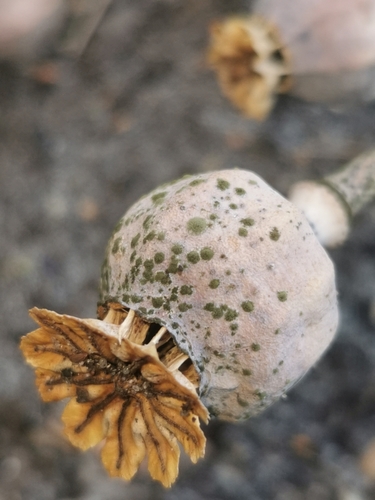
Cladosporium herbarum
Edibility unknown — do not eat -
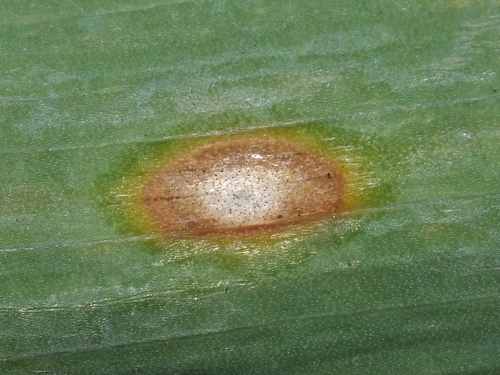
Heterosporium Leaf Spot on Iris
Cladosporium iridis
Edibility unknown — do not eat - No photo yet
Cladosporium salinae
Edibility unknown — do not eat -
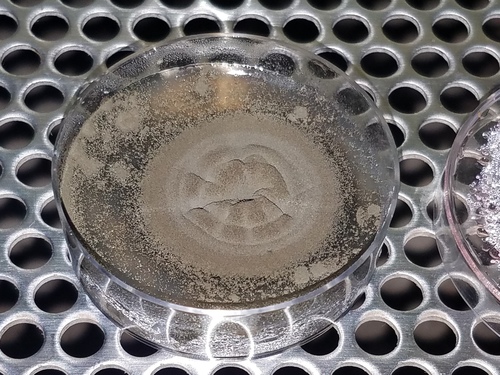
Cladosporium cladosporioides
Edibility unknown — do not eat - No photo yet
Cladosporium fluvum
Edibility unknown — do not eat - No photo yet
Cladosporium subsessile
Edibility unknown — do not eat - No photo yet
Cladosporium typharum
Edibility unknown — do not eat - No photo yet
Cladosporium macrocarpum
Edibility unknown — do not eat
Never eat a wild mushroom based on this site or any app. See safety basics and the disclaimer.