

Cladosporium cladosporioides
Cladosporium cladosporioides (Fresen.) G.A.de Vries
Edibility
Edibility unknown — do not eat
Never eat a wild mushroom based on this site or any app.
Photos
-
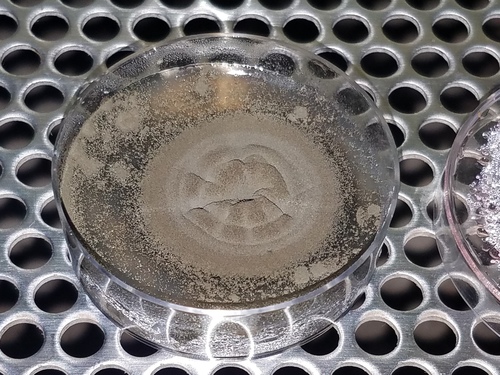
Photo: Alan Rockefeller. CC-BY. Source (inaturalist)
Lookalikes
No lookalikes are recorded for this species yet. That does not mean there are none. Many mushrooms look alike, so never rely on appearance alone.
Season
When this species has been recorded, by month, from open-licensed US and Canada observations. It shows when people report it, not a guarantee it is fruiting.
The highlighted bar is the current month.
View season data as a table
| Month | Records |
|---|---|
| January | 6 |
| February | 3 |
| March | 8 |
| April | 10 |
| May | 8 |
| June | 21 |
| July | 23 |
| August | 10 |
| September | 14 |
| October | 21 |
| November | 19 |
| December | 30 |
Where it is found
States and provinces with the most records. Check the foraging rules for the place you plan to visit.
- Michigan 24 records · Foraging rules
- Utah 19 records · Foraging rules
- California 14 records · Foraging rules
- Missouri 10 records · Foraging rules
- Illinois 9 records · Foraging rules
- Ontario 9 records · Foraging rules
- New York 6 records · Foraging rules
- British Columbia 6 records · Foraging rules
- Florida 6 records · Foraging rules
- Saskatchewan 4 records · Foraging rules
- Wisconsin 3 records · Foraging rules
- Alberta 3 records · Foraging rules
- Washington 3 records · Foraging rules
- Wyoming 2 records · Foraging rules
- Manitoba 2 records · Foraging rules
Show 15 more
- Quebec2 records
- Kansas2 records
- North Carolina2 records
- New Jersey2 records
- Ohio2 records
- Tennessee2 records
- Arkansas1 records
- Idaho1 records
- Alabama1 records
- Pennsylvania1 records
- Prince Edward Island1 records
- Maryland1 records
- Massachusetts1 records
- Arizona1 records
- New Hampshire1 records
About
Cladosporium cladosporioides is a darkly pigmented mold that occurs world-wide on a wide range of materials both outdoors and indoors. It is known for its role in the decomposition of organic matter and its presence in indoor and outdoor environments. This species is also notable for its potential impact on human health, particularly in individuals with respiratory conditions. It is one of the most common fungi in outdoor air where its spores are important in seasonal allergic disease. While this species rarely causes invasive disease in animals, it is an important agent of plant disease, attacking both the leaves and fruits of many plants. This species produces asexual spores in delicate, branched chains that break apart readily and drift in the air. It is able to grow under low water conditions and at very low temperatures.
From Wikipedia, CC BY-SA 4.0. Read the original article.
Recent finds
No community finds tagged with this species yet. Log a find.
More in the genus Cladosporium
-
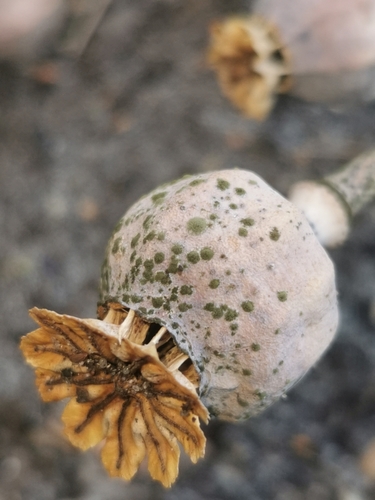
Cladosporium herbarum
Edibility unknown — do not eat -
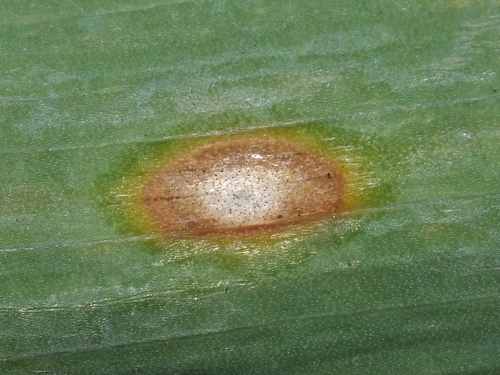
Heterosporium Leaf Spot on Iris
Cladosporium iridis
Edibility unknown — do not eat - No photo yet
Cladosporium salinae
Edibility unknown — do not eat - No photo yet
Cladosporium fluvum
Edibility unknown — do not eat - No photo yet
Cladosporium subsessile
Edibility unknown — do not eat - No photo yet
Cladosporium typharum
Edibility unknown — do not eat - No photo yet
Cladosporium macrocarpum
Edibility unknown — do not eat - No photo yet
Cladosporium oxysporum
Edibility unknown — do not eat
Never eat a wild mushroom based on this site or any app. See safety basics and the disclaimer.