

Xanthoparmelia tinctina
Xanthoparmelia tinctina (Maheu & A.Gillet) Hale
Edibility
Edibility unknown — do not eat
Never eat a wild mushroom based on this site or any app.
Lookalikes
No lookalikes are recorded for this species yet. That does not mean there are none. Many mushrooms look alike, so never rely on appearance alone.
Season
When this species has been recorded, by month, from open-licensed US and Canada observations. It shows when people report it, not a guarantee it is fruiting.
The highlighted bar is the current month.
View season data as a table
| Month | Records |
|---|---|
| January | 0 |
| February | 3 |
| March | 2 |
| April | 0 |
| May | 1 |
| June | 1 |
| July | 0 |
| August | 2 |
| September | 0 |
| October | 0 |
| November | 0 |
| December | 2 |
Where it is found
States and provinces with the most records. Check the foraging rules for the place you plan to visit.
- Louisiana 3 records · Foraging rules
- Texas 3 records · Foraging rules
- Arizona 2 records · Foraging rules
- California 1 records · Foraging rules
- Michigan 1 records · Foraging rules
About
Xanthoparmelia tinctina is a species of foliose lichen from the family Parmeliaceae that can be found in Arizona, California, Northern Africa and Europe. The upper surface is yellow–green, while the bottom surface is brown and flat, measuring 0.2–0.6 millimetres (0.0079–0.0236 in) in diameter. The apothecia are 2–10 millimetres (0.08–0.39 in) wide, the thallus is laminal and is 3–10 centimetres (1–4 in) in diameter. The disc is either cinnamon-brown or dark brown and is ellipsoided. The pycnidia are immersed, and the conidia are bifusiform, with eight-spored asci that are hyaline and ellipsoid. Xanthoparmelia tinctina can colonize serpentinite rocks, including asbestos-bearing surfaces. Studies from the Balangero asbestos mine in northwestern Italy have shown that while the species commonly grows on natural serpentinite outcrops in the region, it shows limited colonization of exposed mine walls. When transplanted to asbestos-rich surfaces, adult thalli of X. tinctina can survive and grow, though their growth rates are affected by substrate instability and erosion. Research has demonstrated that thalli directly adhered to mine surfaces showed variable growth patterns over time, with some specimens achieving up to 29% annual area increase despite challenging conditions. The species reproduces through isidia, though laboratory and field studies indicate these reproductive structures have limited success establishing on unstable mine surfaces.
From Wikipedia, CC BY-SA 4.0. Read the original article.
Recent finds
No community finds tagged with this species yet. Log a find.
More in the genus Xanthoparmelia
-
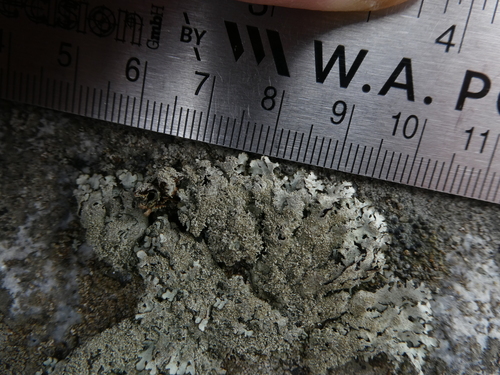
Peppered Rock Shield
Xanthoparmelia conspersa
Edibility unknown — do not eat -
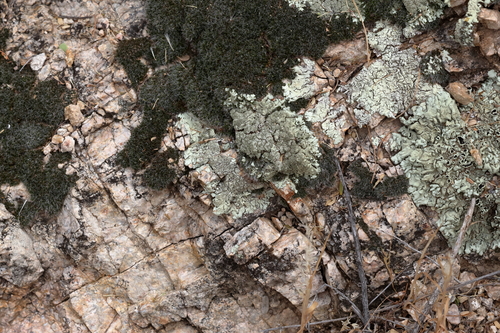
Cumberland Rock Shield
Xanthoparmelia cumberlandia
Edibility unknown — do not eat -
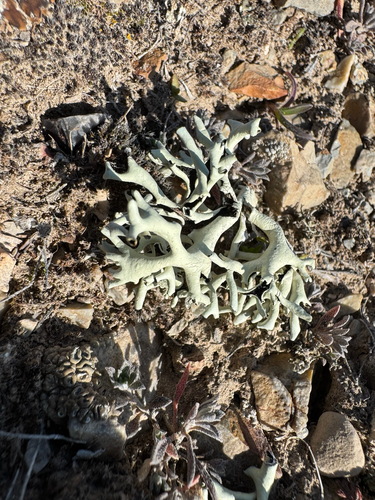
Tumbleweed Shield Lichen
Xanthoparmelia chlorochroa
Edibility unknown — do not eat -
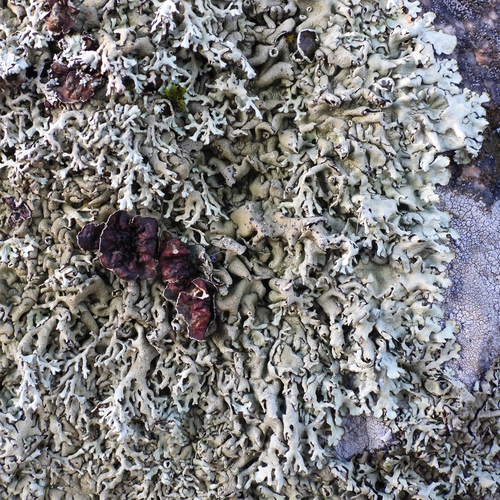
Shingled Rock Shield
Xanthoparmelia stenophylla
Edibility unknown — do not eat -
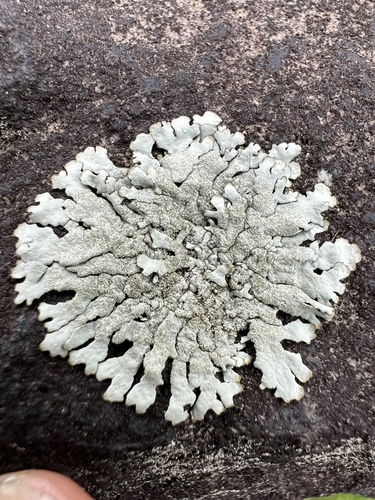
Plitt's Rock Shield
Xanthoparmelia plittii
Edibility unknown — do not eat -
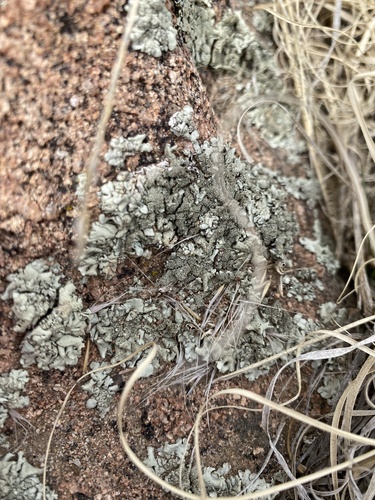
Mexican xanthoparmelia lichen
Xanthoparmelia mexicana
Edibility unknown — do not eat -
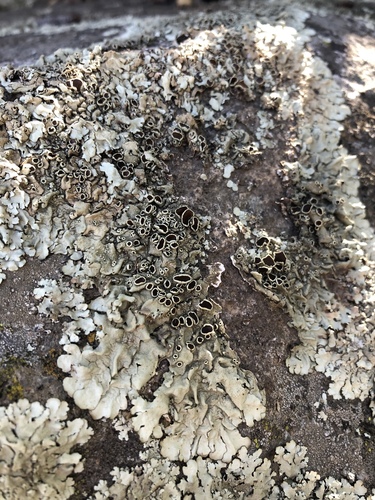
Tight Rock-shield
Xanthoparmelia lineola
Edibility unknown — do not eat -
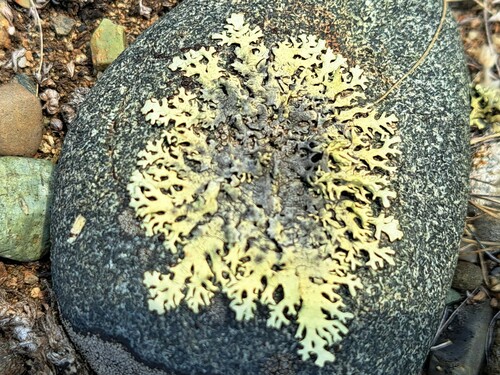
Colorado Rock-shield
Xanthoparmelia coloradoensis
Edibility unknown — do not eat
Never eat a wild mushroom based on this site or any app. See safety basics and the disclaimer.