

Bristly Beard Lichen
Usnea hirta (L.) F.H.Wigg.
Also called: Beard lichen
Edibility
Edibility unknown — do not eat
Never eat a wild mushroom based on this site or any app.
Photos
-
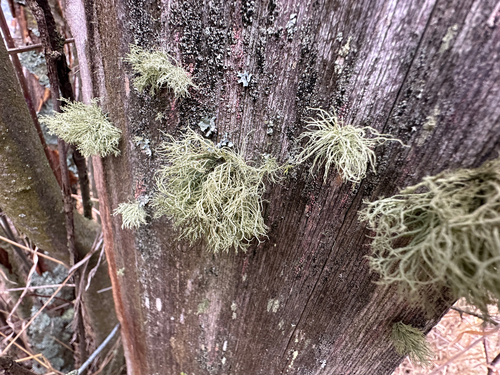
Photo: Daryl Nolan. CC0. Source (inaturalist) -
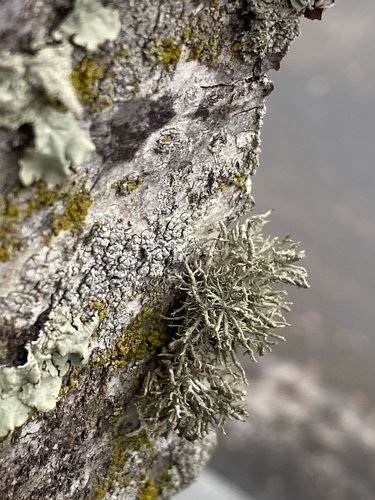
Photo: Sandy Wolkenberg. CC-BY. Source (inaturalist) -
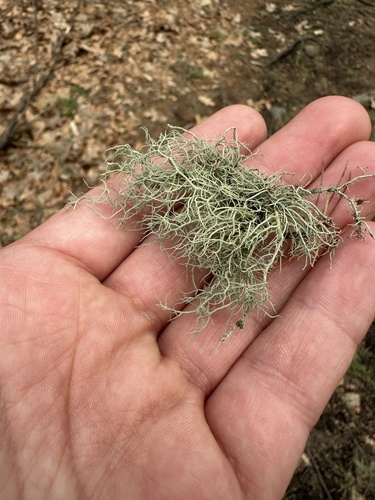
Photo: Eli Talhouk. CC-BY. Source (inaturalist) -
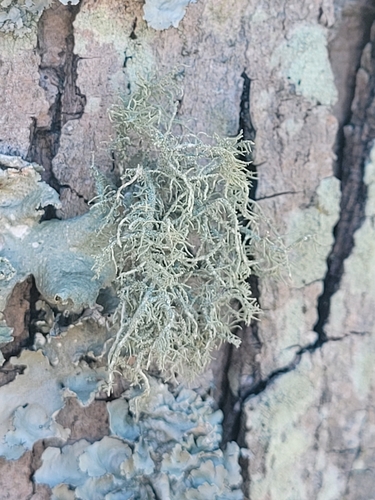
Photo: andrew2285. CC0. Source (inaturalist)
Lookalikes
No lookalikes are recorded for this species yet. That does not mean there are none. Many mushrooms look alike, so never rely on appearance alone.
Season
When this species has been recorded, by month, from open-licensed US and Canada observations. It shows when people report it, not a guarantee it is fruiting.
The highlighted bar is the current month.
View season data as a table
| Month | Records |
|---|---|
| January | 32 |
| February | 29 |
| March | 43 |
| April | 49 |
| May | 142 |
| June | 530 |
| July | 548 |
| August | 386 |
| September | 129 |
| October | 303 |
| November | 49 |
| December | 17 |
Where it is found
States and provinces with the most records. Check the foraging rules for the place you plan to visit.
- Michigan 697 records · Foraging rules
- Minnesota 242 records · Foraging rules
- Ontario 217 records · Foraging rules
- South Dakota 121 records · Foraging rules
- Wisconsin 117 records · Foraging rules
- Arizona 113 records · Foraging rules
- Alberta 90 records · Foraging rules
- Colorado 85 records · Foraging rules
- British Columbia 82 records · Foraging rules
- New Mexico 81 records · Foraging rules
- North Dakota 79 records · Foraging rules
- Maine 33 records · Foraging rules
- Quebec 32 records · Foraging rules
- Nebraska 30 records · Foraging rules
- New Hampshire 27 records · Foraging rules
Show 33 more
- California22 records
- Texas22 records
- New York20 records
- Massachusetts19 records
- Wyoming19 records
- Washington19 records
- Pennsylvania17 records
- Manitoba13 records
- Connecticut13 records
- Vermont11 records
- North Carolina10 records
- Oregon9 records
- Florida8 records
- New Jersey8 records
- Ohio7 records
- Montana7 records
- Nova Scotia6 records
- New Brunswick4 records
- Hawaii3 records
- Alaska3 records
- Arkansas3 records
- Missouri3 records
- Iowa2 records
- West Virginia2 records
- Virginia2 records
- Tennessee2 records
- Louisiana1 records
- Newfoundland and Labrador1 records
- Northwest Territories1 records
- Oklahoma1 records
- Saskatchewan1 records
- District of Columbia1 records
- Nevada1 records
About
Usnea hirta is a species of beard lichen in the family Parmeliaceae. It was one of 80 lichen species first formally described by Carl Linnaeus in his 1753 work Species Plantarum. Friedrich Heinrich Wiggers transferred it to the genus Usnea in 1780. The lichen is sensitive to air pollution, and is often used as a biomonitor of sulphur dioxide. Usnea hirta has an extensive worldwide distribution, and it is morphologically variable, which has led to numerous intraspecific taxa (i.e. subspecies, varieties, and forms) being proposed in its taxonomic history.
From Wikipedia, CC BY-SA 4.0. Read the original article.
More in the genus Usnea


Never eat a wild mushroom based on this site or any app. See safety basics and the disclaimer.