

Ciliate Wrinkle-lichen
Tuckermannopsis ciliaris (Ach.) Gyeln.
Also called: Tuckermanopsis lichen, tuckermannopsis lichen
Edibility
Edibility unknown — do not eat
Never eat a wild mushroom based on this site or any app.
Photos
-
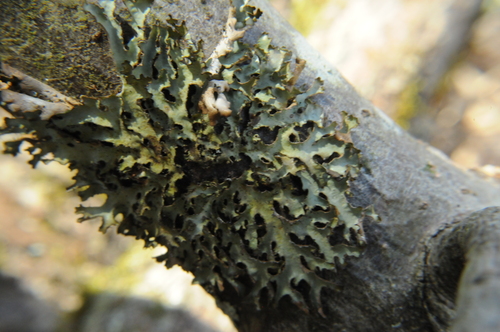
Photo: Grace Merkert. CC-BY. Source (inaturalist) -
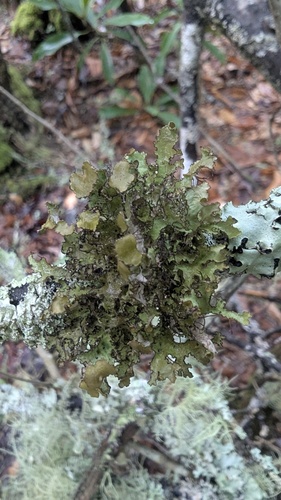
Photo: Alina Martin. CC-BY. Source (inaturalist) -
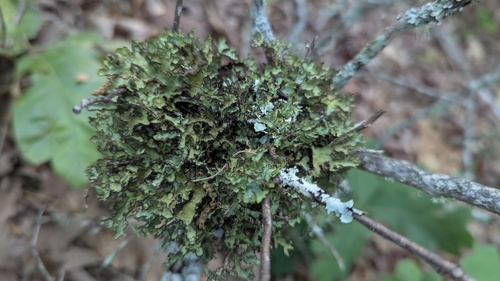
Photo: Alina Martin. CC-BY. Source (inaturalist) -
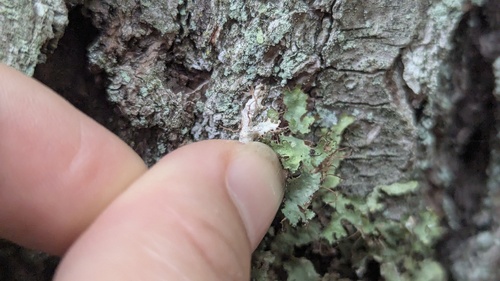
Photo: Alina Martin. CC-BY. Source (inaturalist)
Lookalikes
No lookalikes are recorded for this species yet. That does not mean there are none. Many mushrooms look alike, so never rely on appearance alone.
Season
When this species has been recorded, by month, from open-licensed US and Canada observations. It shows when people report it, not a guarantee it is fruiting.
The highlighted bar is the current month.
View season data as a table
| Month | Records |
|---|---|
| January | 43 |
| February | 28 |
| March | 111 |
| April | 183 |
| May | 207 |
| June | 498 |
| July | 804 |
| August | 498 |
| September | 260 |
| October | 206 |
| November | 53 |
| December | 61 |
Where it is found
States and provinces with the most records. Check the foraging rules for the place you plan to visit.
- Michigan 408 records · Foraging rules
- Virginia 378 records · Foraging rules
- Minnesota 357 records · Foraging rules
- North Carolina 286 records · Foraging rules
- Ontario 203 records · Foraging rules
- West Virginia 168 records · Foraging rules
- Tennessee 155 records · Foraging rules
- Maine 139 records · Foraging rules
- Massachusetts 106 records · Foraging rules
- Kentucky 84 records · Foraging rules
- New Hampshire 79 records · Foraging rules
- Wisconsin 75 records · Foraging rules
- Pennsylvania 67 records · Foraging rules
- Vermont 59 records · Foraging rules
- Connecticut 58 records · Foraging rules
Show 34 more
- Maryland58 records
- New York54 records
- Georgia50 records
- Newfoundland and Labrador43 records
- New Jersey40 records
- Quebec36 records
- Ohio28 records
- Washington27 records
- California24 records
- Alberta19 records
- Oregon17 records
- New Brunswick17 records
- Iowa16 records
- Nova Scotia14 records
- Alabama14 records
- British Columbia13 records
- South Carolina13 records
- Alaska12 records
- Manitoba11 records
- Illinois9 records
- Montana6 records
- Saskatchewan5 records
- District of Columbia3 records
- Northwest Territories3 records
- Yukon3 records
- Delaware3 records
- North Dakota2 records
- Arizona1 records
- Florida1 records
- Nunavut1 records
- Prince Edward Island1 records
- Rhode Island1 records
- South Dakota1 records
- Texas1 records
About
Tuckermannopsis ciliaris is a species of corticolous (bark-dwelling), foliose lichen in the family Parmeliaceae. It was first described by Erik Acharius in 1810, initially classified in the genus Cetraria. The species was later reclassified into the genera Nephromopsis and then Tuckermannopsis, with some researchers proposing that certain cetrarioid genera, including Tuckermannopsis, should be merged into Nephromopsis. However, this suggestion was disputed, and both names, Tuckermannopsis ciliaris and Nephromopsis ciliaris, are used in recent literature to refer to this species. Tuckermannopsis ciliaris is widely distributed across temperate regions of North America and the northern Old World, found on birches and coniferous trees such as pines, with varying frequencies and habitats across different regions. The thallus grows in irregular shapes or rosettes up to 5 cm (2 in) in diameter, with olive-green to greenish-brown coloration and elongated lobes featuring black, hair-like cilia along their edges. Both apothecia (sexual fruiting bodies) and pycnidia (asexual fruiting bodies) also occur along the edges of the lobes. The chemical properties of T. ciliaris include the presence of olivetoric and physodic acids in the medulla. Chemical spot tests for these lichen products can help distinguish T. ciliaris from several similar species.
From Wikipedia, CC BY-SA 4.0. Read the original article.
Never eat a wild mushroom based on this site or any app. See safety basics and the disclaimer.