

Tricholoma vernaticum
Tricholoma vernaticum Shanks
Edibility
Edibility unknown — do not eat
Never eat a wild mushroom based on this site or any app.
Photos
-

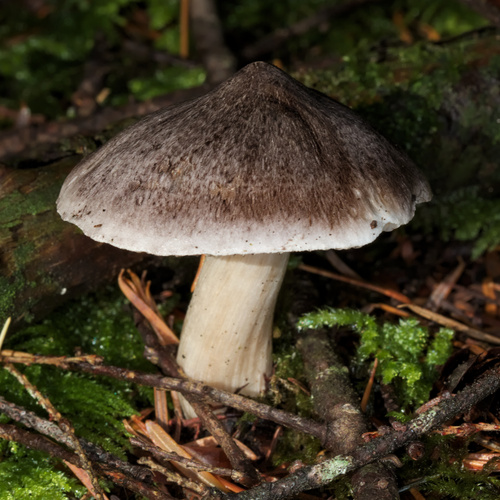
Photo: Alan Rockefeller. CC-BY. Source (inaturalist) -

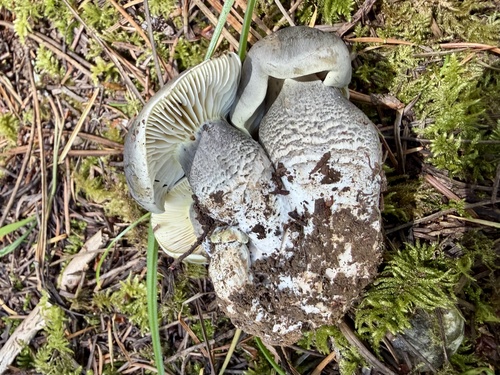
Photo: Alan Rockefeller. CC-BY. Source (inaturalist) -
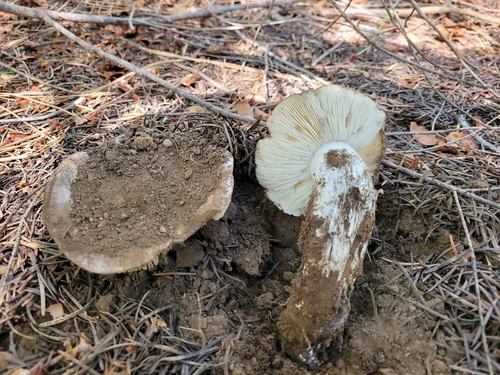
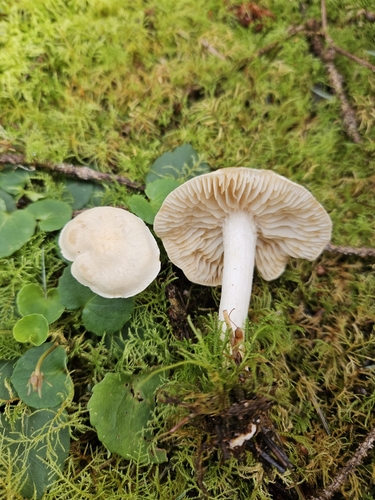
Photo: Mandy Hackney. CC-BY. Source (inaturalist) -
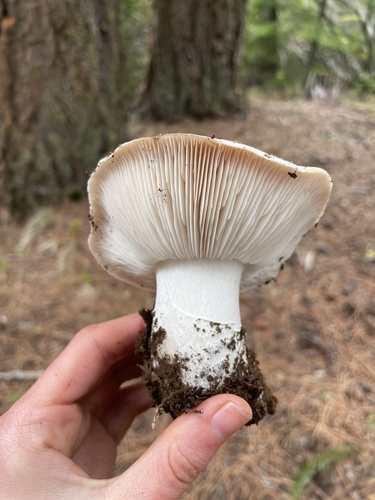
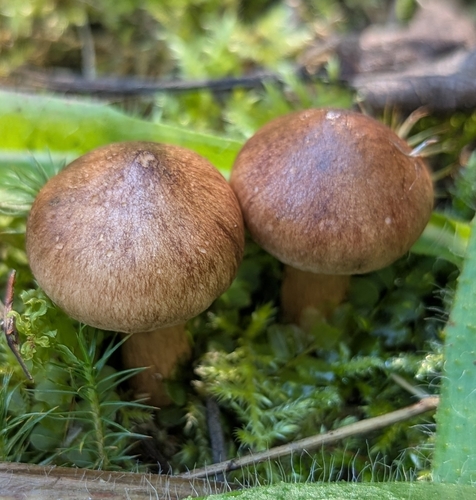
Photo: Hilary Rose Dawson. CC-BY. Source (inaturalist)
Lookalikes
No lookalikes are recorded for this species yet. That does not mean there are none. Many mushrooms look alike, so never rely on appearance alone.
Season
When this species has been recorded, by month, from open-licensed US and Canada observations. It shows when people report it, not a guarantee it is fruiting.
The highlighted bar is the current month.
View season data as a table
| Month | Records |
|---|---|
| January | 1 |
| February | 0 |
| March | 0 |
| April | 5 |
| May | 25 |
| June | 10 |
| July | 0 |
| August | 0 |
| September | 0 |
| October | 0 |
| November | 0 |
| December | 1 |
Where it is found
States and provinces with the most records. Check the foraging rules for the place you plan to visit.
- California 22 records · Foraging rules
- Oregon 6 records · Foraging rules
- Washington 1 records · Foraging rules
Identification traits
| Cap shape | convex |
|---|---|
| Underside (gills, pores or teeth) | gills |
| Ecology | mycorrhizal |
| Stem features | ring |
| Spore print color | white |
Traits vary. Use them to ask better questions of an expert, not to make a final call.
About
Tricholoma vernaticum, commonly known as the cucumber trich, is an agaric fungus of the genus Tricholoma. It was originally described in 1976 as a species of Armillaria when that genus was more inclusive; it received its current name twenty years later. The stout fruit bodies (mushrooms) have moist white to grayish caps (later becoming grayish-brown with age), a membranous ring on the stipe, and an odor resembling cucumbers. The species is native to the Pacific Northwest region of the United States. Mycorrhizal with conifers, it fruits in the spring or early summer, appearing on the ground singly or in groups at high elevations, often at the edge of melting snowbanks. The edibility of the mushroom is unknown, but it has an unpleasant odor and a mealy taste.
From Wikipedia, CC BY-SA 4.0. Read the original article.
Recent finds
No community finds tagged with this species yet. Log a find.
More in the genus Tricholoma
-
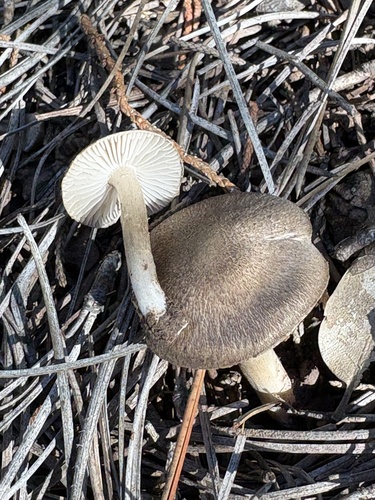
Tricholoma triste
Edibility unknown — do not eat -
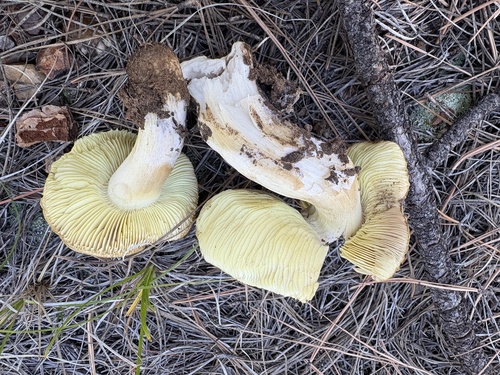
Yellow Knight
Tricholoma equestre
Poisonous -
Grey Knight
Tricholoma terreum
Caution -
Soapy Knight
Tricholoma saponaceum
Poisonous -
Gassy Knight
Tricholoma inamoenum
Edibility unknown — do not eat -
Scaly Knight
Tricholoma vaccinum
Caution -
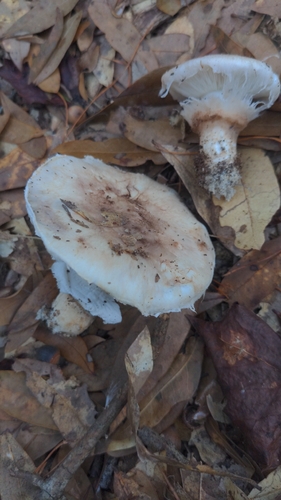
True Booted Knight
Tricholoma caligatum
Edible (per source) -
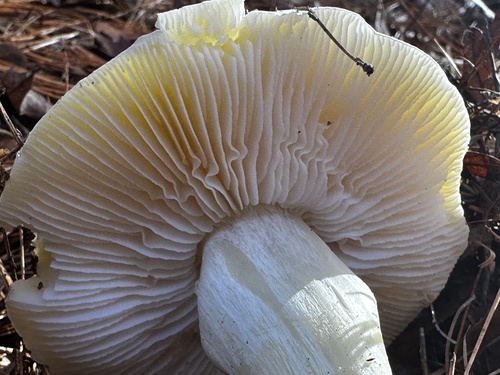
Deceiving Knight
Tricholoma sejunctum
Edibility unknown — do not eat
Never eat a wild mushroom based on this site or any app. See safety basics and the disclaimer.