

Dune Hair Lichen
Sulcaria spiralifera (Brodo & D.Hawksw.) Myllys, Velmala & Goward
Edibility
Edibility unknown — do not eat
Never eat a wild mushroom based on this site or any app.
Photos
-
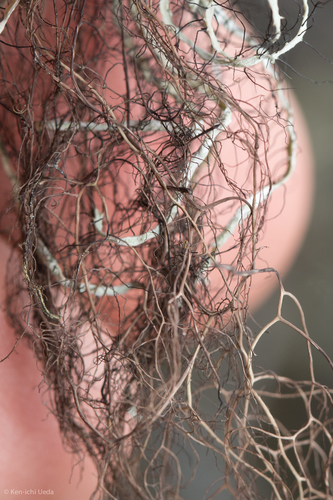
Photo: Ken-ichi Ueda. CC-BY. Source (inaturalist) -

Photo: Ken-ichi Ueda. CC-BY. Source (inaturalist) -
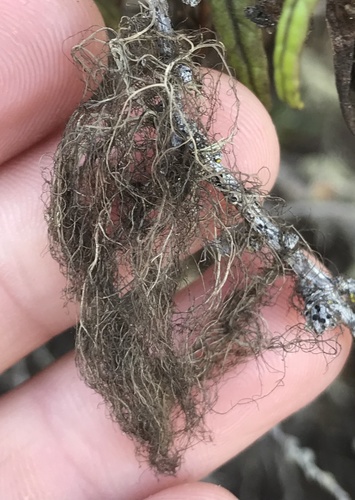
Photo: Adam J. Searcy. CC-BY. Source (inaturalist)
Lookalikes
No lookalikes are recorded for this species yet. That does not mean there are none. Many mushrooms look alike, so never rely on appearance alone.
Season
When this species has been recorded, by month, from open-licensed US and Canada observations. It shows when people report it, not a guarantee it is fruiting.
The highlighted bar is the current month.
View season data as a table
| Month | Records |
|---|---|
| January | 1 |
| February | 0 |
| March | 9 |
| April | 1 |
| May | 10 |
| June | 15 |
| July | 5 |
| August | 4 |
| September | 5 |
| October | 0 |
| November | 7 |
| December | 1 |
Where it is found
States and provinces with the most records. Check the foraging rules for the place you plan to visit.
- California 23 records · Foraging rules
- Oregon 17 records · Foraging rules
- Washington 9 records · Foraging rules
About
Sulcaria spiralifera is a species of fruticose lichen in the family Parmeliaceae. First described in 1977 as a species of Bryoria, it was transferred to the genus Sulcaria in 2014 based on DNA analysis. The species comprises two chemical variants now recognized as varieties: the typical variety and var. pseudocapillaris, which differ in their chemical composition and spot test reactions. It is found in the northwestern United States, where it grows as an epiphyte, hanging from a variety of tree species in open or shaded maritime forests. The lichen is characterized by its pendulous brown thallus with spiral-arranged white pores (pseudocyphellae) on its surface, extending 4–12 cm (1+9⁄16–4+3⁄4 in) in length.
From Wikipedia, CC BY-SA 4.0. Read the original article.
Recent finds
No community finds tagged with this species yet. Log a find.
More in the genus Sulcaria
Never eat a wild mushroom based on this site or any app. See safety basics and the disclaimer.