

blossom blight
Sclerotinia sclerotiorum (Lib.) de Bary
Also called: cottony rot, crown rot, stem drop, stem rot, watery soft rot, white mold
Edibility
Edibility unknown — do not eat
Never eat a wild mushroom based on this site or any app.
Photos
-

Photo: Adam J. Searcy. CC-BY. Source (inaturalist) -
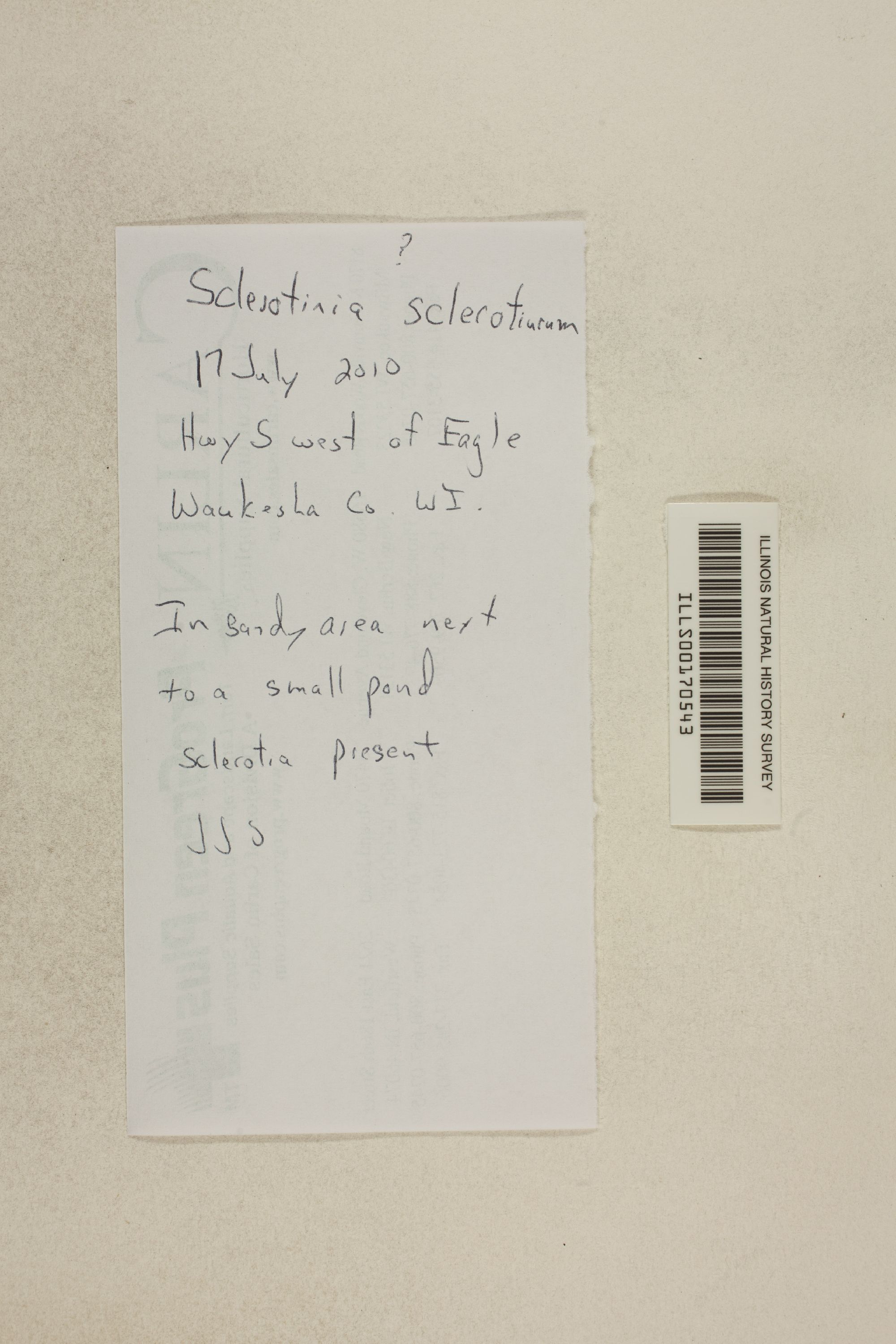
Photo: University of Illinois, Illinois Natural History Survey Fungarium - Fungi (ILLS-). CC0. Source (gbif) -

Photo: bellfungi. CC0. Source (gbif) -

Photo: The New York Botanical Garden. CC-BY. Source (gbif)
Lookalikes
No lookalikes are recorded for this species yet. That does not mean there are none. Many mushrooms look alike, so never rely on appearance alone.
Season
When this species has been recorded, by month, from open-licensed US and Canada observations. It shows when people report it, not a guarantee it is fruiting.
The highlighted bar is the current month.
View season data as a table
| Month | Records |
|---|---|
| January | 16 |
| February | 32 |
| March | 45 |
| April | 26 |
| May | 37 |
| June | 43 |
| July | 59 |
| August | 41 |
| September | 38 |
| October | 26 |
| November | 17 |
| December | 16 |
Where it is found
States and provinces with the most records. Check the foraging rules for the place you plan to visit.
- New York 52 records · Foraging rules
- Florida 38 records · Foraging rules
- District of Columbia 27 records · Foraging rules
- Manitoba 24 records · Foraging rules
- Ontario 20 records · Foraging rules
- Massachusetts 20 records · Foraging rules
- Saskatchewan 18 records · Foraging rules
- Pennsylvania 18 records · Foraging rules
- British Columbia 16 records · Foraging rules
- Virginia 16 records · Foraging rules
- Illinois 15 records · Foraging rules
- Connecticut 15 records · Foraging rules
- Colorado 14 records · Foraging rules
- California 13 records · Foraging rules
- Washington 8 records · Foraging rules
Show 25 more
- Quebec7 records
- Maryland7 records
- Oregon6 records
- Minnesota6 records
- Wisconsin5 records
- Ohio5 records
- South Carolina5 records
- Texas4 records
- Arizona4 records
- West Virginia3 records
- Maine3 records
- Montana3 records
- Tennessee3 records
- New Jersey2 records
- North Carolina2 records
- Missouri2 records
- Idaho2 records
- Nova Scotia2 records
- North Dakota2 records
- New Brunswick1 records
- Indiana1 records
- Mississippi1 records
- Delaware1 records
- Michigan1 records
- Louisiana1 records
About
Sclerotinia sclerotiorum is a plant pathogenic fungus and can cause a disease called white mold if conditions are conducive. S. sclerotiorum can also be known as cottony rot, watery soft rot, stem rot, drop, crown rot and blossom blight. A key characteristic of this pathogen is its ability to produce black resting structures known as sclerotia and white fuzzy growths of mycelium on the plant it infects. These sclerotia give rise to a fruiting body in the spring that produces spores in a sac which is why fungi in this class are called sac fungi (Ascomycota). This pathogen can occur on many continents and has a wide host range of plants. When S. sclerotiorum is onset in the field by favorable environmental conditions, losses can be great and control measures should be considered.
From Wikipedia, CC BY-SA 4.0. Read the original article.
Recent finds
No community finds tagged with this species yet. Log a find.
More in the genus Sclerotinia
- No photo yet
Sclerotinia borealis
Edibility unknown — do not eat - No photo yet
Sclerotinia trifoliorum
Edibility unknown — do not eat - No photo yet
Sclerotinia longisclerotialis
Edibility unknown — do not eat - No photo yet
Sclerotinia sulcata
Edibility unknown — do not eat - No photo yet
Sclerotinia asari
Edibility unknown — do not eat - No photo yet
Sclerotinia angustior
Edibility unknown — do not eat - No photo yet
Sclerotinia minor
Edibility unknown — do not eat - No photo yet
Sclerotinia veratri
Edibility unknown — do not eat
Never eat a wild mushroom based on this site or any app. See safety basics and the disclaimer.