

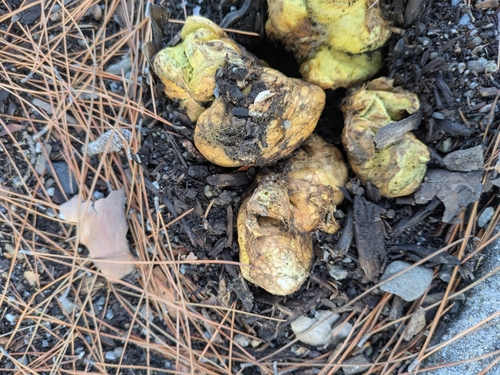
Rhizopogon salebrosus
Rhizopogon salebrosus A.H.Sm.
Edibility
Edibility unknown — do not eat
Never eat a wild mushroom based on this site or any app.
Lookalikes
No lookalikes are recorded for this species yet. That does not mean there are none. Many mushrooms look alike, so never rely on appearance alone.
Season
When this species has been recorded, by month, from open-licensed US and Canada observations. It shows when people report it, not a guarantee it is fruiting.
The highlighted bar is the current month.
View season data as a table
| Month | Records |
|---|---|
| January | 0 |
| February | 0 |
| March | 0 |
| April | 1 |
| May | 0 |
| June | 2 |
| July | 1 |
| August | 7 |
| September | 9 |
| October | 1 |
| November | 0 |
| December | 1 |
Where it is found
States and provinces with the most records. Check the foraging rules for the place you plan to visit.
- British Columbia 2 records · Foraging rules
- California 2 records · Foraging rules
- Idaho 2 records · Foraging rules
- Arizona 1 records · Foraging rules
- Oregon 1 records · Foraging rules
About
Rhizopogon salebrosus is a mushroom species within the Rhizopogon subgenus Amylopogon. R. salebrosus is a monotropoid mycorrhiza that is of vital importance to the ecology of conifer forests, especially in the Pacific Northwest region of North America. Although it is native to North America, R. salebrosus has been found in Europe and its range is generally limited to mountainous regions with sufficient precipitation. The mycoheterotrophic plant, Pterospora andromedea is often found in an obligate association with R. salebrosus in western parts of the U.S. Eastern populations of P. andromedea are typically symbiotic with another Rhizopogon sub species, R. kretzerae. Species that form these mycoheterotrophic relationships like P. andromedea and R. salebrosus benefit one other by sharing essential nutrients. For example, ectomycorrhizal plants contribute up to 30% of their fixed carbon in exchange for nitrogen that their host fungi absorb from the soil. These unique mycoheterotrophic associations are thought to have evolved due to low light availability on the forest floor.
From Wikipedia, CC BY-SA 4.0. Read the original article.
Recent finds
No community finds tagged with this species yet. Log a find.
More in the genus Rhizopogon
- No photo yet
Rhizopogon arctostaphyli
Edibility unknown — do not eat -
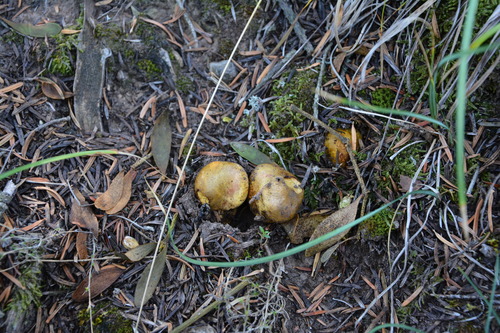
Blushing Beard Truffle
Rhizopogon roseolus
Edible (per source) - No photo yet
Rhizopogon armeniacus
Edibility unknown — do not eat -
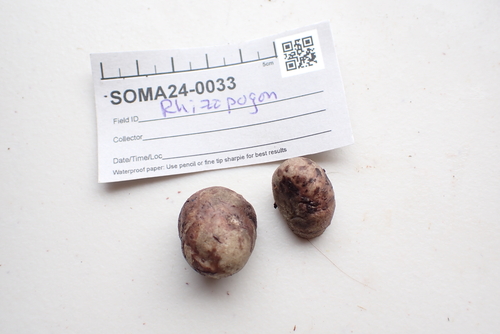
Rhizopogon parksii
Edibility unknown — do not eat - No photo yet
Rhizopogon evadens
Edibility unknown — do not eat -
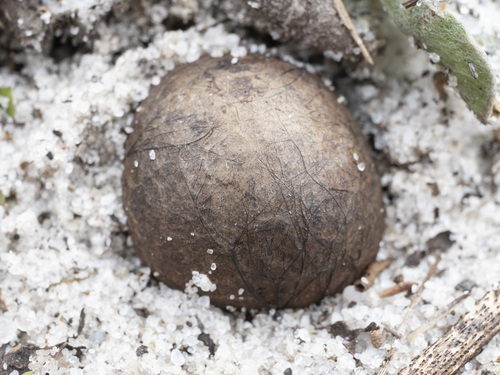
Rhizopogon nigrescens
Edibility unknown — do not eat -
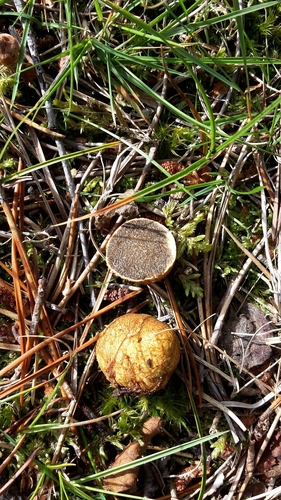
Yellow False Truffle
Rhizopogon luteolus
Edibility unknown — do not eat -
Rhizopogon occidentalis
Edibility unknown — do not eat
Never eat a wild mushroom based on this site or any app. See safety basics and the disclaimer.