

Ramularia ulmariae
Ramularia ulmariae Cooke
Edibility
Edibility unknown — do not eat
Never eat a wild mushroom based on this site or any app.
Lookalikes
No lookalikes are recorded for this species yet. That does not mean there are none. Many mushrooms look alike, so never rely on appearance alone.
Season
When this species has been recorded, by month, from open-licensed US and Canada observations. It shows when people report it, not a guarantee it is fruiting.
The highlighted bar is the current month.
View season data as a table
| Month | Records |
|---|---|
| January | 0 |
| February | 0 |
| March | 0 |
| April | 0 |
| May | 0 |
| June | 0 |
| July | 4 |
| August | 3 |
| September | 0 |
| October | 0 |
| November | 0 |
| December | 0 |
Where it is found
States and provinces with the most records. Check the foraging rules for the place you plan to visit.
- Alaska 4 records · Foraging rules
- British Columbia 3 records · Foraging rules
About
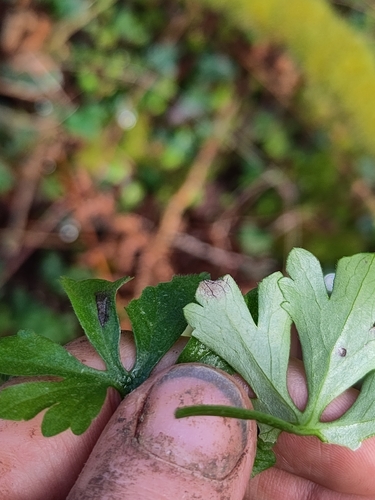
Ramularia ulmariae is a fungal species described by Cooke in 1876. Ramularia ulmariae belongs to the genus Ramularia and the family Mycosphaerellaceae. No subspecies are listed in the Catalogue of Life. This fungus is a pathogen of meadowsweet (Filipendula ulmaria) that causes purple spots on the plant's leaves and is most evident in summer. It produces translucent, cylindrical conidia with up to two septa. Ramularia ulmariae has been reported from Europe and also the western coast of North America. However its presence is probably under-recorded.
From Wikipedia, CC BY-SA 4.0. Read the original article.
Recent finds
No community finds tagged with this species yet. Log a find.
More in the genus Ramularia
-
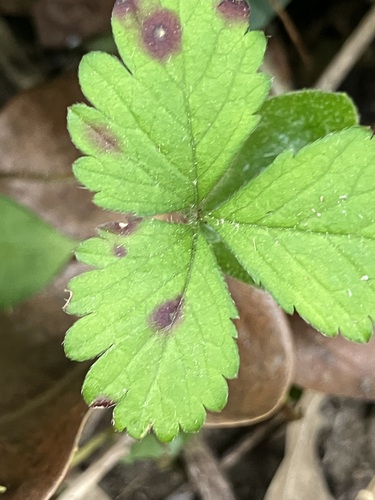
Common Strawberry Spot
Ramularia grevilleana
Edibility unknown — do not eat -
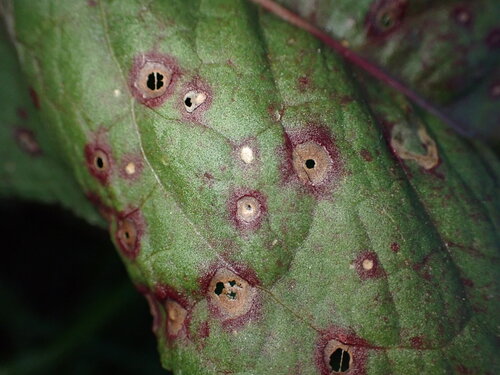
Red Dock Spot
Ramularia rubella
Edibility unknown — do not eat -
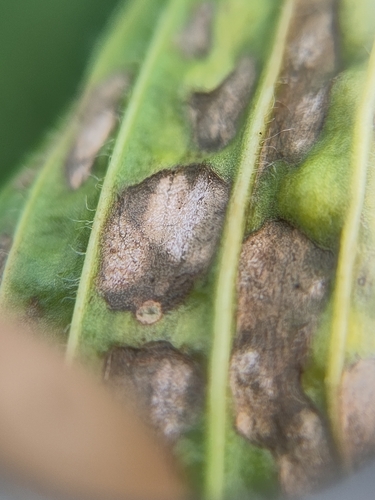
Ramularia rhabdospora
Edibility unknown — do not eat - No photo yet
Ramularia arvensis
Edibility unknown — do not eat - No photo yet
Ramularia asteris
Edibility unknown — do not eat -
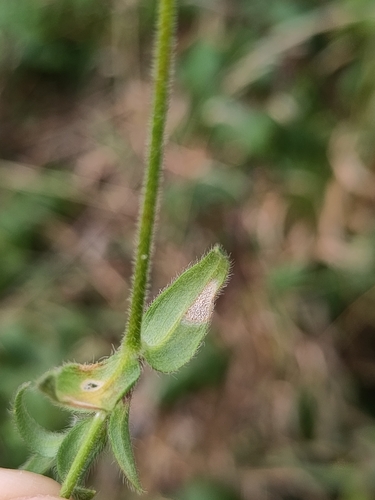
Ramularia alborosella
Edibility unknown — do not eat - No photo yet
Ramularia taraxaci
Edibility unknown — do not eat -
Ascomycete
Ramularia didyma
Edibility unknown — do not eat
Never eat a wild mushroom based on this site or any app. See safety basics and the disclaimer.