

Puccinia melanocephala
Puccinia melanocephala Syd. & P.Syd.
Edibility
Edibility unknown — do not eat
Never eat a wild mushroom based on this site or any app.
Lookalikes
No lookalikes are recorded for this species yet. That does not mean there are none. Many mushrooms look alike, so never rely on appearance alone.
Season
When this species has been recorded, by month, from open-licensed US and Canada observations. It shows when people report it, not a guarantee it is fruiting.
The highlighted bar is the current month.
View season data as a table
| Month | Records |
|---|---|
| January | 10 |
| February | 36 |
| March | 6 |
| April | 5 |
| May | 9 |
| June | 4 |
| July | 11 |
| August | 3 |
| September | 4 |
| October | 2 |
| November | 10 |
| December | 10 |
Where it is found
States and provinces with the most records. Check the foraging rules for the place you plan to visit.
- Florida 67 records · Foraging rules
- Georgia 25 records · Foraging rules
- Louisiana 12 records · Foraging rules
- Texas 6 records · Foraging rules
- Hawaii 4 records · Foraging rules
- Mississippi 2 records · Foraging rules
- South Carolina 2 records · Foraging rules
- District of Columbia 1 records · Foraging rules
About
Puccinia melanocephala is a fungus and plant pathogen, it is the causal agent of sugarcane rust. It was originally found on the leaves of a species of Arundinaria (cane) in Assam, India. This pathogen was found to also affect multiple species of sugarcane, including Saccharum spontaneum or wild sugarcane, Saccharum robustum, and the most commonly cultivated species Saccharum officinarum. Puccinia melanocephala can also infect other member of the family Poaceae, including some species of bamboo such as Bambusa vulgaris. The first symptoms of sugarcane rust are elongate, yellow-colored leaf spots, roughly 1mm to 4mm in length. The leaf spots gradually become bigger and turn a reddish-brown color. The uredia develop underneath the epidermis where the leaf spots are present. When the uredia become big enough, they break through the epidermis to form the characteristic rust pustules from which uredospores are borne. These pustules can coalesce, resulting in large areas of dead tissue.
From Wikipedia, CC BY-SA 4.0. Read the original article.
Recent finds
No community finds tagged with this species yet. Log a find.
More in the genus Puccinia
-
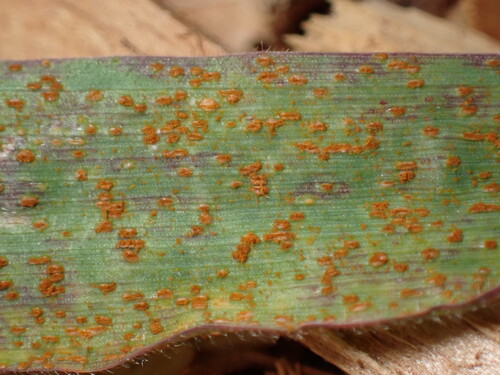
Brown Rust of Wheat
Puccinia recondita
Edibility unknown — do not eat -
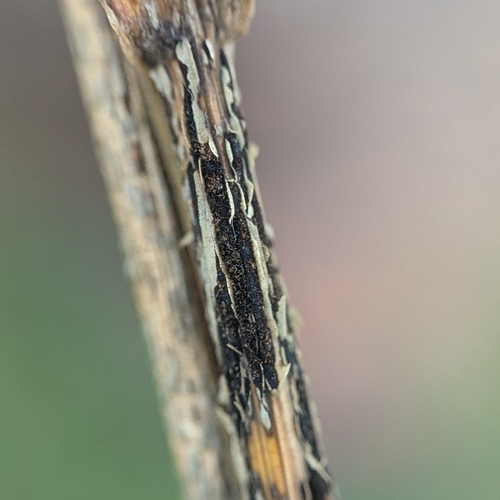
Black Stem Rust
Puccinia graminis
Edibility unknown — do not eat -
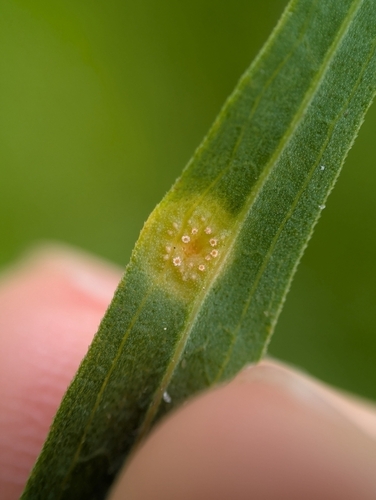
Puccinia dioicae
Edibility unknown — do not eat -
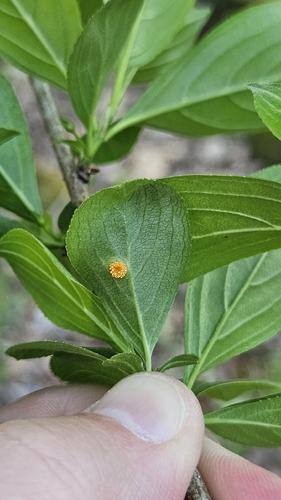
Crown Rust
Puccinia coronata
Edibility unknown — do not eat -
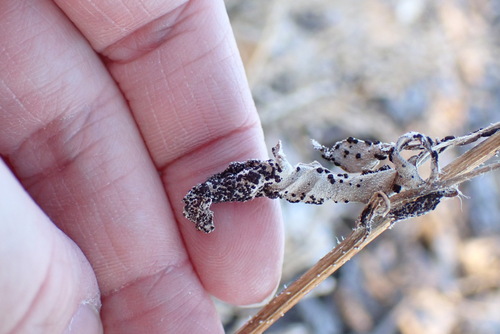
Puccinia helianthi-mollis
Edibility unknown — do not eat -
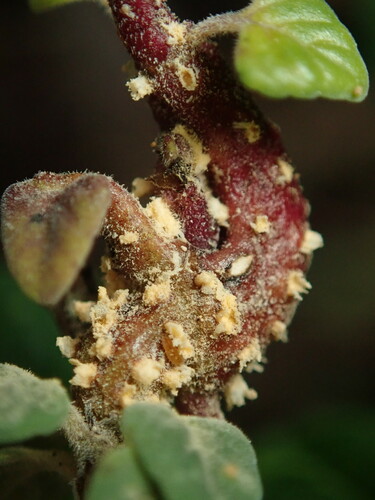
Mint Rust
Puccinia menthae
Edibility unknown — do not eat -
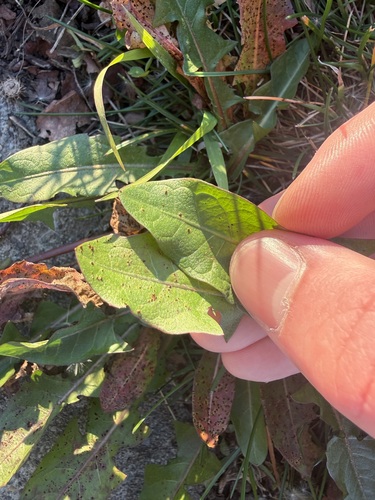
Puccinia hieracii
Edibility unknown — do not eat -
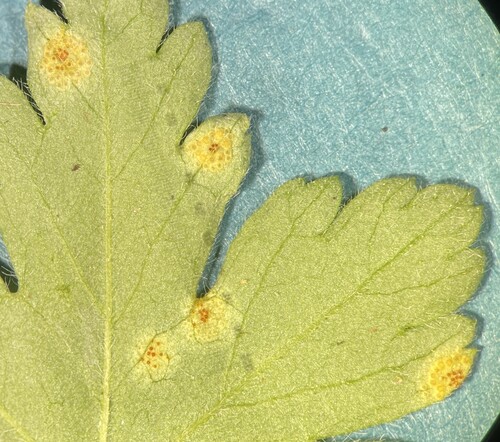
Cluster Cup Rust
Puccinia caricina
Edibility unknown — do not eat
Never eat a wild mushroom based on this site or any app. See safety basics and the disclaimer.