

Psoroglaena stigonemoides
Psoroglaena stigonemoides (Orange) Henssen
Edibility
Edibility unknown — do not eat
Never eat a wild mushroom based on this site or any app.
Lookalikes
No lookalikes are recorded for this species yet. That does not mean there are none. Many mushrooms look alike, so never rely on appearance alone.
Season
When this species has been recorded, by month, from open-licensed US and Canada observations. It shows when people report it, not a guarantee it is fruiting.
The highlighted bar is the current month.
View season data as a table
| Month | Records |
|---|---|
| January | 0 |
| February | 0 |
| March | 0 |
| April | 0 |
| May | 0 |
| June | 0 |
| July | 0 |
| August | 0 |
| September | 1 |
| October | 0 |
| November | 0 |
| December | 0 |
Where it is found
States and provinces with the most records. Check the foraging rules for the place you plan to visit.
- British Columbia 1 records · Foraging rules
About
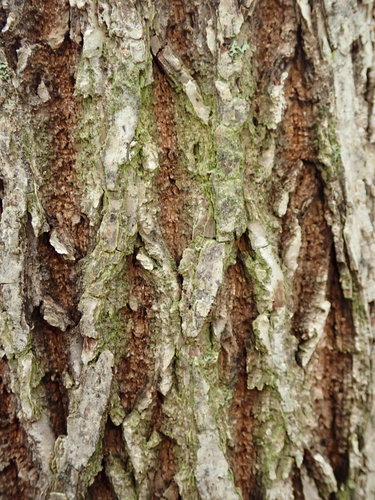
Psoroglaena stigonemoides is a species of corticolous (bark-dwelling) lichen in the family Verrucariaceae. It grows primarily on tree bark in humid environments throughout Great Britain, Ireland and parts of Europe. First scientifically described in 1989, it forms distinctive thread-like structures that often break into granular fragments less than a millimetre in height. The species shows a preference for elder trees but can also be found on sycamore, oak, willow and elm, typically in sheltered woodland locations with high humidity. It has a unique biological structure where its fungal component arranges unicellular green algae into rows that resemble filamentous colonies. Unlike many related lichens, it produces pale brown reproductive structures rather than darkly pigmented ones, and is frequently found without these structures. Though widespread across the British Isles, it is often overlooked due to its small size and resemblance to algae or moss protonemata.
From Wikipedia, CC BY-SA 4.0. Read the original article.
Recent finds
No community finds tagged with this species yet. Log a find.
More in the genus Psoroglaena
Never eat a wild mushroom based on this site or any app. See safety basics and the disclaimer.