

Ghost Shield
Pluteus pellitus (Pers.) P.Kumm.
Also called: White Deer Mushroom
Edibility
Edibility unknown — do not eat
Never eat a wild mushroom based on this site or any app.
Photos
-

Photo: Martin Cooper. CC-BY. Source (inaturalist)
Lookalikes
No lookalikes are recorded for this species yet. That does not mean there are none. Many mushrooms look alike, so never rely on appearance alone.
Season
When this species has been recorded, by month, from open-licensed US and Canada observations. It shows when people report it, not a guarantee it is fruiting.
The highlighted bar is the current month.
View season data as a table
| Month | Records |
|---|---|
| January | 1 |
| February | 1 |
| March | 3 |
| April | 0 |
| May | 2 |
| June | 10 |
| July | 24 |
| August | 24 |
| September | 18 |
| October | 4 |
| November | 0 |
| December | 1 |
Where it is found
States and provinces with the most records. Check the foraging rules for the place you plan to visit.
- New York 12 records · Foraging rules
- Michigan 9 records · Foraging rules
- Ontario 7 records · Foraging rules
- Alaska 6 records · Foraging rules
- West Virginia 6 records · Foraging rules
- Florida 5 records · Foraging rules
- British Columbia 4 records · Foraging rules
- Colorado 3 records · Foraging rules
- Quebec 3 records · Foraging rules
- Alberta 3 records · Foraging rules
- Minnesota 3 records · Foraging rules
- Texas 3 records · Foraging rules
- Wyoming 2 records · Foraging rules
- Idaho 2 records · Foraging rules
- Missouri 2 records · Foraging rules
Show 12 more
- Tennessee2 records
- Utah2 records
- Mississippi1 records
- Pennsylvania1 records
- Indiana1 records
- Louisiana1 records
- California1 records
- Virginia1 records
- Washington1 records
- Wisconsin1 records
- Montana1 records
- North Carolina1 records
About
Pluteus pellitus, the ghost shield, is a species of mushroom-forming fungus belonging to the family Pluteaceae. It is a wood-dwelling mushroom that decomposes dead plant material. It produces fruiting bodies with a cap and stipe; the cap is whitish but pale brown towards the centre. The species can be distinguished from Pluteus petasatus by its pleurocystidia (specialized cells on the gill sides) that bear 2–4 hooks at their tips, and by the presence of clamp connections on the hyphae of the cap surface. It is widespread but rare in Europe.
From Wikipedia, CC BY-SA 4.0. Read the original article.
Recent finds
No community finds tagged with this species yet. Log a find.
More in the genus Pluteus
-
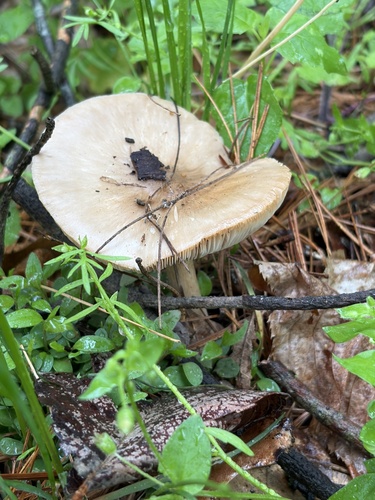
Deer Shield
Pluteus cervinus
Edibility unknown — do not eat -
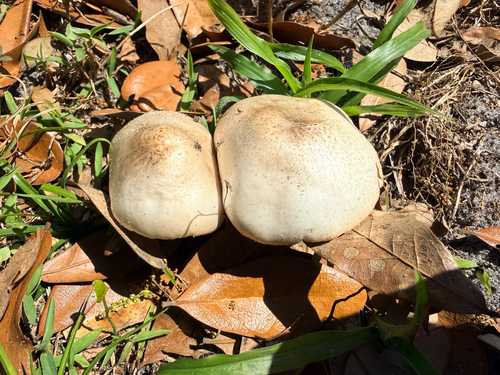
Scaly Shield
Pluteus petasatus
Edibility unknown — do not eat -

Pluteus admirabilis
Edibility unknown — do not eat -
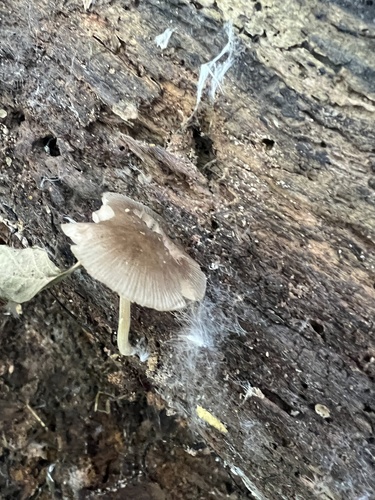
Pleated Pluteus
Pluteus longistriatus
Edibility unknown — do not eat -
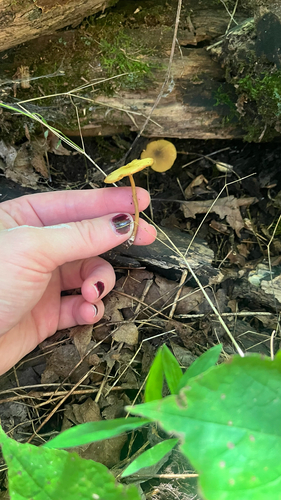
Yellow Deer Mushroom
Pluteus chrysophlebius
Edibility unknown — do not eat -
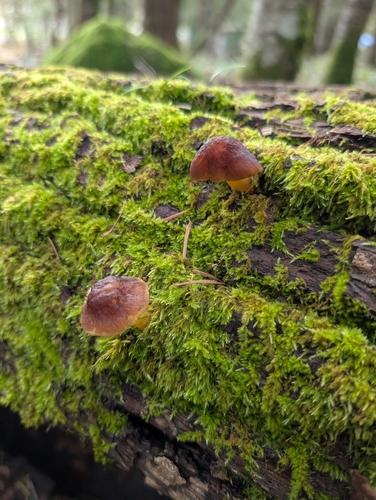
Goldleaf Shield
Pluteus romellii
Edibility unknown — do not eat -
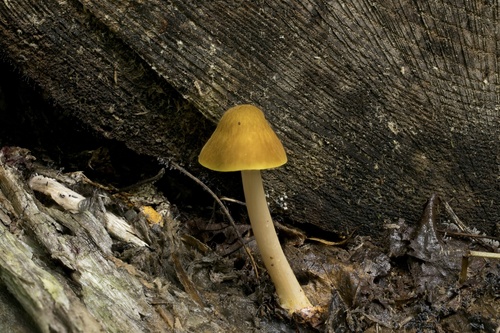
Lion Shield
Pluteus leoninus
Edible (per source) -
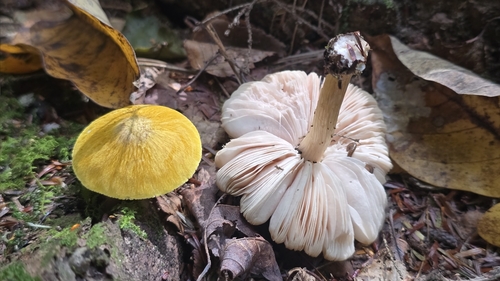
Pluteus flavofuligineus
Edibility unknown — do not eat
Never eat a wild mushroom based on this site or any app. See safety basics and the disclaimer.