

Burnet Rose Rust
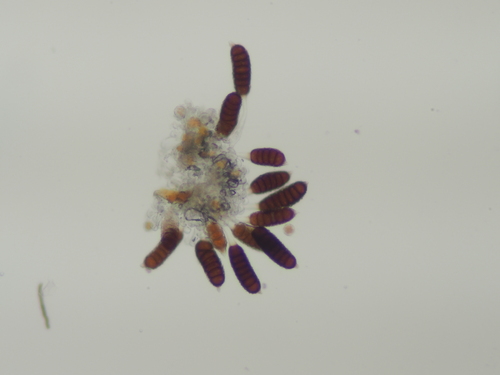
Phragmidium rosae-pimpinellifoliae (Rabenh.) Dietel
Edibility
Edibility unknown — do not eat
Never eat a wild mushroom based on this site or any app.
Lookalikes
No lookalikes are recorded for this species yet. That does not mean there are none. Many mushrooms look alike, so never rely on appearance alone.
Season
When this species has been recorded, by month, from open-licensed US and Canada observations. It shows when people report it, not a guarantee it is fruiting.
The highlighted bar is the current month.
View season data as a table
| Month | Records |
|---|---|
| January | 0 |
| February | 0 |
| March | 0 |
| April | 0 |
| May | 12 |
| June | 18 |
| July | 35 |
| August | 23 |
| September | 22 |
| October | 11 |
| November | 2 |
| December | 2 |
Where it is found
States and provinces with the most records. Check the foraging rules for the place you plan to visit.
- Wyoming 15 records · Foraging rules
- Nebraska 12 records · Foraging rules
- Colorado 12 records · Foraging rules
- California 11 records · Foraging rules
- Montana 9 records · Foraging rules
- British Columbia 7 records · Foraging rules
- Kansas 7 records · Foraging rules
- Wisconsin 7 records · Foraging rules
- Alaska 5 records · Foraging rules
- Illinois 5 records · Foraging rules
- New Jersey 5 records · Foraging rules
- Massachusetts 4 records · Foraging rules
- Utah 4 records · Foraging rules
- South Dakota 4 records · Foraging rules
- Quebec 3 records · Foraging rules
Show 15 more
- Ontario3 records
- Hawaii2 records
- Indiana2 records
- Nevada2 records
- New York2 records
- Michigan2 records
- Texas1 records
- Washington1 records
- New Brunswick1 records
- Delaware1 records
- West Virginia1 records
- Prince Edward Island1 records
- Newfoundland and Labrador1 records
- Ohio1 records
- Iowa1 records
About
Phragmidium rosae-pimpinellifoliae is a species of fungus in the family Phragmidiaceae. A plant pathogen, it causes a rust on the stem, leaves, petioles and fruits of burnet rose and related hybrids. The fungus is found in Europe and North America.
From Wikipedia, CC BY-SA 4.0. Read the original article.
Recent finds
No community finds tagged with this species yet. Log a find.
More in the genus Phragmidium
-
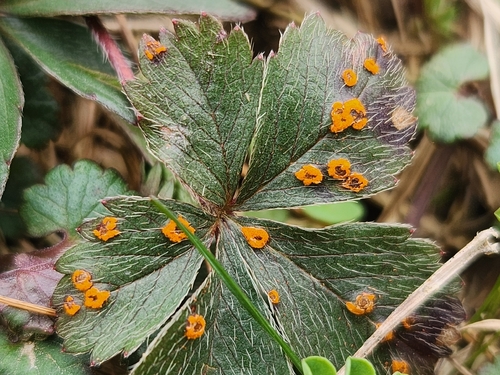
Cinquefoil Rust
Phragmidium potentillae
Edibility unknown — do not eat -
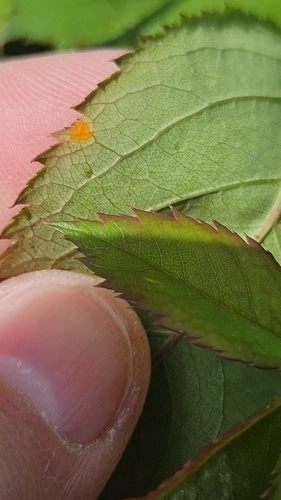
Rose Rust
Phragmidium mucronatum
Edibility unknown — do not eat -

Phragmidium montivagum
Edibility unknown — do not eat -
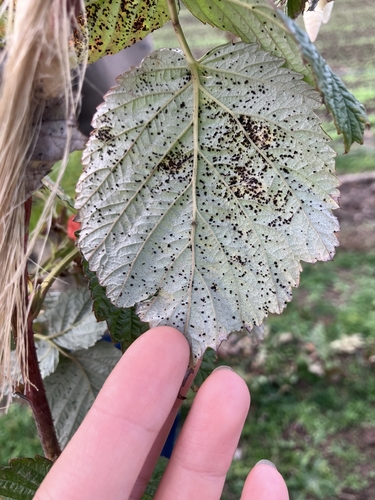
Raspberry Rust
Phragmidium rubi-idaei
Edibility unknown — do not eat -

Phragmidium speciosum
Edibility unknown — do not eat -
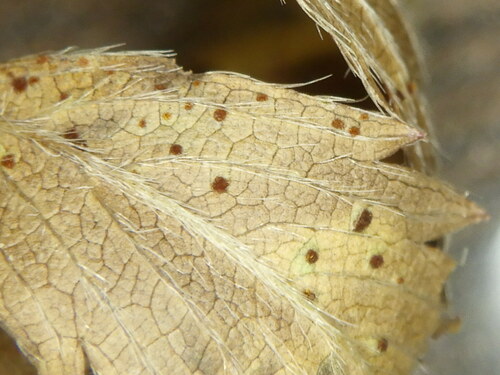
Phragmidium ivesiae
Edibility unknown — do not eat -
Phragmidium occidentale
Edibility unknown — do not eat -

Phragmidium americanum
Edibility unknown — do not eat
Never eat a wild mushroom based on this site or any app. See safety basics and the disclaimer.