

Penicillium rubens
Penicillium rubens Biourge
Edibility
Edibility unknown — do not eat
Never eat a wild mushroom based on this site or any app.
Lookalikes
No lookalikes are recorded for this species yet. That does not mean there are none. Many mushrooms look alike, so never rely on appearance alone.
Season
When this species has been recorded, by month, from open-licensed US and Canada observations. It shows when people report it, not a guarantee it is fruiting.
The highlighted bar is the current month.
View season data as a table
| Month | Records |
|---|---|
| January | 0 |
| February | 0 |
| March | 0 |
| April | 1 |
| May | 0 |
| June | 0 |
| July | 0 |
| August | 0 |
| September | 0 |
| October | 0 |
| November | 0 |
| December | 2 |
Where it is found
States and provinces with the most records. Check the foraging rules for the place you plan to visit.
- Illinois 1 records · Foraging rules
- New Mexico 1 records · Foraging rules
About
Penicillium rubens is a species of fungus in the genus Penicillium and was the first species known to produce the antibiotic penicillin. It was first described by Philibert Melchior Joseph Ehi Biourge in 1923. In 1928, Alexander Fleming at St Mary's Hospital, London discovered that the fungus produced an antibiotic that killed bacteria, and named the unknown compound penicillin. For the discovery and development of penicillin, Fleming shared the 1945 Nobel Prize in Physiology or Medicine with Ernst Boris Chain and Howard Florey. There was long history of controversy on the exact identification of the original penicillin-producing species and was variously identified as Penicillium rubrum, P. notatum, and P. chrysogenum among others. It was only after genomic comparison and phylogenetic analysis in 2011 that the species was resolved as P. rubens. P. rubens is the best source of penicillins such as benzylpenicillin (G), phenoxymethylpenicillin (V) and octanoylpenicillin (K). It also produces another class of antibiotics, cephalosporins. It is also the source of other important bioactive compounds such as andrastin, chrysogine, fungisporin, roquefortine, and sorbicillins.
From Wikipedia, CC BY-SA 4.0. Read the original article.
Recent finds
No community finds tagged with this species yet. Log a find.
More in the genus Penicillium
-
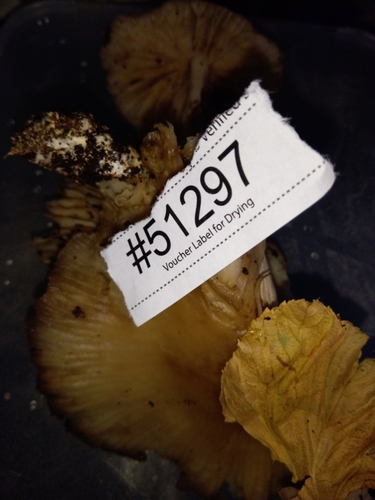
Penicillium adametzii
Edibility unknown — do not eat - No photo yet
Penicillium melinii
Edibility unknown — do not eat - No photo yet
Penicillium antarcticum
Edibility unknown — do not eat - No photo yet
Penicillium quercetorum
Edibility unknown — do not eat - No photo yet
Penicillium virgatum
Edibility unknown — do not eat -
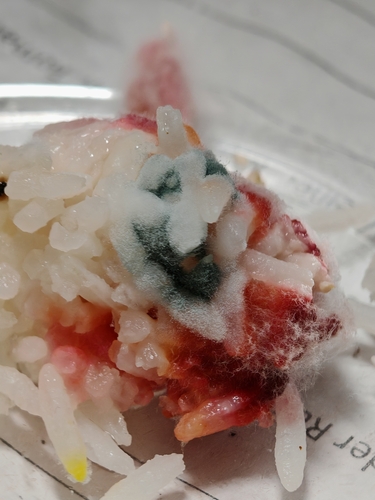
Penicillium chrysogenum
Edibility unknown — do not eat - No photo yet
Penicillium griseolum
Edibility unknown — do not eat -
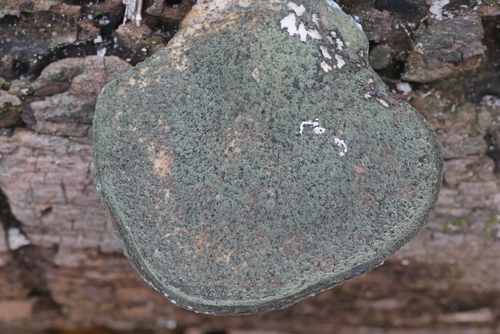
Rollrim Mould
Penicillium brevicompactum
Edibility unknown — do not eat
Never eat a wild mushroom based on this site or any app. See safety basics and the disclaimer.