

Penicillium bilaiae
Penicillium bilaiae Chalab.
Edibility
Edibility unknown — do not eat
Never eat a wild mushroom based on this site or any app.
Lookalikes
No lookalikes are recorded for this species yet. That does not mean there are none. Many mushrooms look alike, so never rely on appearance alone.
Season
When this species has been recorded, by month, from open-licensed US and Canada observations. It shows when people report it, not a guarantee it is fruiting.
The highlighted bar is the current month.
View season data as a table
| Month | Records |
|---|---|
| January | 0 |
| February | 0 |
| March | 0 |
| April | 0 |
| May | 0 |
| June | 0 |
| July | 0 |
| August | 1 |
| September | 0 |
| October | 0 |
| November | 0 |
| December | 0 |
Where it is found
States and provinces with the most records. Check the foraging rules for the place you plan to visit.
- Saskatchewan 4 records · Foraging rules
About
Penicillium bilaiae is a species of native soil fungus that can be used as a PGPM (plant growth-promoting microorganism). R. Kucey first identified that organic acids excreted by the microorganism can solubilize soil-bound phosphate. The organism can live in symbiosis with several plant species by enhancing phosphate uptake by the root structure while feeding off plant waste products. Native soil populations are often low and can be increased by application as an agricultural inoculant. The species name bilaiae is a transliteration of the Ukrainian scientist Prof. Vera Bilai for whom it is named in 1950 by Chalabuda T.V., Zabolotny Institute of Microbiology and Virology National Academy of Sciences of Ukraine, Kiev, Ukraine. Alternative spellings published in the literature are bilaji or bilaii.
From Wikipedia, CC BY-SA 4.0. Read the original article.
Recent finds
No community finds tagged with this species yet. Log a find.
More in the genus Penicillium
-
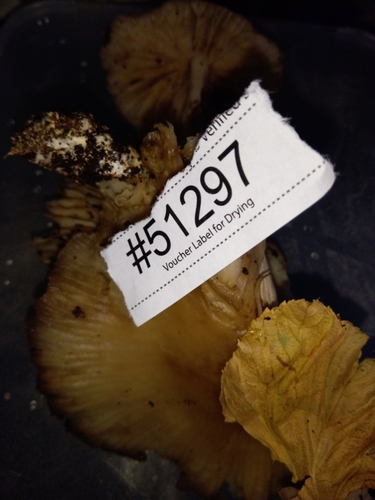
Penicillium adametzii
Edibility unknown — do not eat - No photo yet
Penicillium melinii
Edibility unknown — do not eat - No photo yet
Penicillium antarcticum
Edibility unknown — do not eat - No photo yet
Penicillium quercetorum
Edibility unknown — do not eat - No photo yet
Penicillium virgatum
Edibility unknown — do not eat -
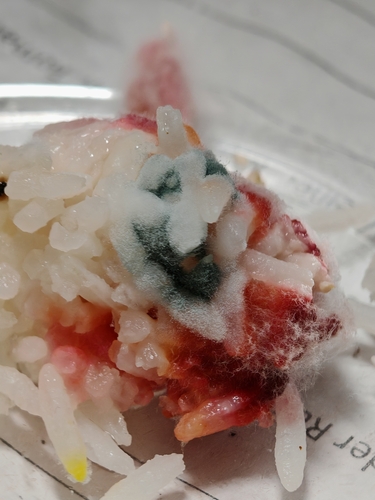
Penicillium chrysogenum
Edibility unknown — do not eat - No photo yet
Penicillium griseolum
Edibility unknown — do not eat -
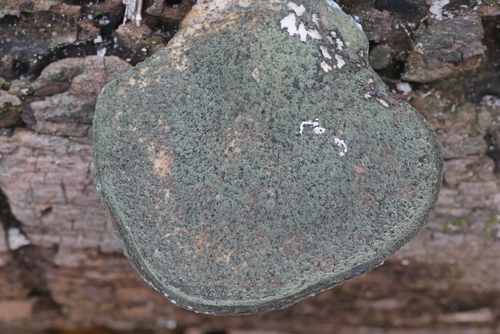
Rollrim Mould
Penicillium brevicompactum
Edibility unknown — do not eat
Never eat a wild mushroom based on this site or any app. See safety basics and the disclaimer.