

Panaeolus alcis
Panaeolus alcis M.M.Moser
Edibility
Edibility unknown — do not eat
Never eat a wild mushroom based on this site or any app.
Photos
-
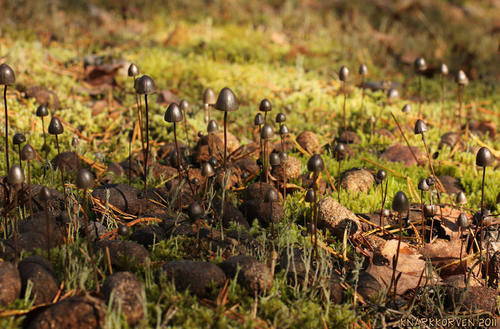
Photo: Alan Rockefeller. CC-BY. Source (inaturalist)
Lookalikes
No lookalikes are recorded for this species yet. That does not mean there are none. Many mushrooms look alike, so never rely on appearance alone.
Season
When this species has been recorded, by month, from open-licensed US and Canada observations. It shows when people report it, not a guarantee it is fruiting.
The highlighted bar is the current month.
View season data as a table
| Month | Records |
|---|---|
| January | 0 |
| February | 0 |
| March | 0 |
| April | 0 |
| May | 0 |
| June | 0 |
| July | 0 |
| August | 1 |
| September | 0 |
| October | 0 |
| November | 0 |
| December | 0 |
Where it is found
No regional records yet.
About
Panaeolus alcis is a species of agaric fungus in the family Bolbitiaceae. Found in Europe and Canada, it was described as new to science in 1984 by Austrian mycologist Meinhard Michael Moser. The type collection, made in Sweden, was found growing on moose dung. The fungus produces small, brown fruit bodies with bell-shaped to conical caps measuring 0.4–1 cm (0.2–0.4 in) in diameter and 0.3–0.9 cm (0.12–0.35 in) high. Gills are dark gray initially, then develop a black mottling when the spores mature. The gray to brownish stipe is 2–9 cm (0.8–3.5 in) long by 0.5–1.5 mm thick, and pruinose (covered with white powdery granules). Spores are smooth, dark brown, and have a pore. They measure 16.3–21 by 8–12 μm when viewed face-on, and 8–10 μm viewed from the side. The fungus has been mostly found fruiting on the droppings of moose, although it has also been recorded on roe deer and reindeer dung. Moser originally published the name of this species invalidly in 1983 as Panaeolus alcidis; this name is now considered an orthographic variant.
From Wikipedia, CC BY-SA 4.0. Read the original article.
Recent finds
No community finds tagged with this species yet. Log a find.
More in the genus Panaeolus
-
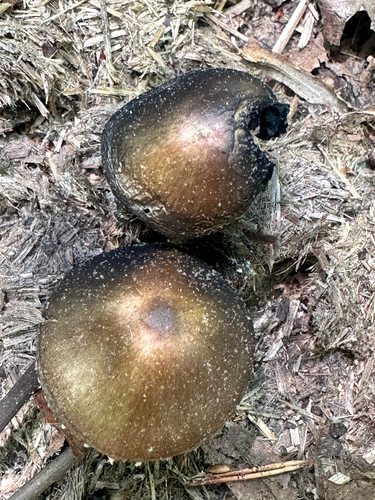
Petticoat Mottlegill
Panaeolus papilionaceus
Inedible - No photo yet
Panaeolus subbalteatus
Edibility unknown — do not eat -
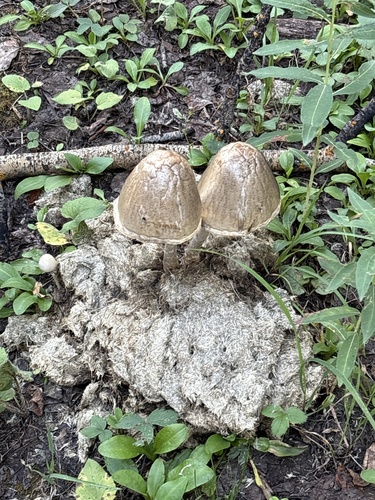
Egghead Mottlegill
Panaeolus semiovatus
Inedible -

Banded Mottlegill
Panaeolus cinctulus
Psychoactive - No photo yet
Panaeolus solidipes
Edibility unknown — do not eat -
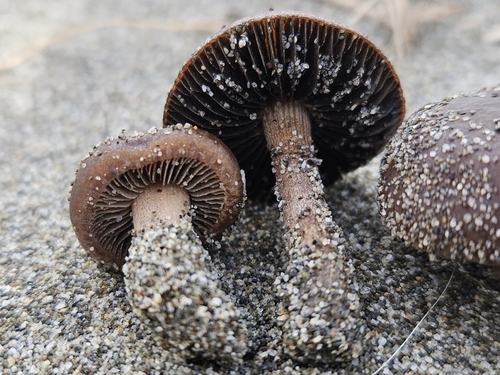
Turf Mottlegill
Panaeolus fimicola
Edibility unknown — do not eat -
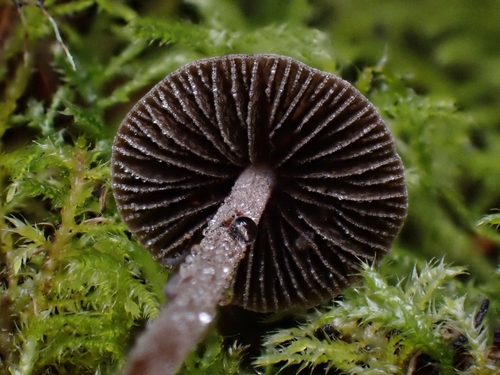
Dewdrop Mottlegill
Panaeolus acuminatus
Edibility unknown — do not eat -
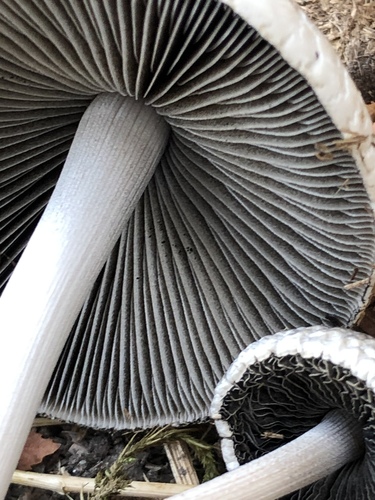
Panaeolus antillarum
Edible (per source)
Never eat a wild mushroom based on this site or any app. See safety basics and the disclaimer.