

Poplar Bracket
Oxyporus populinus (Schumach.) Donk
Edibility
Edibility unknown — do not eat
Never eat a wild mushroom based on this site or any app.
Photos
-
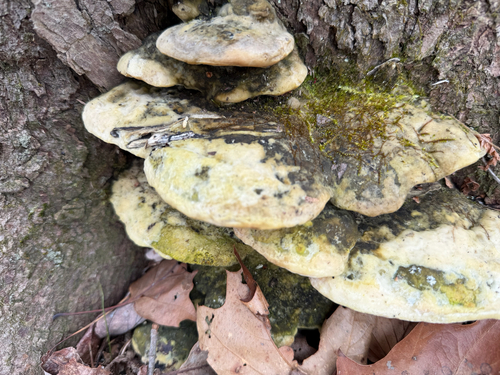
Photo: Sawyer Baran. CC-BY. Source (inaturalist) -
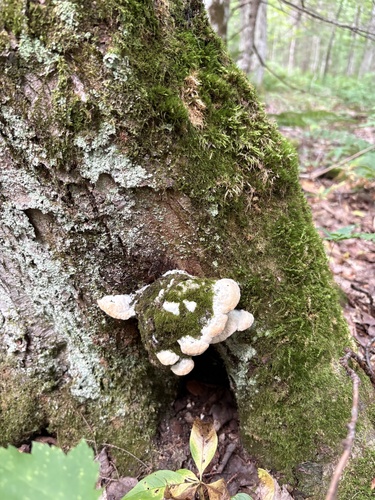
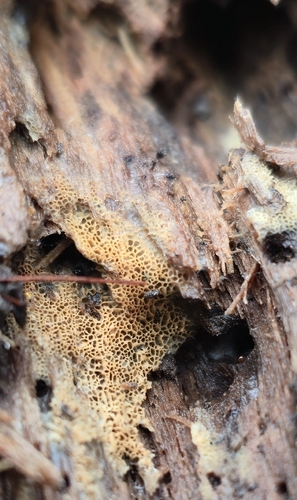
Photo: kedgehog. CC-BY. Source (inaturalist) -
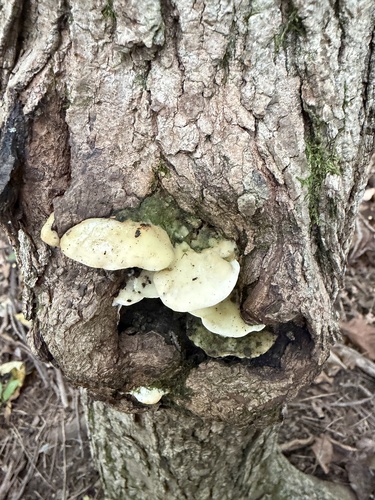
Photo: Julie Travaglini. CC-BY. Source (inaturalist) -
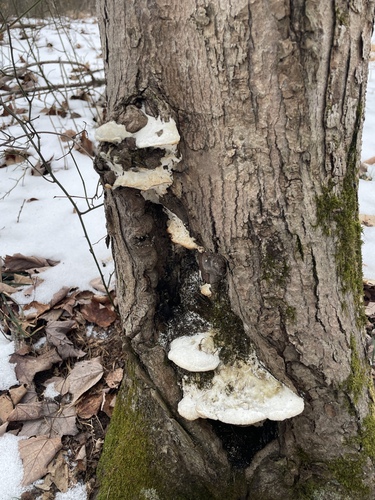
Photo: Stephanie Tran. CC-BY. Source (inaturalist)
Lookalikes
No lookalikes are recorded for this species yet. That does not mean there are none. Many mushrooms look alike, so never rely on appearance alone.
Season
When this species has been recorded, by month, from open-licensed US and Canada observations. It shows when people report it, not a guarantee it is fruiting.
The highlighted bar is the current month.
View season data as a table
| Month | Records |
|---|---|
| January | 19 |
| February | 26 |
| March | 43 |
| April | 47 |
| May | 58 |
| June | 54 |
| July | 143 |
| August | 293 |
| September | 296 |
| October | 259 |
| November | 104 |
| December | 32 |
Where it is found
States and provinces with the most records. Check the foraging rules for the place you plan to visit.
- New York 185 records · Foraging rules
- Ontario 137 records · Foraging rules
- Pennsylvania 119 records · Foraging rules
- Ohio 94 records · Foraging rules
- Quebec 87 records · Foraging rules
- Massachusetts 76 records · Foraging rules
- New Hampshire 58 records · Foraging rules
- Connecticut 54 records · Foraging rules
- Wisconsin 48 records · Foraging rules
- Vermont 45 records · Foraging rules
- Maine 41 records · Foraging rules
- Tennessee 39 records · Foraging rules
- Michigan 39 records · Foraging rules
- New Jersey 38 records · Foraging rules
- Virginia 32 records · Foraging rules
Show 28 more
- North Carolina24 records
- Illinois23 records
- Minnesota23 records
- Indiana23 records
- West Virginia19 records
- Nova Scotia12 records
- Missouri10 records
- Maryland10 records
- Rhode Island9 records
- New Brunswick9 records
- Manitoba9 records
- Florida7 records
- Kentucky5 records
- Delaware5 records
- South Carolina4 records
- Georgia4 records
- British Columbia3 records
- Alabama3 records
- North Dakota3 records
- Kansas2 records
- Iowa2 records
- Utah1 records
- Colorado1 records
- Saskatchewan1 records
- Prince Edward Island1 records
- Nebraska1 records
- Wyoming1 records
- South Dakota1 records
About
Oxyporus populinus, also known as the mossy maple polypore and poplar bracket, is a species of fungus in the family Schizoporaceae. It is a plant pathogen that affects trees. It is typically white (sometimes gray near the center and/or pinkish near the margin), more or less semicircular, and 2.5–20 centimetres (1–8 in) wide, with tough flesh which is inedible.
From Wikipedia, CC BY-SA 4.0. Read the original article.
Recent finds
No community finds tagged with this species yet. Log a find.
More in the genus Oxyporus
-
Oxyporus corticola
Inedible - No photo yet
Oxyporus cuneatus
Edibility unknown — do not eat - No photo yet
Oxyporus obducens
Edibility unknown — do not eat - No photo yet
Oxyporus similis
Edibility unknown — do not eat - No photo yet
Oxyporus pellicula
Edibility unknown — do not eat - No photo yet
Oxyporus macroporus
Edibility unknown — do not eat - No photo yet
Oxyporus piceicola
Edibility unknown — do not eat - No photo yet
Oxyporus millavensis
Edibility unknown — do not eat
Never eat a wild mushroom based on this site or any app. See safety basics and the disclaimer.