

Nia vibrissa
Nia vibrissa R.T.Moore & Meyers
Edibility
Edibility unknown — do not eat
Never eat a wild mushroom based on this site or any app.
Photos
-

Photo: Jerry Cooper. CC-BY. Source (inaturalist) -
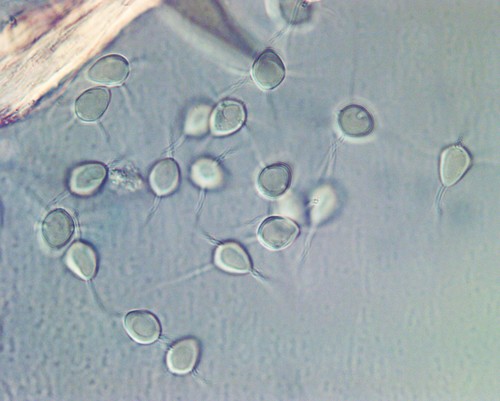
Photo: Jerry Cooper. CC-BY. Source (inaturalist)
Lookalikes
No lookalikes are recorded for this species yet. That does not mean there are none. Many mushrooms look alike, so never rely on appearance alone.
Season
When this species has been recorded, by month, from open-licensed US and Canada observations. It shows when people report it, not a guarantee it is fruiting.
The highlighted bar is the current month.
View season data as a table
| Month | Records |
|---|---|
| January | 0 |
| February | 0 |
| March | 4 |
| April | 0 |
| May | 8 |
| June | 0 |
| July | 1 |
| August | 0 |
| September | 0 |
| October | 0 |
| November | 0 |
| December | 0 |
Where it is found
States and provinces with the most records. Check the foraging rules for the place you plan to visit.
- California 6 records · Foraging rules
- Hawaii 4 records · Foraging rules
- Florida 2 records · Foraging rules
- North Carolina 1 records · Foraging rules
- Rhode Island 1 records · Foraging rules
About
Nia vibrissa is a species of fungus in the order Agaricales. The species is adapted to a marine environment and is a wood-rotting fungus, producing small, gasteroid basidiocarps (fruit bodies) on driftwood, submerged timber, mangrove wood, and similar substrates. The spores have long, hair-like projections and are widely dispersed in sea water, giving Nia vibrissa a cosmopolitan distribution.
From Wikipedia, CC BY-SA 4.0. Read the original article.
Recent finds
No community finds tagged with this species yet. Log a find.
Never eat a wild mushroom based on this site or any app. See safety basics and the disclaimer.