

Montanelia saximontana
Montanelia saximontana (R.A.Anderson & W.A.Weber) S.D.Leav., Essl., Divakar, A.Crespo & Lumbsch
Edibility
Edibility unknown — do not eat
Never eat a wild mushroom based on this site or any app.
Lookalikes
No lookalikes are recorded for this species yet. That does not mean there are none. Many mushrooms look alike, so never rely on appearance alone.
Season
When this species has been recorded, by month, from open-licensed US and Canada observations. It shows when people report it, not a guarantee it is fruiting.
The highlighted bar is the current month.
View season data as a table
| Month | Records |
|---|---|
| January | 0 |
| February | 1 |
| March | 2 |
| April | 15 |
| May | 1 |
| June | 0 |
| July | 0 |
| August | 1 |
| September | 0 |
| October | 1 |
| November | 0 |
| December | 0 |
Where it is found
States and provinces with the most records. Check the foraging rules for the place you plan to visit.
- Colorado 15 records · Foraging rules
- Minnesota 2 records · Foraging rules
- Northwest Territories 1 records · Foraging rules
- California 1 records · Foraging rules
- Nevada 1 records · Foraging rules
About
Montanelia saximontana is a species of foliose lichen in the family Parmeliaceae. It is characterized by its olive-brown, leafy growth form with powdery reproductive structures (soredia) and a black underside. The species grows on rocks and occasionally on tree bark across western North America, from British Columbia south to Arizona. Originally described from specimens collected in Colorado in 1962, it was transferred to its current genus in 2016 based on DNA evidence. It is closely related to the Asian species Montanelia tominii and can only be reliably distinguished from it using DNA sequences. Thalli can grow up to 15 cm (6 in) across, typically forming rosettes on rock surfaces.
From Wikipedia, CC BY-SA 4.0. Read the original article.
Recent finds
No community finds tagged with this species yet. Log a find.
More in the genus Montanelia
-
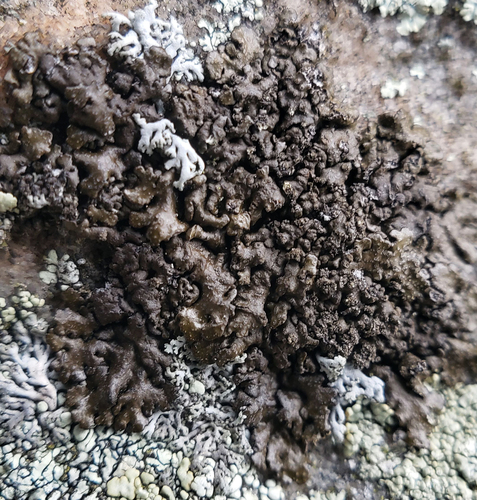
Dimpled Camouflage Lichen
Montanelia tominii
Edibility unknown — do not eat -
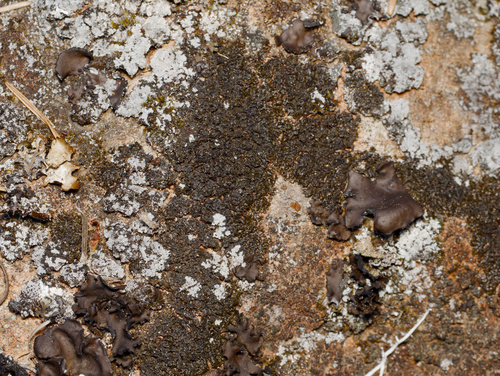
Mealy Camouflage Lichen
Montanelia disjuncta
Edibility unknown — do not eat -
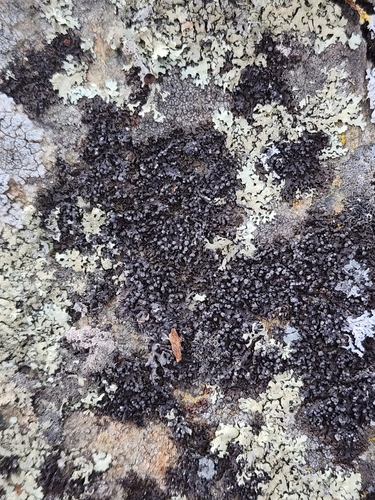
Powdered Camouflage Lichen
Montanelia sorediata
Edibility unknown — do not eat -
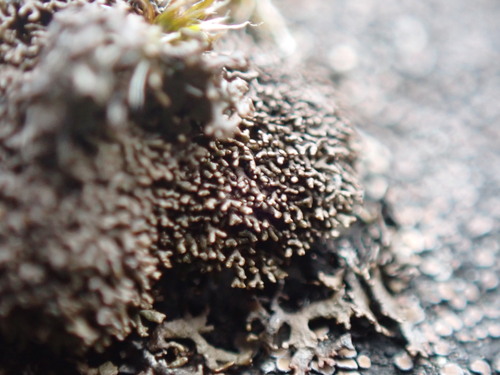
Shingled Camouflage Lichen
Montanelia panniformis
Edibility unknown — do not eat
Never eat a wild mushroom based on this site or any app. See safety basics and the disclaimer.