

Lobariella pallida
Lobariella pallida (Hook.) B.Moncada & Lücking
Edibility
Edibility unknown — do not eat
Never eat a wild mushroom based on this site or any app.
Photos
-

Photo: Jean-Paul Boerekamps. CC0. Source (inaturalist) -
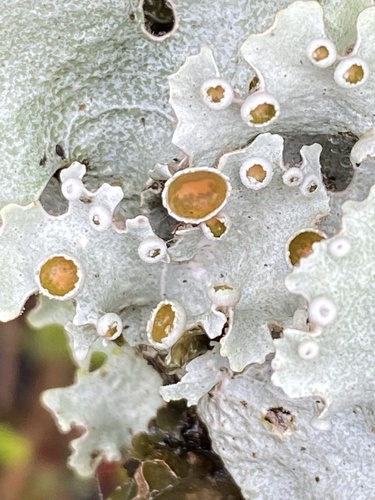
Photo: Jean-Paul Boerekamps. CC0. Source (inaturalist)
Lookalikes
No lookalikes are recorded for this species yet. That does not mean there are none. Many mushrooms look alike, so never rely on appearance alone.
Season
When this species has been recorded, by month, from open-licensed US and Canada observations. It shows when people report it, not a guarantee it is fruiting.
The highlighted bar is the current month.
View season data as a table
| Month | Records |
|---|---|
| January | 0 |
| February | 0 |
| March | 0 |
| April | 0 |
| May | 0 |
| June | 0 |
| July | 0 |
| August | 0 |
| September | 0 |
| October | 0 |
| November | 1 |
| December | 0 |
Where it is found
No regional records yet.
About
Lobariella pallida is a species of corticolous (bark-dwelling), foliose lichen in the family Peltigeraceae. It was first formally described in 1822 by English botanist William Jackson Hooker, as a member of the genus Sticta. Bibiana Moncada and Robert Lücking transferred it to the genus Lobariella in 2011. The lichen occurs in páramo regions of Central and South America, where it grows on twigs and thin stems of shrubs and small trees. It is the most common species in its genus. Although it typically grows in association with other lichens, its quite loose attachment to its substrate means it does not take up much surface space. Secondary chemicals (lichen products) present in Lobariella pallida include lobariellin (methyl 3-formyl-2,4-dihydroxy-5,6-dimethylbenzoate) and methyl orsellinate.
From Wikipedia, CC BY-SA 4.0. Read the original article.
Recent finds
No community finds tagged with this species yet. Log a find.
More in the genus Lobariella
Never eat a wild mushroom based on this site or any app. See safety basics and the disclaimer.