

Lettuce Lichen
Lobaria oregana (Tuck.) Müll.Arg.
Also called: Oregon lung lichen
Edibility
Edibility unknown — do not eat
Never eat a wild mushroom based on this site or any app.
Photos
-
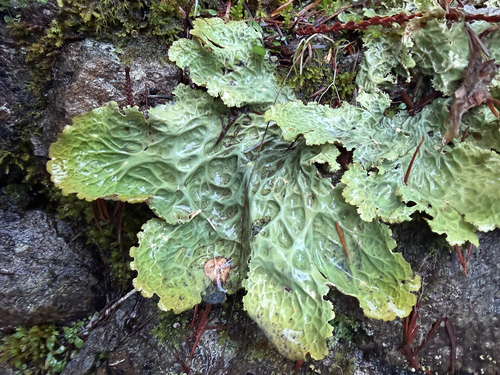
Photo: jjfeiler. CC-BY. Source (inaturalist) -
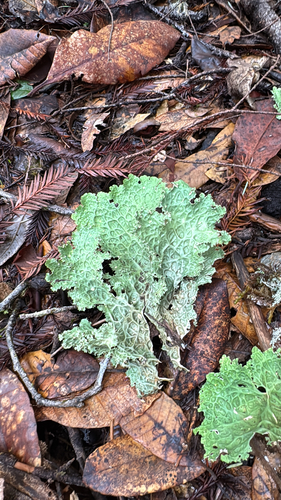
Photo: Megan “Moe” Morelock. CC-BY. Source (inaturalist) -
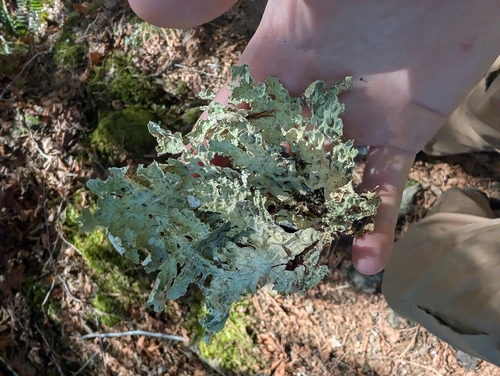
Photo: Drew Meyer. CC0. Source (inaturalist) -
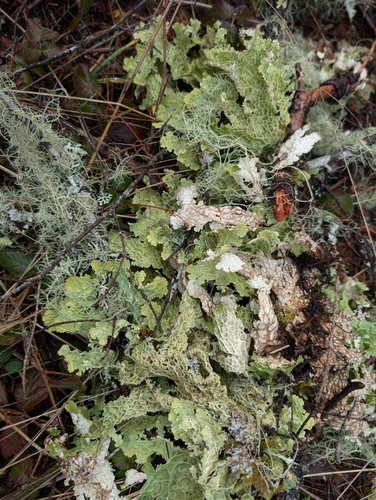
Photo: Drew Meyer. CC0. Source (inaturalist)
Lookalikes
No lookalikes are recorded for this species yet. That does not mean there are none. Many mushrooms look alike, so never rely on appearance alone.
Season
When this species has been recorded, by month, from open-licensed US and Canada observations. It shows when people report it, not a guarantee it is fruiting.
The highlighted bar is the current month.
View season data as a table
| Month | Records |
|---|---|
| January | 42 |
| February | 54 |
| March | 111 |
| April | 215 |
| May | 268 |
| June | 492 |
| July | 383 |
| August | 405 |
| September | 225 |
| October | 113 |
| November | 53 |
| December | 40 |
Where it is found
States and provinces with the most records. Check the foraging rules for the place you plan to visit.
- British Columbia 1,403 records · Foraging rules
- Washington 472 records · Foraging rules
- Oregon 344 records · Foraging rules
- Alaska 238 records · Foraging rules
- California 34 records · Foraging rules
- Alberta 2 records · Foraging rules
- Colorado 2 records · Foraging rules
- Idaho 1 records · Foraging rules
- Minnesota 1 records · Foraging rules
- Northwest Territories 1 records · Foraging rules
About
Lobaria oregana, also known as lettuce lichen and as Oregon lungwort, is a species of foliose lichen occurring in North American old-growth forests, such as the Hoh Rainforest in Washington state. Taking its common name from its lettuce-like appearance, the lichen grows in the tree canopy but falls to the forest floor, where it is consumed by deer, elk, and other animals. The species was first described by American botanist Edward Tuckerman in 1874 as Sticta oregana, and later (1889) transferred to the genus Lobaria by Swiss lichen specialist Johannes Müller Argoviensis. Via cyanobacteria, it fixes nitrogen from the air, which then enters the local ecosystem when eaten or when absorbed by rootlets which the host trees extend from their own bark into the lichen.
From Wikipedia, CC BY-SA 4.0. Read the original article.
More in the genus Lobaria

Never eat a wild mushroom based on this site or any app. See safety basics and the disclaimer.