

wolf lichen
Letharia vulpina (L.) Hue
Edibility
Edibility unknown — do not eat
Never eat a wild mushroom based on this site or any app.
Photos
-
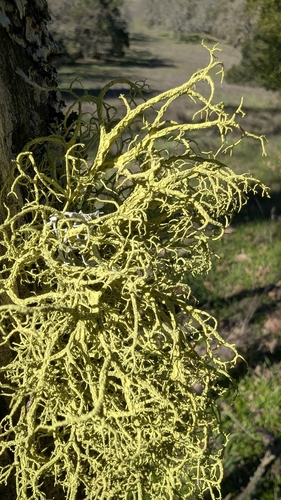
Photo: Felicia Gershberg. CC-BY. Source (inaturalist) -
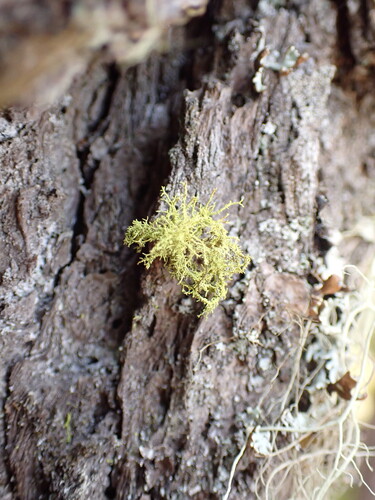
Photo: Randal. CC0. Source (inaturalist) -
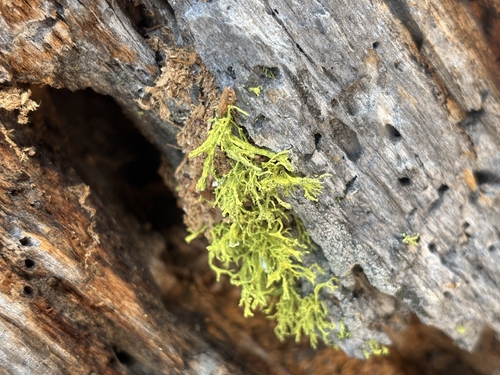
Photo: Jeff Wilson. CC-BY. Source (inaturalist) -
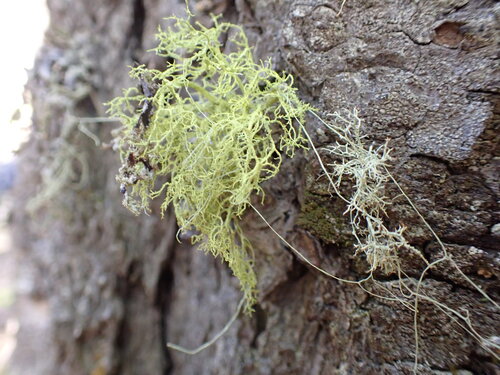
Photo: Randal. CC0. Source (inaturalist)
Lookalikes
No lookalikes are recorded for this species yet. That does not mean there are none. Many mushrooms look alike, so never rely on appearance alone.
Season
When this species has been recorded, by month, from open-licensed US and Canada observations. It shows when people report it, not a guarantee it is fruiting.
The highlighted bar is the current month.
View season data as a table
| Month | Records |
|---|---|
| January | 68 |
| February | 74 |
| March | 130 |
| April | 171 |
| May | 516 |
| June | 499 |
| July | 522 |
| August | 578 |
| September | 318 |
| October | 154 |
| November | 74 |
| December | 57 |
Where it is found
States and provinces with the most records. Check the foraging rules for the place you plan to visit.
- British Columbia 1,018 records · Foraging rules
- California 919 records · Foraging rules
- Oregon 338 records · Foraging rules
- Washington 323 records · Foraging rules
- Wyoming 188 records · Foraging rules
- Montana 178 records · Foraging rules
- Idaho 166 records · Foraging rules
- Alberta 127 records · Foraging rules
- Nevada 23 records · Foraging rules
- Yukon 20 records · Foraging rules
- Colorado 17 records · Foraging rules
- Alaska 7 records · Foraging rules
- South Dakota 7 records · Foraging rules
- Minnesota 2 records · Foraging rules
- Utah 2 records · Foraging rules
Show 3 more
- North Dakota2 records
- Massachusetts1 records
- Arizona1 records
About
Letharia vulpina, commonly known as the wolf lichen (although the species name vulpina, from vulpine relates to the fox), is a fruticose lichenized species of fungus in the family Parmeliaceae. It is bright yellow-green, shrubby and highly branched, and grows on the bark of living and dead conifers in parts of western and continental Europe and the Pacific Northwest and northern Rocky Mountains of North America. This species is somewhat toxic to mammals due to the yellow pigment vulpinic acid, and has been used historically as a poison for wolves and foxes. It has also been used traditionally by many native North American ethnic groups as a pigment source for dyes and paints.
From Wikipedia, CC BY-SA 4.0. Read the original article.
Never eat a wild mushroom based on this site or any app. See safety basics and the disclaimer.