

Lepra corallina
Lepra corallina (L.) Hafellner
Edibility
Edibility unknown — do not eat
Never eat a wild mushroom based on this site or any app.
Photos
-

Photo: Vesa Oikonen. CC0. Source (inaturalist) -
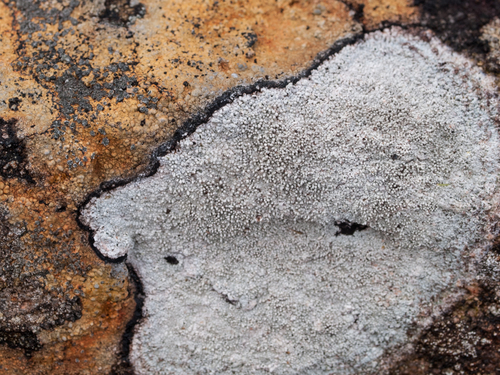
Photo: Tim Johnson. CC-BY. Source (inaturalist)
Lookalikes
No lookalikes are recorded for this species yet. That does not mean there are none. Many mushrooms look alike, so never rely on appearance alone.
Season
Season data is not available for this species yet.
Where it is found
States and provinces with the most records. Check the foraging rules for the place you plan to visit.
- North Carolina 1 records · Foraging rules
- Pennsylvania 1 records · Foraging rules
- Vermont 1 records · Foraging rules
About
Lepra corallina is a species of saxicolous (rock-dwelling) crustose lichen in the family Pertusariaceae. First described by Carl Linnaeus in 1767 as Lichen corallinus, it was long known as Pertusaria corallina until molecular studies showed that Pertusaria in its traditional sense was not a natural group; the species was transferred to Lepra in 2016. The lichen forms a thick whitish to grey crust on acidic, lime-free rocks and is characterized by abundant coral-like isidia that often cover much of the surface. Fertile structures are rare. When present, they appear as small wart-like swellings containing a few apothecia with very large, two-spored asci. The lichen's chemistry is dominated by thamnolic acid, a secondary metabolite that contributes to its characteristic reactions to chemical tests. Lepra corallina is widely distributed across temperate and boreal regions of the Northern Hemisphere, with records from western Europe, Scandinavia, Russia, Greenland, and eastern Asia. It grows mainly on steep or vertical faces of hard siliceous rock, from coastal outcrops to alpine ridges. The lichen actively weathers its rock substrate by excreting oxalic acid, which dissolves minerals and produces calcium oxalate crystals within the thallus. On manganese-rich ores it forms manganese oxalate, the first documented natural occurrence of that mineral. Field studies in Norway and Wales have shown it to be a habitat generalist and a relatively strong competitor, capable of overgrowing neighbouring crustose lichens, though its dominance can be transient. Established thalli also serve as hosts for several lichenicolous fungi.
From Wikipedia, CC BY-SA 4.0. Read the original article.
Recent finds
No community finds tagged with this species yet. Log a find.
More in the genus Lepra
-
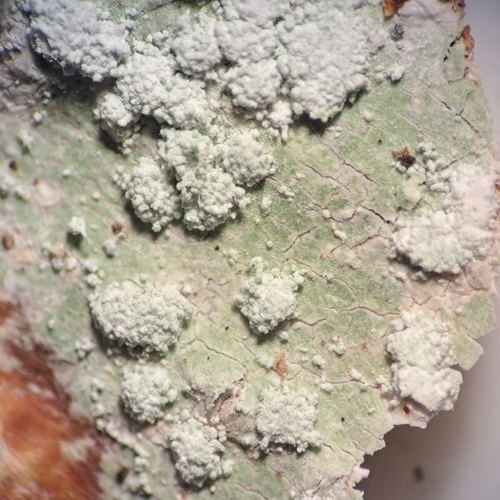
bitter wart lichen
Lepra amara
Edibility unknown — do not eat -
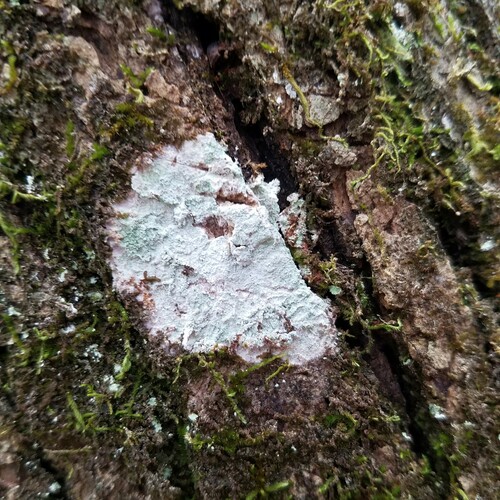
Pustule Crust Lichen
Lepra pustulata
Edibility unknown — do not eat -
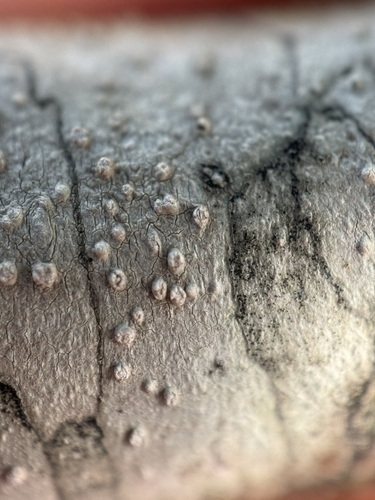
Powdered Wart Lichen
Lepra trachythallina
Edibility unknown — do not eat -
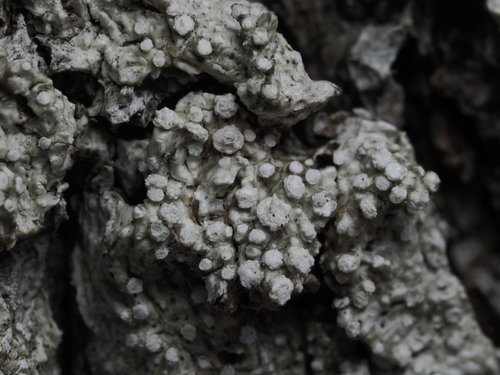
Ragged Wart Lichen
Lepra ophthalmiza
Edibility unknown — do not eat -
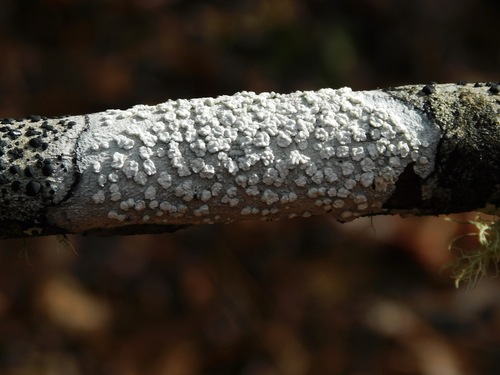
Fumarprotocetraric Fluff-Wart
Lepra multipunctoides
Edibility unknown — do not eat -
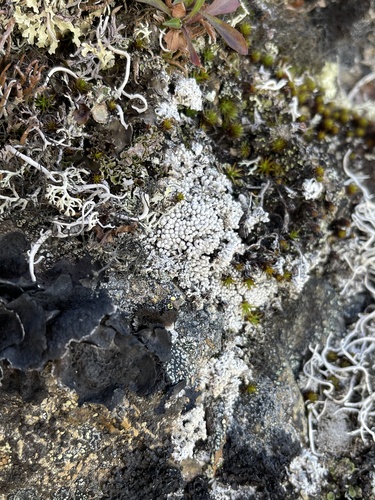
Finger Wart Lichen
Lepra dactylina
Edibility unknown — do not eat -
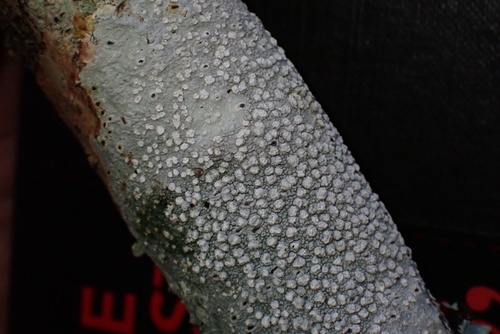
Lepra multipuncta
Edibility unknown — do not eat - No photo yet
Lepra commutata
Edibility unknown — do not eat
Never eat a wild mushroom based on this site or any app. See safety basics and the disclaimer.