

Greyshank Bolete
Leccinum cyaneobasileucum Lannoy & Estadès
Edibility
Edibility unknown — do not eat
Never eat a wild mushroom based on this site or any app.
Photos
-
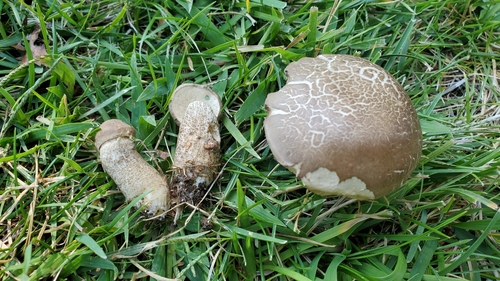
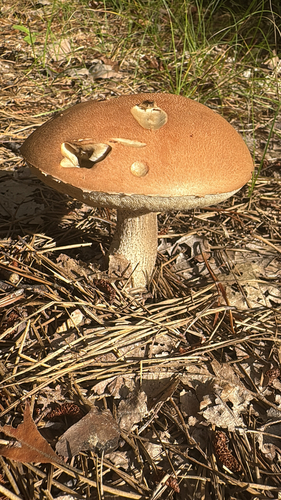
Photo: Thea Chesney. CC-BY. Source (inaturalist)
Lookalikes
No lookalikes are recorded for this species yet. That does not mean there are none. Many mushrooms look alike, so never rely on appearance alone.
Season
When this species has been recorded, by month, from open-licensed US and Canada observations. It shows when people report it, not a guarantee it is fruiting.
The highlighted bar is the current month.
View season data as a table
| Month | Records |
|---|---|
| January | 0 |
| February | 0 |
| March | 0 |
| April | 0 |
| May | 0 |
| June | 0 |
| July | 0 |
| August | 2 |
| September | 0 |
| October | 2 |
| November | 0 |
| December | 0 |
Where it is found
States and provinces with the most records. Check the foraging rules for the place you plan to visit.
- California 4 records · Foraging rules
About
Leccinum cyaneobasileucum is a species of bolete fungus in the family Boletaceae. Originally found growing under silver birch, it was described as new to science in 1991. The fungus produces fruit bodies with caps measuring 5–15 cm (2–6 in) wide that range in colour from hazel, to reddish-yellow, to walnut brown. The white to grey stipe measures 7–20 cm (3–8 in) long by 0.8–2 cm (0.3–0.8 in) thick and is covered with brownish scales. In deposit the spores are walnut brown; microscopically, they are somewhat spindle shaped and measure 14–18 by 5–6 μm. L. cyaneobasileucum grows under birch, usually in moss. The mushroom is edible but according to the British botanist Roger Phillips, not particularly tasty.
From Wikipedia, CC BY-SA 4.0. Read the original article.
Recent finds
No community finds tagged with this species yet. Log a find.
More in the genus Leccinum
-
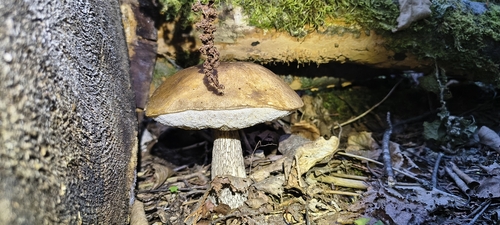
Brown Birch Bolete
Leccinum scabrum
Edibility unknown — do not eat -
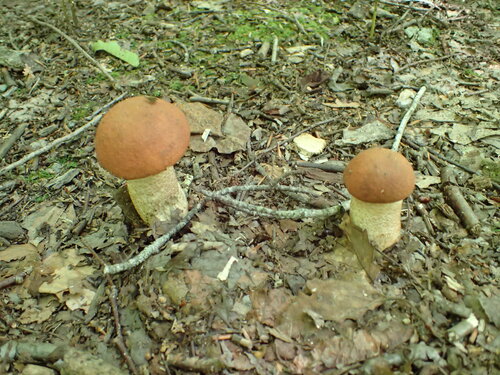
Orange Oak Bolete
Leccinum aurantiacum
Caution -
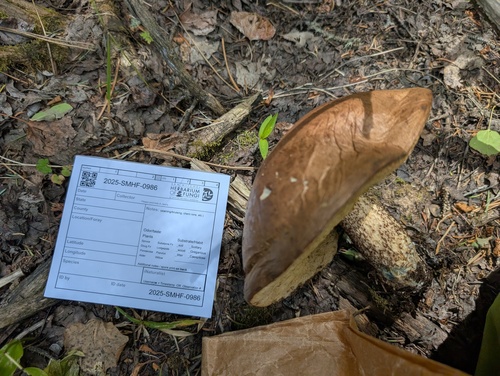
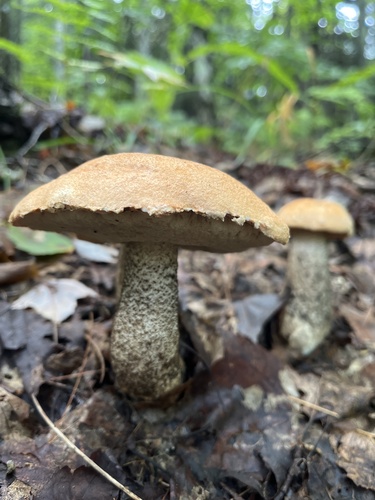
aspen bolete
Leccinum insigne
Edible (per source) -
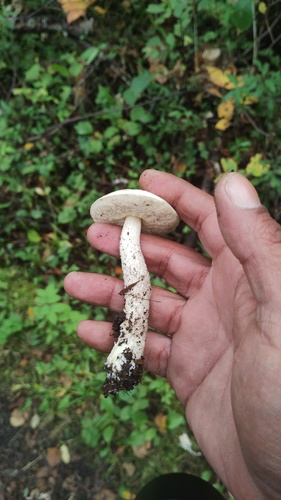
Ghost Bolete
Leccinum holopus
Edible (per source) -
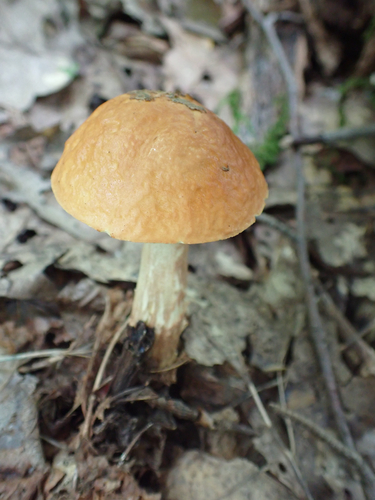
Orange Birch Bolete
Leccinum versipelle
Edibility unknown — do not eat -
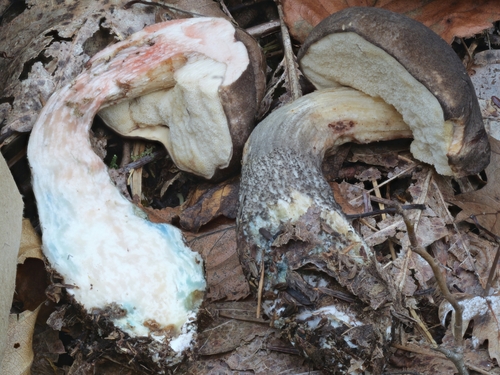
Leccinum longicurvipes
Edibility unknown — do not eat -
Snell's bolete
Leccinum snellii
Edibility unknown — do not eat -
Foxy Bolete
Leccinum vulpinum
Edibility unknown — do not eat
Never eat a wild mushroom based on this site or any app. See safety basics and the disclaimer.