

Lactarius subtorminosus
Lactarius subtorminosus Coker
Edibility
Edibility unknown — do not eat
Never eat a wild mushroom based on this site or any app.
Lookalikes
No lookalikes are recorded for this species yet. That does not mean there are none. Many mushrooms look alike, so never rely on appearance alone.
Season
When this species has been recorded, by month, from open-licensed US and Canada observations. It shows when people report it, not a guarantee it is fruiting.
The highlighted bar is the current month.
View season data as a table
| Month | Records |
|---|---|
| January | 0 |
| February | 0 |
| March | 0 |
| April | 0 |
| May | 0 |
| June | 0 |
| July | 1 |
| August | 0 |
| September | 1 |
| October | 0 |
| November | 0 |
| December | 0 |
Where it is found
States and provinces with the most records. Check the foraging rules for the place you plan to visit.
- Ontario 1 records · Foraging rules
- North Carolina 1 records · Foraging rules
About
Lactarius subtorminosus is a member of the "milk-cap" genus Lactarius in the order Russulales. Described as new to science by William Chambers Coker in 1918, it is known from North America. The whitish to cream-colored cap reaches 5–6 cm (2.0–2.4 in) in diameter and is tomentose, with margins folded inward. The gills are packed closely together, and are cream when mature. Gills that are cut will first turn pink then light brown. The stem is about 1.5 cm (0.6 in) long and 1.1–1.5 cm (0.4–0.6 in) thick, white overall with a few cream dots, and covered with a dense layer of small hairs. When cut or injured, the fruit bodies will ooze a sparse whitish latex with a taste similar to cypress wood. The spores are roughly spherical, warted, and measure 5.8–6.5 by 6.5–7 μm. Lactarius subtorminosus may be distinguished from the similar L. torminosus by its milder latex and smaller spores.
From Wikipedia, CC BY-SA 4.0. Read the original article.
Recent finds
No community finds tagged with this species yet. Log a find.
More in the genus Lactarius
-
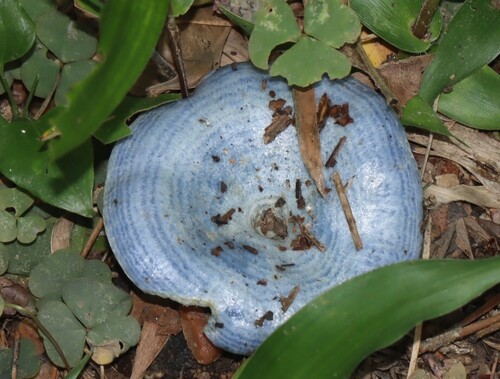
Indigo Milk Cap
Lactarius indigo
Edible (per source) -
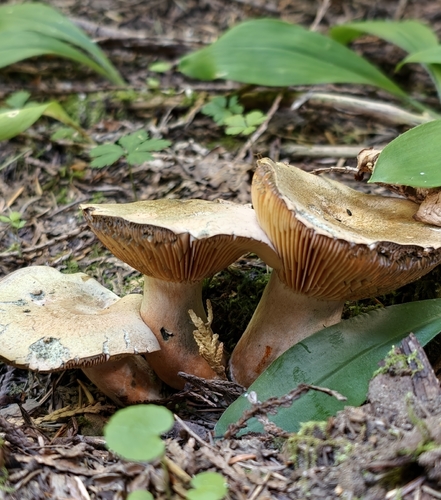
Saffron Milkcap
Lactarius deliciosus
Edible (per source) -
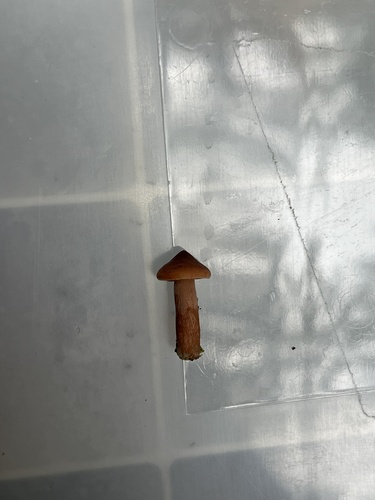
Mild Milkcap
Lactarius subdulcis
Edibility unknown — do not eat -
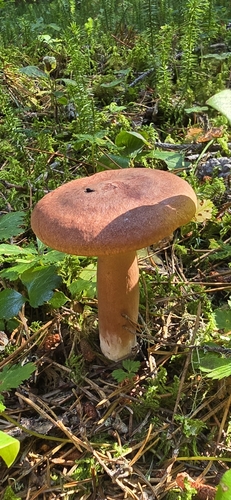
Rufous Milkcap
Lactarius rufus
Edibility unknown — do not eat -
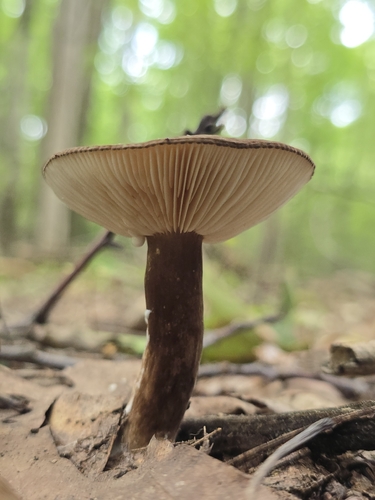
Velvet Milkcap
Lactarius lignyotus
Edibility unknown — do not eat -
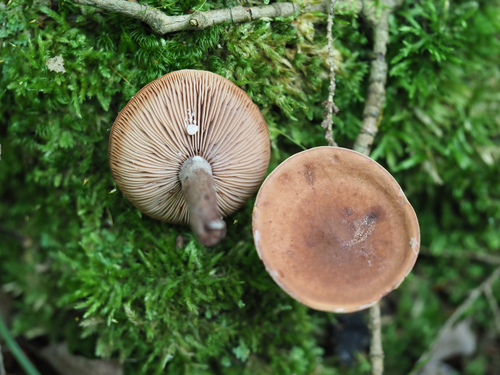
Curry Milkcap
Lactarius camphoratus
Edibility unknown — do not eat -
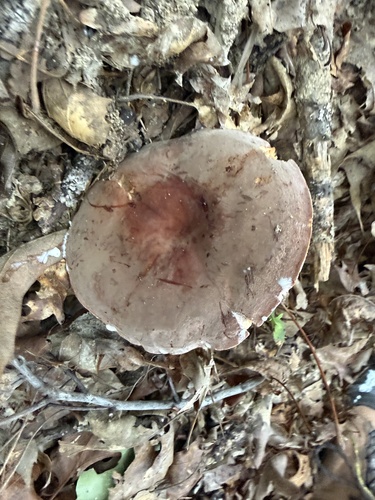
Corrugated-cap milky
Lactarius corrugis
Edible (per source) -
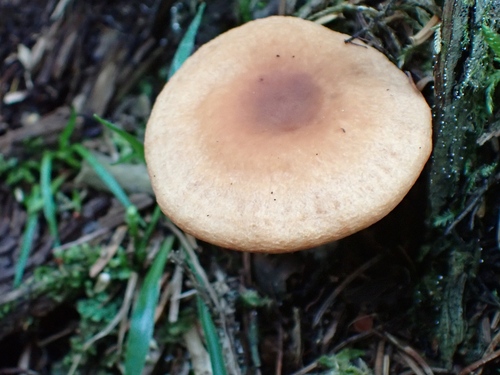
Birch Milkcap
Lactarius tabidus
Inedible
Never eat a wild mushroom based on this site or any app. See safety basics and the disclaimer.