

Oregon brown truffle
Kalapuya brunnea M.J.Trappe, Trappe & Bonito
Edibility
Edibility unknown — do not eat
Never eat a wild mushroom based on this site or any app.
Photos
-
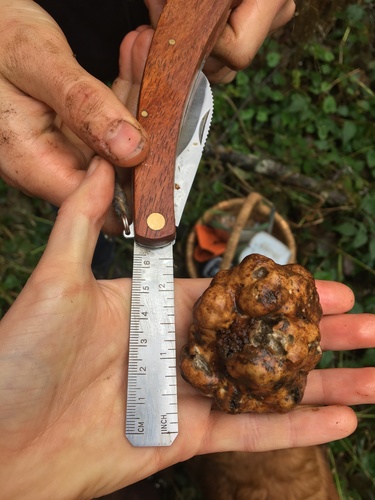
Photo: Hilary Rose Dawson. CC-BY. Source (inaturalist) -
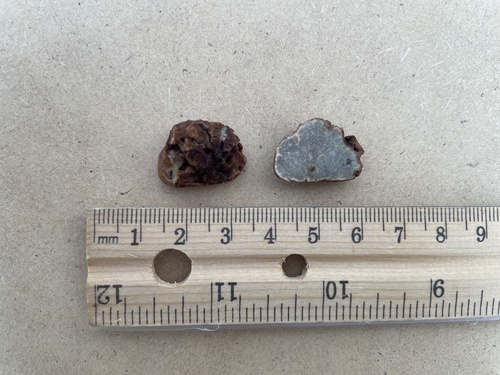
Photo: Hilary Rose Dawson. CC-BY. Source (inaturalist)
Lookalikes
No lookalikes are recorded for this species yet. That does not mean there are none. Many mushrooms look alike, so never rely on appearance alone.
Season
When this species has been recorded, by month, from open-licensed US and Canada observations. It shows when people report it, not a guarantee it is fruiting.
The highlighted bar is the current month.
View season data as a table
| Month | Records |
|---|---|
| January | 5 |
| February | 10 |
| March | 4 |
| April | 9 |
| May | 0 |
| June | 4 |
| July | 1 |
| August | 0 |
| September | 3 |
| October | 2 |
| November | 10 |
| December | 9 |
Where it is found
States and provinces with the most records. Check the foraging rules for the place you plan to visit.
- Oregon 8 records · Foraging rules
About
Kalapuya brunnea is a species of truffle in the monotypic fungal genus Kalapuya. The truffle occurs only in the Pacific Northwest region of the United States, in western Oregon and northern California. Known locally as the Oregon brown truffle, it was formerly thought to be an undescribed species of Leucangium until molecular analysis demonstrated that it was distinct from that genus. The truffle is reddish brown with a rough and warty outer skin, while the interior spore-producing gleba is initially whitish before developing greyish-brown mottling as it matures. Mature truffles have an odor resembling garlicky cheese, similar to mature Camembert. The species has been harvested for culinary purposes in Oregon.
From Wikipedia, CC BY-SA 4.0. Read the original article.
Recent finds
No community finds tagged with this species yet. Log a find.
Never eat a wild mushroom based on this site or any app. See safety basics and the disclaimer.