

Inocybe tahquamenonensis
Inocybe tahquamenonensis D.E.Stuntz
Edibility
Edibility unknown — do not eat
Never eat a wild mushroom based on this site or any app.
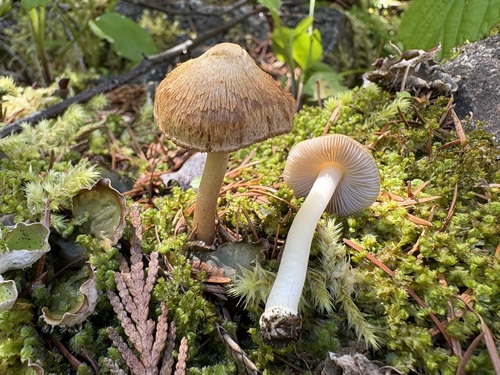
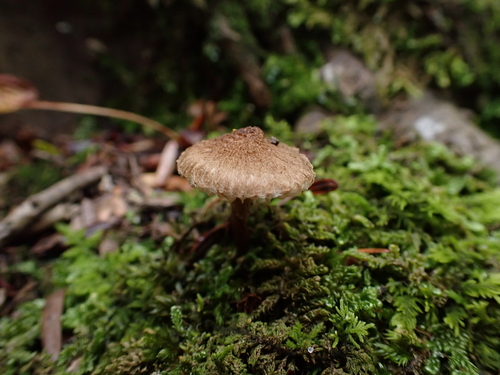
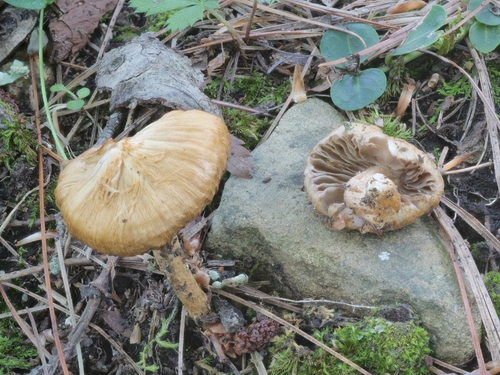
Photos
-
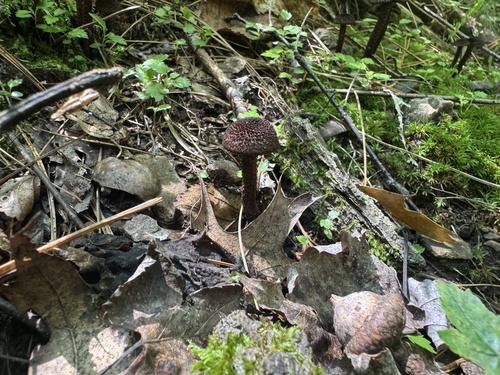
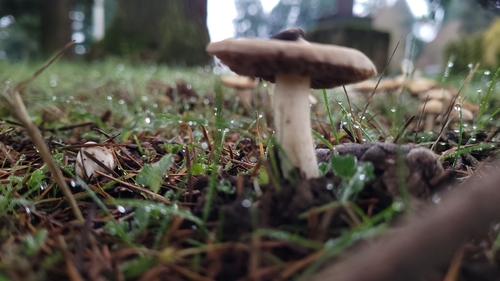
Photo: SiphonophoreSlinger. CC-BY. Source (inaturalist) -
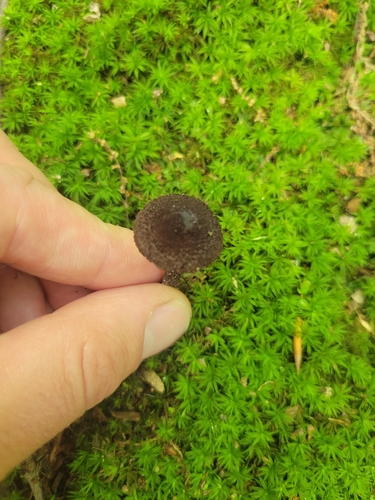
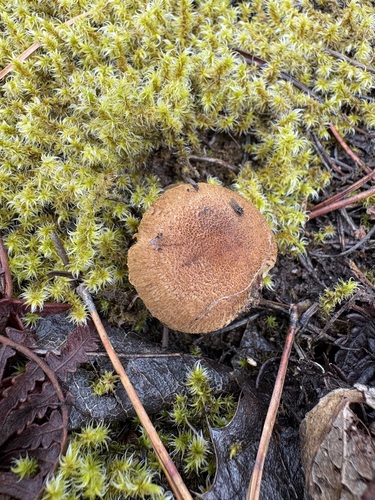
Photo: Harry Mazariego. CC0. Source (inaturalist) -
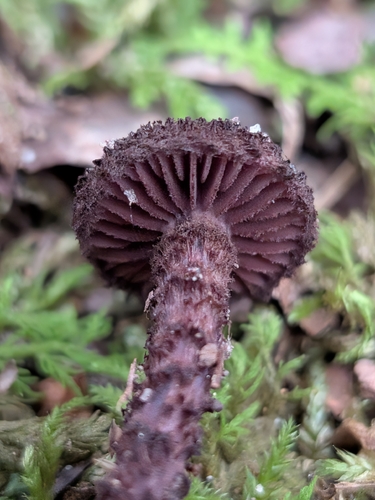
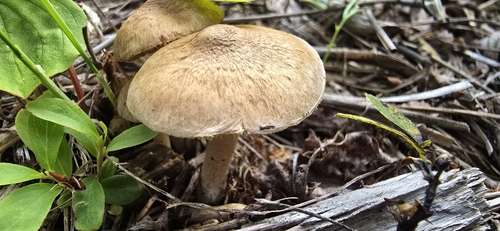
Photo: Drew Palmer. CC-BY. Source (inaturalist) -
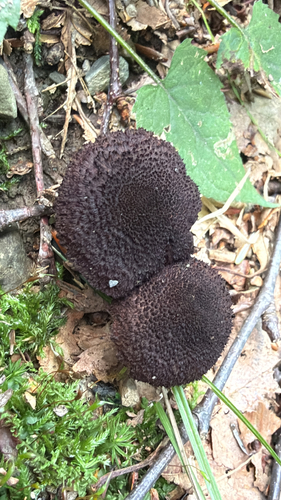
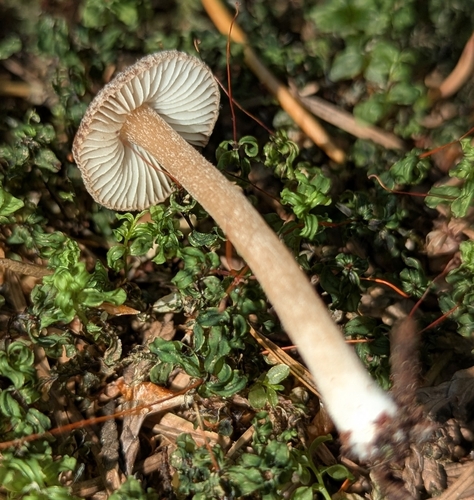
Photo: nebrooks. CC-BY. Source (inaturalist)
Lookalikes
No lookalikes are recorded for this species yet. That does not mean there are none. Many mushrooms look alike, so never rely on appearance alone.
Season
When this species has been recorded, by month, from open-licensed US and Canada observations. It shows when people report it, not a guarantee it is fruiting.
The highlighted bar is the current month.
View season data as a table
| Month | Records |
|---|---|
| January | 0 |
| February | 0 |
| March | 0 |
| April | 0 |
| May | 56 |
| June | 27 |
| July | 77 |
| August | 84 |
| September | 42 |
| October | 53 |
| November | 11 |
| December | 0 |
Where it is found
States and provinces with the most records. Check the foraging rules for the place you plan to visit.
- Pennsylvania 55 records · Foraging rules
- New York 19 records · Foraging rules
- West Virginia 12 records · Foraging rules
- Michigan 12 records · Foraging rules
- Quebec 9 records · Foraging rules
- Virginia 9 records · Foraging rules
- Massachusetts 4 records · Foraging rules
- Tennessee 4 records · Foraging rules
- Rhode Island 3 records · Foraging rules
- North Carolina 3 records · Foraging rules
- Ohio 2 records · Foraging rules
- New Hampshire 2 records · Foraging rules
- Connecticut 1 records · Foraging rules
- New Jersey 1 records · Foraging rules
- Georgia 1 records · Foraging rules
Show 3 more
- Maine1 records
- South Carolina1 records
- Vermont1 records
About
Inocybe tahquamenonensis is an inedible species of agaric fungus in the family Inocybaceae. It was formally described in 1954 by mycologist Daniel E. Stuntz. The fruit bodies have bell-shaped to convex to flattened caps measuring 1.2–3 cm (1⁄2–1+1⁄4 in) in diameter. Its color is dark purplish brown to reddish- or blackish-brown, with reddish-purple flesh. The gills are attached to the stipe and are somewhat distantly spaced. They are initially reddish brown before turning to chocolate brown, sometimes developing whitish edges. The spore print is brown; spores measure 6–8.5 by 5–6 μm. Fruit bodies grow singly, scattered, or in groups under deciduous trees in the United States.
From Wikipedia, CC BY-SA 4.0. Read the original article.
Recent finds
No community finds tagged with this species yet. Log a find.
More in the genus Inocybe
-
White Fibrecap
Inocybe geophylla
Poisonous -
Torn Fibrecap
Inocybe lacera
Poisonous -
Fleecy Fibrecap
Inocybe flocculosa
Edibility unknown — do not eat -
Inocybe nitidiuscula
Edibility unknown — do not eat -
Inocybe occulta
Edibility unknown — do not eat -
Woolly Fibrecap
Inocybe lanuginosa
Poisonous -
Inocybe albodisca
Edibility unknown — do not eat - No photo yet
Inocybe armeniaca
Edibility unknown — do not eat
Never eat a wild mushroom based on this site or any app. See safety basics and the disclaimer.