

Tar Lichen
Hydropunctaria maura (Wahlenb. ex Ach.) C.Keller, Gueidan & Thüs
Also called: Black tar lichen, Sea Star Lichen, Wart Lichen
Edibility
Edibility unknown — do not eat
Never eat a wild mushroom based on this site or any app.
Photos
-
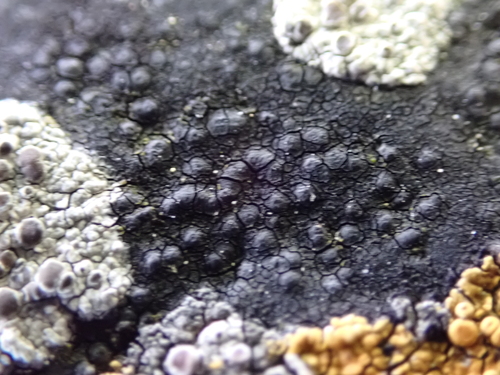
Photo: Randal. CC0. Source (inaturalist) -
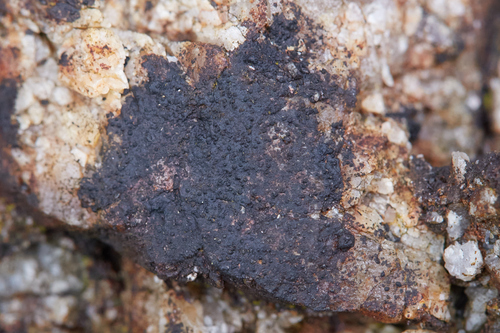
Photo: Ken-ichi Ueda. CC-BY. Source (inaturalist) -
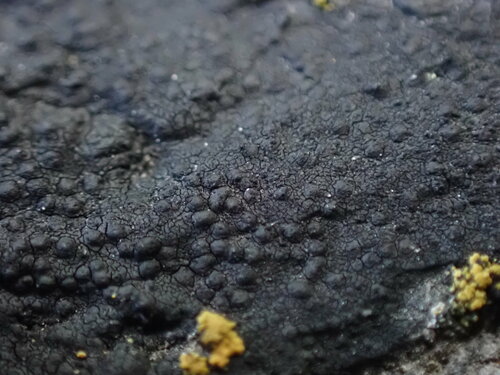
Photo: Randal. CC0. Source (inaturalist) -

Photo: Randal. CC0. Source (inaturalist)
Lookalikes
No lookalikes are recorded for this species yet. That does not mean there are none. Many mushrooms look alike, so never rely on appearance alone.
Season
When this species has been recorded, by month, from open-licensed US and Canada observations. It shows when people report it, not a guarantee it is fruiting.
The highlighted bar is the current month.
View season data as a table
| Month | Records |
|---|---|
| January | 59 |
| February | 56 |
| March | 44 |
| April | 25 |
| May | 1,235 |
| June | 129 |
| July | 187 |
| August | 123 |
| September | 37 |
| October | 16 |
| November | 22 |
| December | 29 |
Where it is found
States and provinces with the most records. Check the foraging rules for the place you plan to visit.
- Nova Scotia 1,194 records · Foraging rules
- California 344 records · Foraging rules
- British Columbia 119 records · Foraging rules
- Washington 93 records · Foraging rules
- Newfoundland and Labrador 74 records · Foraging rules
- Alaska 58 records · Foraging rules
- Oregon 39 records · Foraging rules
- Maine 24 records · Foraging rules
- New Brunswick 23 records · Foraging rules
- Massachusetts 20 records · Foraging rules
- Quebec 4 records · Foraging rules
- New Hampshire 1 records · Foraging rules
- Rhode Island 1 records · Foraging rules
About
Hydropunctaria maura, still often called by the older name Verrucaria maura and commonly known as tar lichen, is a species of saxicolous (rock-dwelling), crustose lichen belonging to the family Verrucariaceae. A perennial species that does not experience seasonal variations, it is the type species of the genus Hydropunctaria. The medulla is a black basal layer that forms columns (Latin: punctae) to the upper surface and isolates the algae into pockets near the upper surface. The black band formed by H. maura can often be seen at a distance as a marker of the high water point.
From Wikipedia, CC BY-SA 4.0. Read the original article.
Never eat a wild mushroom based on this site or any app. See safety basics and the disclaimer.