

quince rust
Gymnosporangium clavipes Cooke & Peck
Also called: cedar quince rust, cedar-quince rust
Edibility
Edibility unknown — do not eat
Never eat a wild mushroom based on this site or any app.
Photos
-
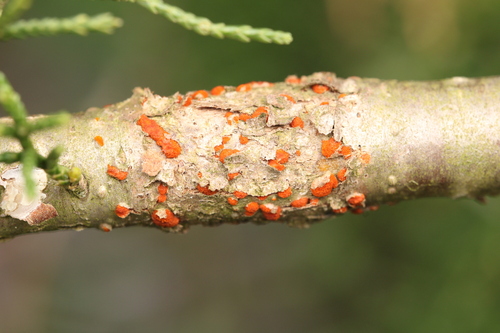
Photo: daksu. CC-BY. Source (inaturalist) -
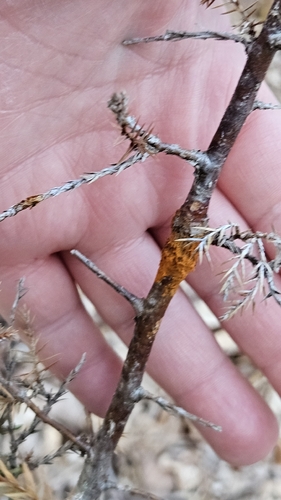
Photo: Sam Bucciarelli. CC-BY. Source (inaturalist) -
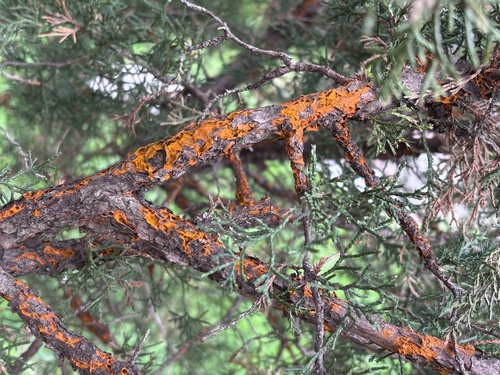
Photo: reagan peschke. CC-BY. Source (inaturalist) -
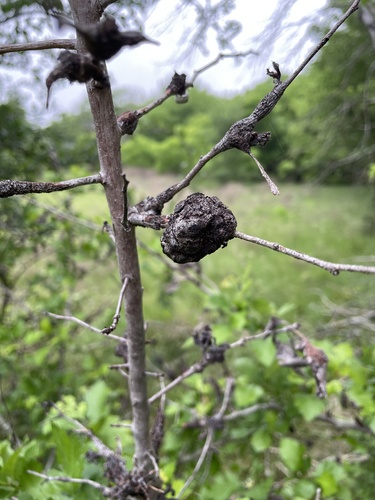
Photo: lanechaffin. CC0. Source (inaturalist)
Lookalikes
No lookalikes are recorded for this species yet. That does not mean there are none. Many mushrooms look alike, so never rely on appearance alone.
Season
When this species has been recorded, by month, from open-licensed US and Canada observations. It shows when people report it, not a guarantee it is fruiting.
The highlighted bar is the current month.
View season data as a table
| Month | Records |
|---|---|
| January | 5 |
| February | 14 |
| March | 136 |
| April | 214 |
| May | 684 |
| June | 544 |
| July | 839 |
| August | 542 |
| September | 138 |
| October | 37 |
| November | 26 |
| December | 7 |
Where it is found
States and provinces with the most records. Check the foraging rules for the place you plan to visit.
- Massachusetts 787 records · Foraging rules
- Ontario 403 records · Foraging rules
- New York 227 records · Foraging rules
- Pennsylvania 177 records · Foraging rules
- Florida 143 records · Foraging rules
- Quebec 135 records · Foraging rules
- Maine 112 records · Foraging rules
- Virginia 107 records · Foraging rules
- Connecticut 105 records · Foraging rules
- New Jersey 88 records · Foraging rules
- Texas 66 records · Foraging rules
- Georgia 57 records · Foraging rules
- Michigan 55 records · Foraging rules
- Tennessee 55 records · Foraging rules
- South Carolina 54 records · Foraging rules
Show 36 more
- Maryland50 records
- Wisconsin48 records
- British Columbia47 records
- North Carolina46 records
- Illinois46 records
- Ohio38 records
- District of Columbia34 records
- Montana34 records
- Mississippi34 records
- Alabama31 records
- Nova Scotia30 records
- Wyoming29 records
- Rhode Island28 records
- West Virginia24 records
- Manitoba24 records
- Louisiana23 records
- Arkansas22 records
- Delaware19 records
- Saskatchewan19 records
- Missouri18 records
- Minnesota16 records
- Newfoundland and Labrador15 records
- New Hampshire15 records
- New Brunswick13 records
- Alberta12 records
- Indiana12 records
- Prince Edward Island10 records
- Kentucky10 records
- Iowa8 records
- Washington5 records
- Vermont3 records
- South Dakota3 records
- Colorado3 records
- Oklahoma2 records
- Kansas2 records
- Oregon1 records
About
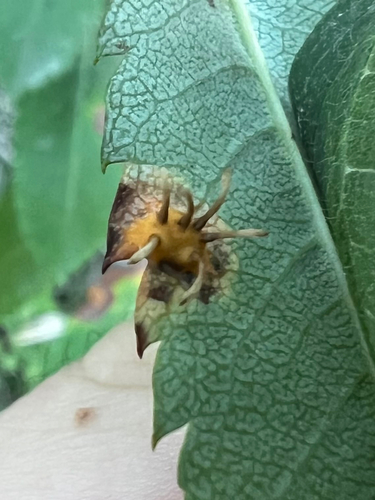
Gymnosporangium clavipes is a plant pathogen, a fungus that causes cedar-quince rust. Similar to Gymnosporangium juniperi-virginianae and Gymnosporangium globosum, the fungus infects a wide range of Rosaceae, such as apple, hawthorn and quince trees, and also requires an evergreen host such as eastern red cedar or a number of other juniper species to complete its life cycle.
From Wikipedia, CC BY-SA 4.0. Read the original article.
Recent finds
No community finds tagged with this species yet. Log a find.
More in the genus Gymnosporangium
-
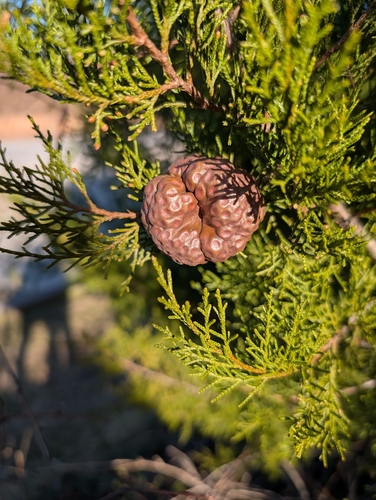
juniper-apple rust
Gymnosporangium juniperi-virginianae
Edibility unknown — do not eat -
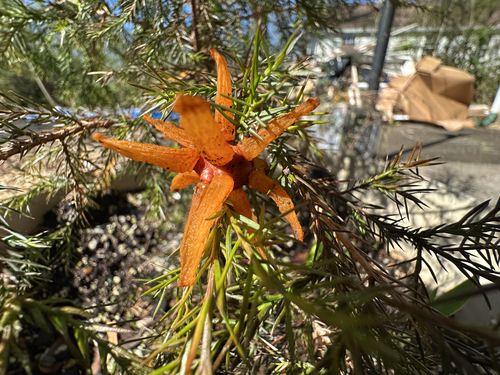
Juniper-hawthorn rust
Gymnosporangium globosum
Edibility unknown — do not eat -
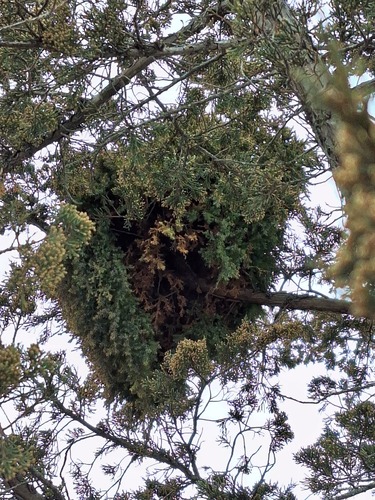
Juniper Broom Rust
Gymnosporangium nidus-avis
Edibility unknown — do not eat - No photo yet
Gymnosporangium nelsonii
Edibility unknown — do not eat -
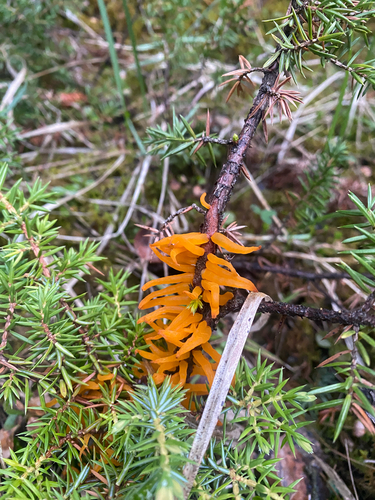
Tongues Of Fire
Gymnosporangium clavariiforme
Edibility unknown — do not eat - No photo yet
Gymnosporangium bethelii
Edibility unknown — do not eat -
Rowan Crown
Gymnosporangium cornutum
Edibility unknown — do not eat - No photo yet
Gymnosporangium biseptatum
Edibility unknown — do not eat
Never eat a wild mushroom based on this site or any app. See safety basics and the disclaimer.