

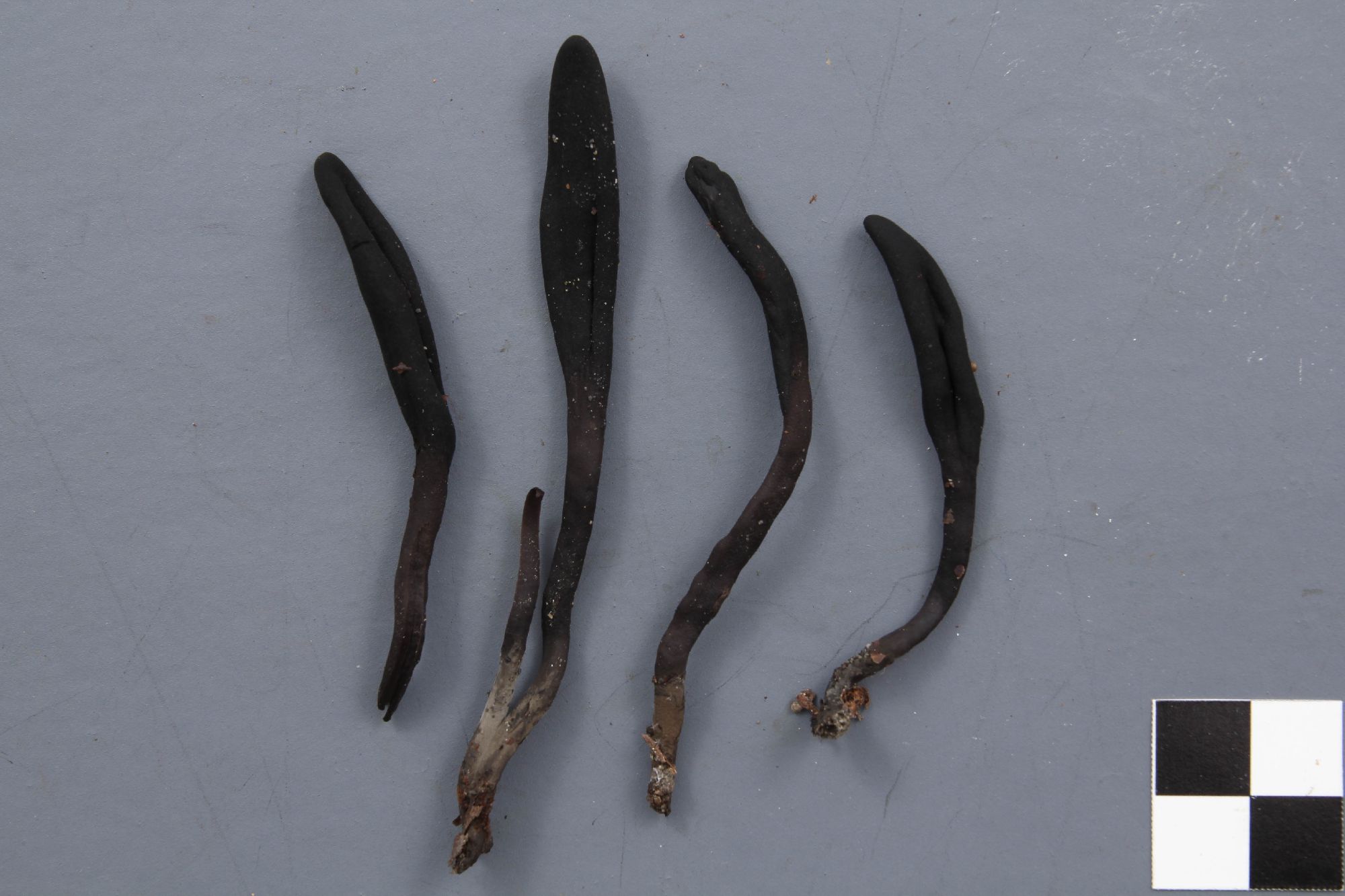
Dark-Purple Earthtongue
Geoglossum atropurpureum (Batsch) Pers.
Edibility
Edibility unknown — do not eat
Never eat a wild mushroom based on this site or any app.
Lookalikes
No lookalikes are recorded for this species yet. That does not mean there are none. Many mushrooms look alike, so never rely on appearance alone.
Season
When this species has been recorded, by month, from open-licensed US and Canada observations. It shows when people report it, not a guarantee it is fruiting.
The highlighted bar is the current month.
View season data as a table
| Month | Records |
|---|---|
| January | 0 |
| February | 1 |
| March | 0 |
| April | 1 |
| May | 0 |
| June | 0 |
| July | 0 |
| August | 33 |
| September | 96 |
| October | 13 |
| November | 2 |
| December | 0 |
Where it is found
States and provinces with the most records. Check the foraging rules for the place you plan to visit.
- Nova Scotia 32 records · Foraging rules
- Ontario 25 records · Foraging rules
- Quebec 22 records · Foraging rules
- New York 20 records · Foraging rules
- Massachusetts 11 records · Foraging rules
- Pennsylvania 10 records · Foraging rules
- North Carolina 7 records · Foraging rules
- Maine 5 records · Foraging rules
- Wisconsin 5 records · Foraging rules
- New Hampshire 3 records · Foraging rules
- Vermont 3 records · Foraging rules
- Michigan 2 records · Foraging rules
- California 1 records · Foraging rules
- Mississippi 1 records · Foraging rules
- Tennessee 1 records · Foraging rules
Show 1 more
- Virginia1 records
About
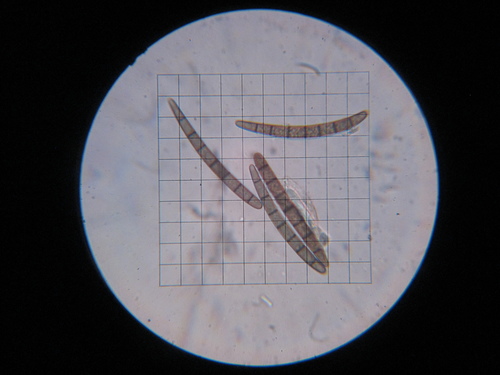
Microglossum atropurpureum is a species of fungus in the family Leotiaceae. In the UK, it has been given the recommended English name of dark-purple earthtongue. Ascocarps (fruit bodies) are black, often with a purple tint, and are irregularly club-shaped. They occur in soil and resemble earth tongues, but are microscopically distinct. The species was formerly referred to the genus Geoglossum, but is not closely related to the Geoglossomycetes. Microglossum atropurpureum is found in eastern North America and Europe, where it is typical of waxcap grasslands, a declining habitat due to changing agricultural practices, such as fertilization methods. As a result, the species is of global conservation concern and is listed as "vulnerable" on the IUCN Red List of Threatened Species. Furthermore, this species is believed to be found primarily in grasslands. Very little is known about it because of its rarity, but more research is underway. The lack of grazing animals in its natural habitats in Europe add to the danger that the species is in. Because of the low presence of grazing animals, invasive species have been allowed to take over most of the area and "choke out" the dark-purple earthtongue. There is belief that the Hanboigoir microglossum and genera microglossum should be removed from the family geoglossaceae because the fact that geoclossaceae is polyfyletic (meaning from more than one common evolutionary ancestor). At this moment, there is no evidence that suggests the genera migroglossum fits that criteria.
From Wikipedia, CC BY-SA 4.0. Read the original article.
Recent finds
No community finds tagged with this species yet. Log a find.
More in the genus Geoglossum
-
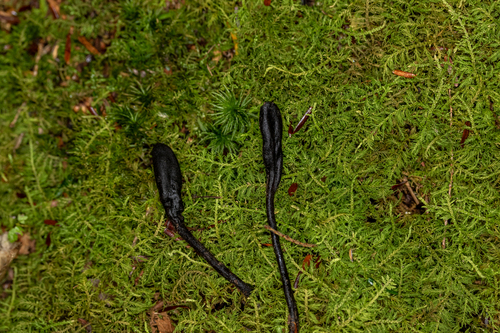
Geoglossum glabrum
Edibility unknown — do not eat -
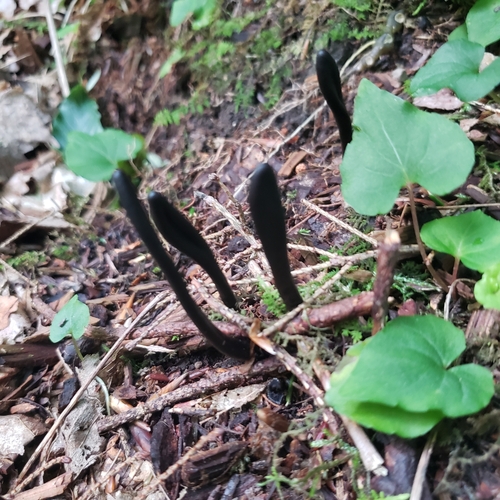
Common Black Earth Tongue
Geoglossum simile
Edibility unknown — do not eat -
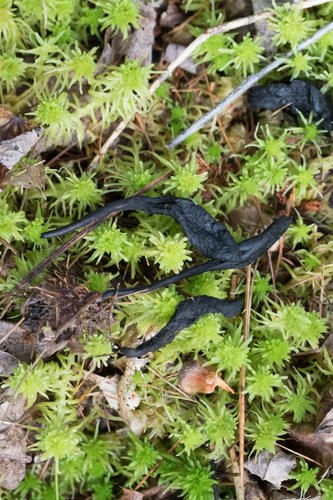
Slimy Earthtongue
Geoglossum difforme
Edibility unknown — do not eat -
Geoglossum nigritum
Edibility unknown — do not eat - No photo yet
Deceptive Earthtongue
Geoglossum fallax
Edibility unknown — do not eat - No photo yet
Slimy Earthtongue
Geoglossum peckianum
Edibility unknown — do not eat -
Plain Earthtongue
Geoglossum umbratile
Edibility unknown — do not eat - No photo yet
Geoglossum affine
Edibility unknown — do not eat
Never eat a wild mushroom based on this site or any app. See safety basics and the disclaimer.