

Lingzhi
Ganoderma sichuanense J.D.Zhao & X.Q.Zhang
Also called: Ganoderma lingzhi
Edibility
Edibility unknown — do not eat
Never eat a wild mushroom based on this site or any app.
Lookalikes
No lookalikes are recorded for this species yet. That does not mean there are none. Many mushrooms look alike, so never rely on appearance alone.
Season
When this species has been recorded, by month, from open-licensed US and Canada observations. It shows when people report it, not a guarantee it is fruiting.
The highlighted bar is the current month.
View season data as a table
| Month | Records |
|---|---|
| January | 0 |
| February | 0 |
| March | 0 |
| April | 0 |
| May | 0 |
| June | 2 |
| July | 0 |
| August | 0 |
| September | 0 |
| October | 0 |
| November | 0 |
| December | 0 |
Where it is found
No regional records yet.
Identification traits
| Cap shape | offset |
|---|---|
| Underside (gills, pores or teeth) | pores |
| Ecology | saprotrophic |
| Stem features | bare |
| Spore print color | brown |
Traits vary. Use them to ask better questions of an expert, not to make a final call.
About
Lingzhi (Ganoderma sichuanense), also known as reishi, is a polypore fungus ("bracket fungus") native to East Asia belonging to the genus Ganoderma. Its reddish brown, varnished, kidney-shaped cap with bands and peripherally inserted stem give it a distinct fan-like appearance. When fresh, the lingzhi is soft, cork-like, and flat. It lacks gills on its underside, and instead releases its spores via fine pores (80–120 μm) in yellow colors. In nature, it grows at the base and stumps of deciduous trees, especially maples. Lingzhi may be cultivated on hardwood logs, sawdust, or woodchips. The lingzhi mushroom is used in traditional Chinese medicine.
From Wikipedia, CC BY-SA 4.0. Read the original article.
Recent finds
No community finds tagged with this species yet. Log a find.
More in the genus Ganoderma
-
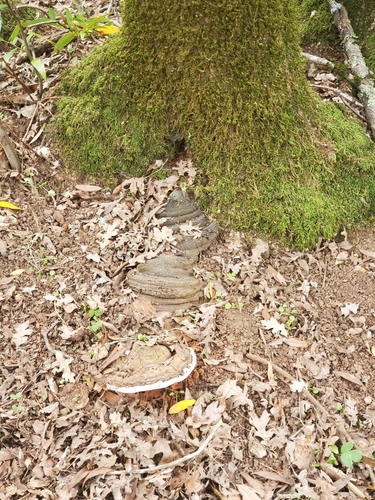
Artist's Bracket
Ganoderma applanatum
Inedible -
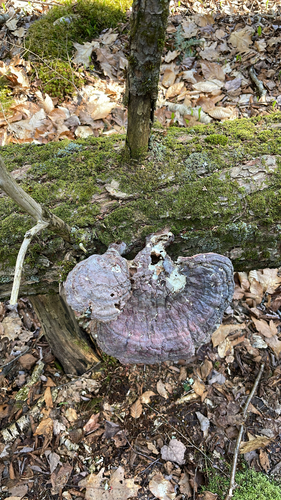
hemlock varnish shelf
Ganoderma tsugae
Edibility unknown — do not eat -
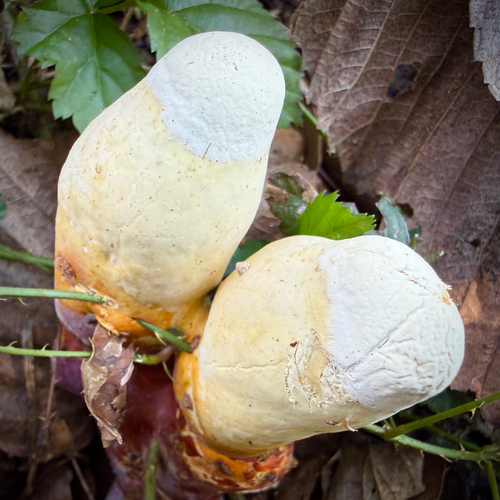
golden reishi
Ganoderma curtisii
Edibility unknown — do not eat -
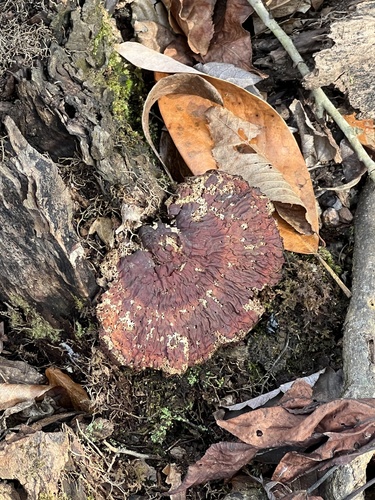
Ganoderma resinaceum
Edibility unknown — do not eat -
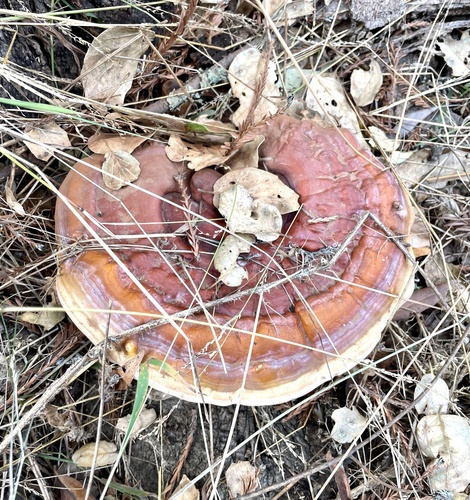
Lacquered Bracket
Ganoderma lucidum
Edibility unknown — do not eat -
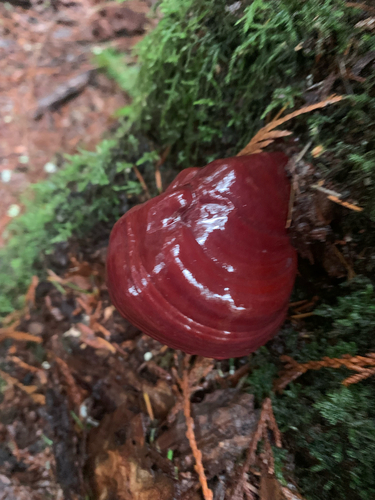
West Coast Reishi
Ganoderma oregonense
Edibility unknown — do not eat -
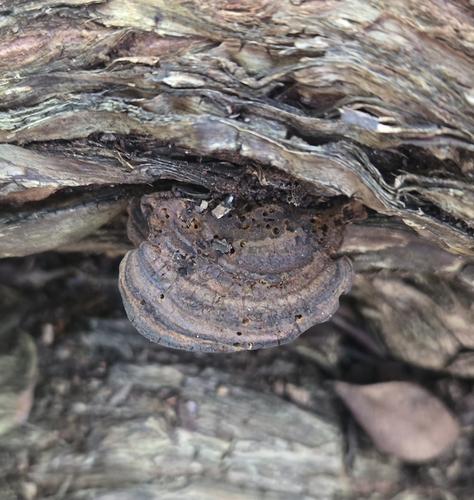
Ganoderma lobatum
Edibility unknown — do not eat -
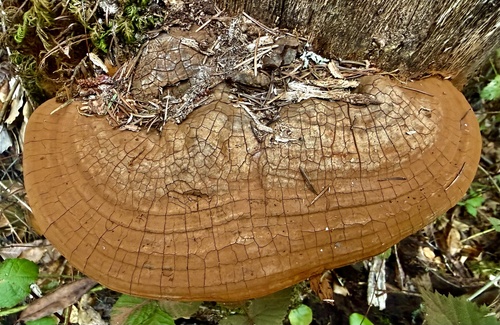
Artist's Conk
Ganoderma brownii
Edibility unknown — do not eat
Never eat a wild mushroom based on this site or any app. See safety basics and the disclaimer.