

Fusarium pseudograminearum
Fusarium pseudograminearum O'Donnell & T.Aoki
Edibility
Edibility unknown — do not eat
Never eat a wild mushroom based on this site or any app.
Lookalikes
No lookalikes are recorded for this species yet. That does not mean there are none. Many mushrooms look alike, so never rely on appearance alone.
Season
Season data is not available for this species yet.
Where it is found
States and provinces with the most records. Check the foraging rules for the place you plan to visit.
- Washington 2 records · Foraging rules
About
Crown rot of wheat is caused by the fungal pathogen Fusarium pseudograminearum. F. pseudograminearum is a member of the fungal phylum Ascomycota and is also known as Gibberella coronicola (teleomorph). It is a monoecious fungus, meaning it does not require another host other than wheat to complete its life cycle. Although F. pseudograminearum can produce both anamorphic and teleomorphic states, the teleomorph is usually not present for crown rot of wheat. This Fusarium species has, until recently, been considered to be the same as the species known as Fusarium graminearum (head blight of wheat) due to many similar characteristics. One of the only differences between the two species is that F. pseudograminearum lacks its sexual stage on the wheat host. An important characteristic in terms of infection that also distinguishes F. pseudgraminearum from F. graminearum is that F. pseudograminearum rarely infects the head of the wheat plant, only the crown, whereas F. graminearum can infect the entire wheat host. Other than these differences, the signs and symptoms of both fungal pathogens are very similar, showing necrosis of the stem base and crown. F. pseudograminearum also produces mycotoxins once colonization of the wheat has been fully established, which are responsible for the majority of the symptoms produced. Crown Rot of Wheat is an important plant disease that needs to be well managed due to its detrimental effects that it can have on entire fields of wheat. The infection of F. pseudograminearum can develop during stressful water deficits in fields and can spread quickly to other wheat plants, whose symptoms will ultimately lead to plant death.
From Wikipedia, CC BY-SA 4.0. Read the original article.
Recent finds
No community finds tagged with this species yet. Log a find.
More in the genus Fusarium
-
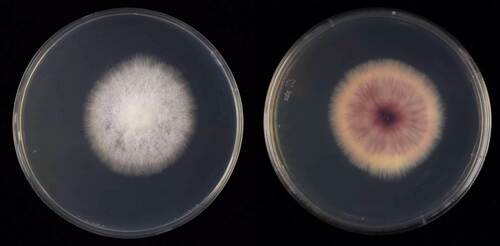
Cucumber Fusarium
Fusarium oxysporum
Edibility unknown — do not eat -
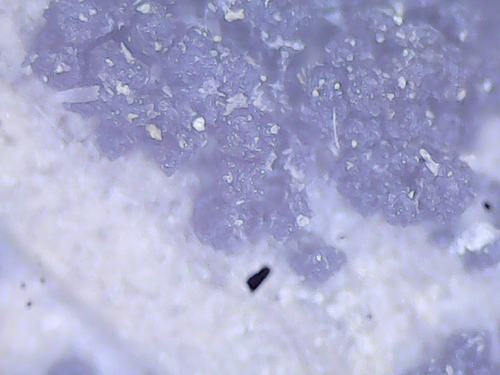
Gibberella Stalk Rot
Fusarium graminearum
Edibility unknown — do not eat - No photo yet
Fusarium solani
Edibility unknown — do not eat -
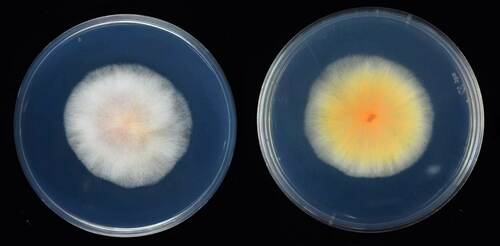
Fusarium fujikuroi
Edibility unknown — do not eat - No photo yet
Fusarium roseum
Edibility unknown — do not eat - No photo yet
Fusarium pseudensiforme
Edibility unknown — do not eat - No photo yet
Fusarium acuminatum
Edibility unknown — do not eat - No photo yet
Fusarium proliferatum
Edibility unknown — do not eat
Never eat a wild mushroom based on this site or any app. See safety basics and the disclaimer.