

Fusarium mangiferae
Fusarium mangiferae Britz, M.J.Wingf. & Marasas
Edibility
Edibility unknown — do not eat
Never eat a wild mushroom based on this site or any app.
Lookalikes
No lookalikes are recorded for this species yet. That does not mean there are none. Many mushrooms look alike, so never rely on appearance alone.
Season
When this species has been recorded, by month, from open-licensed US and Canada observations. It shows when people report it, not a guarantee it is fruiting.
The highlighted bar is the current month.
View season data as a table
| Month | Records |
|---|---|
| January | 0 |
| February | 0 |
| March | 0 |
| April | 0 |
| May | 1 |
| June | 0 |
| July | 2 |
| August | 2 |
| September | 0 |
| October | 0 |
| November | 0 |
| December | 0 |
Where it is found
No regional records yet.
About
Fusarium mangiferae is a fungal plant pathogen that infects mango trees. Its aerial mycelium is white and floccose. Conidiophores on aerial mycelium originating erect and prostrate from substrate; they are sympodially branched bearing mono and polyphialides. Polyphialides have 2–5 conidiogenous openings. Phialides on the aerial conidiophores mono- and polyphialidic. Sterile hyphae are absent. Microconidia are variable in shape, obovoid conidia are the most abundant type, oval to allantoid conidia occurring occasionally. Microconidia mostly 0-septate with 1-septate conidia occurring less abundantly. Sporodochia are present. Macroconidia are long and slender, usually 3–5 septate. Chlamydospores are absent.
From Wikipedia, CC BY-SA 4.0. Read the original article.
Recent finds
No community finds tagged with this species yet. Log a find.
More in the genus Fusarium
-
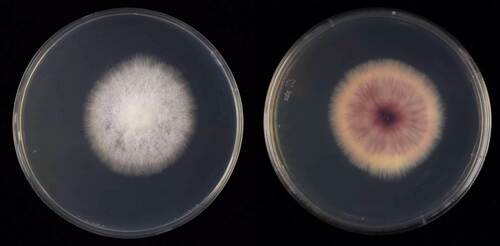
Cucumber Fusarium
Fusarium oxysporum
Edibility unknown — do not eat -
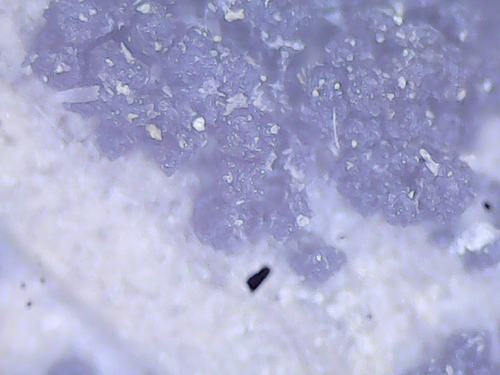
Gibberella Stalk Rot
Fusarium graminearum
Edibility unknown — do not eat - No photo yet
Fusarium solani
Edibility unknown — do not eat -
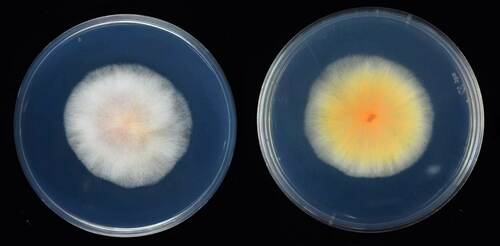
Fusarium fujikuroi
Edibility unknown — do not eat - No photo yet
Fusarium roseum
Edibility unknown — do not eat - No photo yet
Fusarium pseudensiforme
Edibility unknown — do not eat - No photo yet
Fusarium acuminatum
Edibility unknown — do not eat - No photo yet
Fusarium proliferatum
Edibility unknown — do not eat
Never eat a wild mushroom based on this site or any app. See safety basics and the disclaimer.